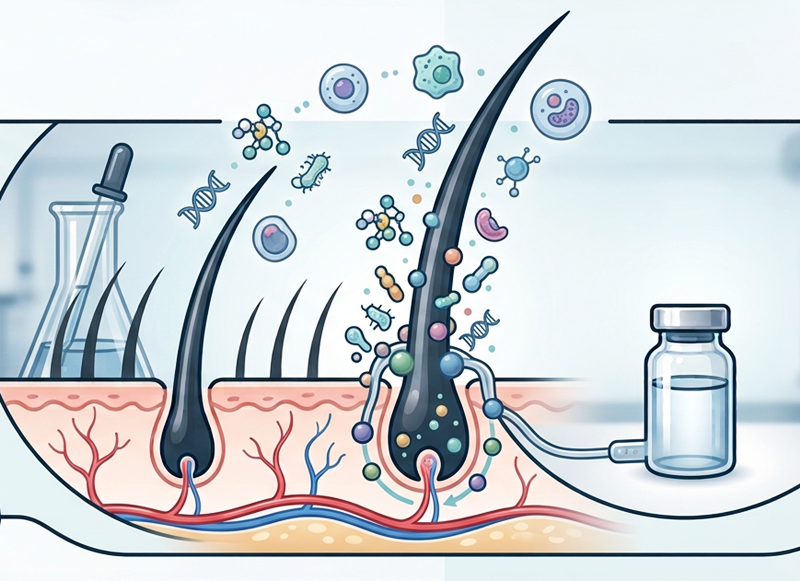
Professional hair-loss products are increasingly promoted with terms such as:
– Cytokines
– Growth factors
– Bioactive proteins
– Regenerative signaling
– Multi-factor formulation
For distributors, however, the most important question is not how advanced the terminology sounds.
The key question is:
What exactly does the product contain, and can those components be consistently identified and controlled?
Recombinant protein-based products are designed around selected signaling proteins produced through biotechnology. Their main commercial and technical characteristic is defined composition.
This article explains:
– What recombinant proteins are
– How they are produced
– Why several proteins may be combined
– What defined composition means
– How distributors should evaluate Cytokines Mesotherapy products
What Is a Recombinant Protein?
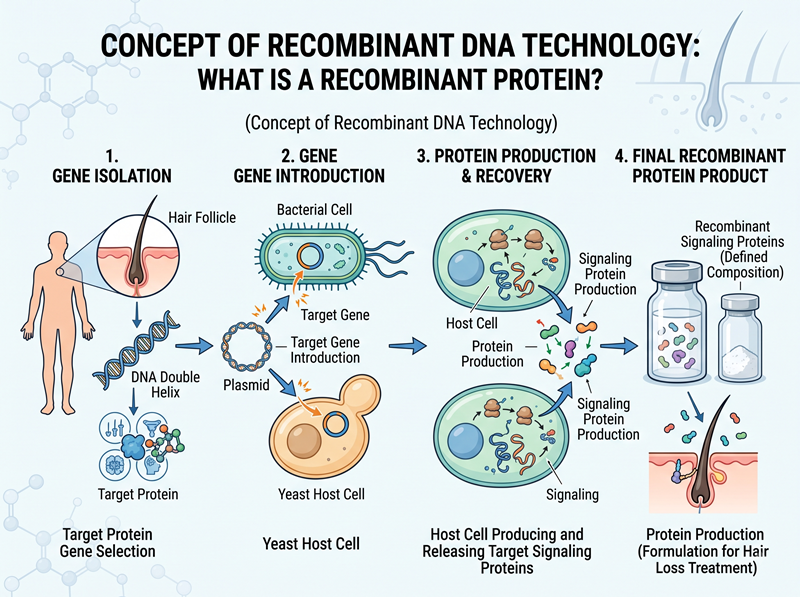
A recombinant protein is a protein produced using recombinant DNA technology.
Scientists first select a protein associated with a particular biological function. The genetic information for that protein is then introduced into a controlled production system.
The host system produces the target protein, which is subsequently collected, purified, tested, and formulated.
Common production systems include:
– Bacteria
– Yeast
– Insect cells
– Mammalian cells
The selected host system can affect production efficiency, protein structure, purity, and biological activity.
The Basic Production Process
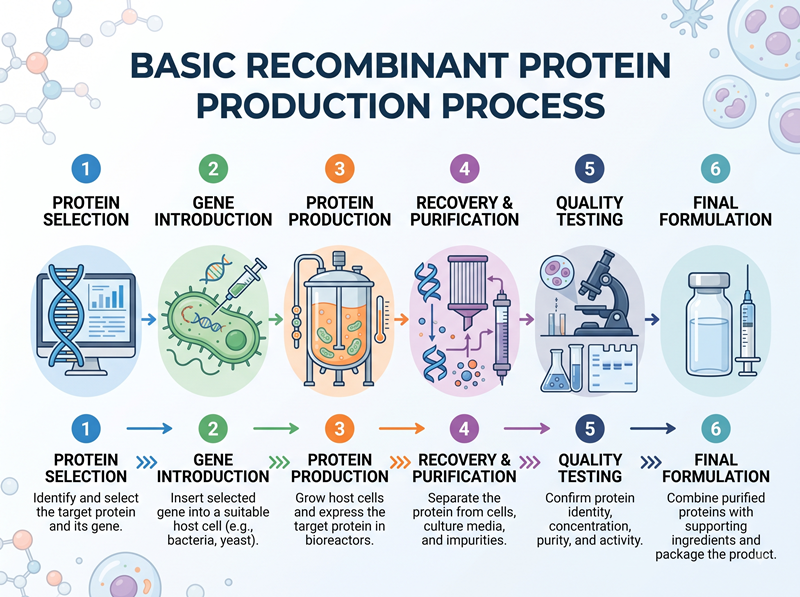
Recombinant protein production can be summarized in six main stages.
1. Protein Selection
The manufacturer selects proteins according to the intended product concept.
For hair and scalp applications, the selection may be based on signals associated with:
– Dermal papilla cells
– Keratinocytes
– Vascular support
– Hair-cycle regulation
– Oxidative-stress control
– Tissue repair
2. Gene Introduction
The genetic sequence associated with the selected protein is introduced into a suitable host cell.
3. Protein Production
The host cells are grown under controlled conditions and produce the target protein.
4. Recovery and Purification
The protein is separated from the production cells, culture materials, and other unwanted substances.
5. Quality Testing
The manufacturer confirms characteristics such as:
– Protein identity
– Concentration
– Purity
– Biological activity6. Final Formulation
6. Final Fomulation
The purified proteins may be combined with other proteins and supporting ingredients.
The product may then be supplied as:
– A liquid formulation
– A concentrated solution
– A lyophilized powder requiring reconstitution
This production model differs from Exosome-based manufacturing, which begins with living source cells and collects complex vesicles released by those cells
Why Use Recombinant Technology?
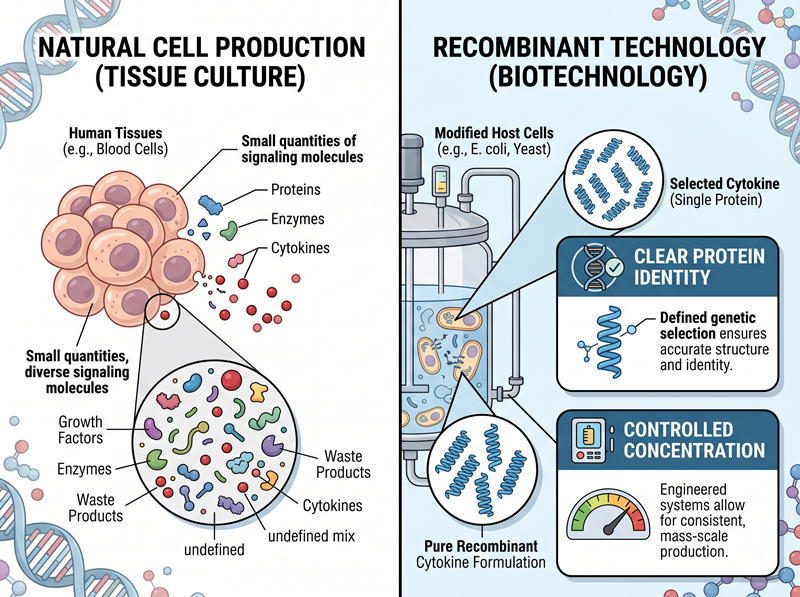
Natural cells produce cytokines and growth factors, but these proteins may be present in very small quantities and mixed with many other substances.
Recombinant technology allows a manufacturer to produce a selected protein separately.
Potential advantages include:
– Clear protein identity
– Controlled concentration
– Protein-specific purification
– Biological-activity testing
– Repeatable production
– Defined blending of multiple proteins
This does not mean that every recombinant protein product is automatically effective or high quality.
It means that the active components can generally be described more directly than those of a complex cell-derived mixture.
What Does Defined Composition Mean?
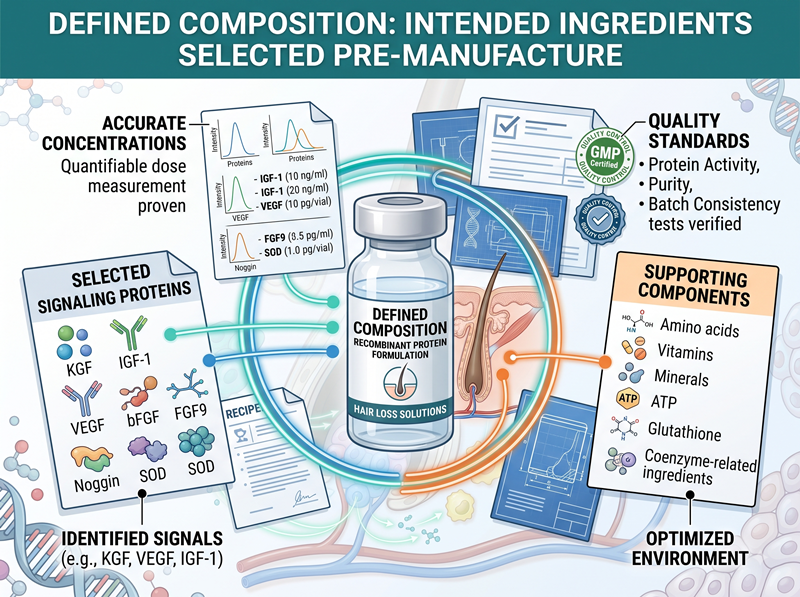
Defined composition means that the intended ingredients are selected before the final product is manufactured.
For a recombinant protein formulation, the manufacturer may specify:
– Which proteins are included
– How much of each protein is included
– Which supporting ingredients are used
– How the product is stored
– How it should be reconstituted
– Which quality standards each batch must meet
This creates a structured product identity.
For distributors, defined composition can make it easier to:
– Compare products
– Review ingredient documentation
– Train sales teams
– Explain the product to clinics
– Evaluate batch consistency
– Review country-specific regulations
However, defined composition is a manufacturing and quality characteristic.
It does not independently prove clinical effectiveness.
Why Combine Several Recombinant Proteins?
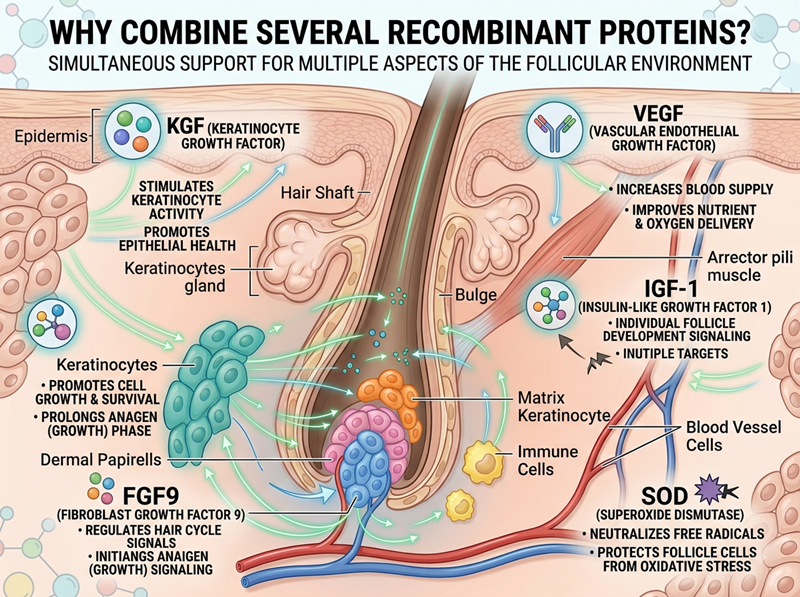
The hair follicle is regulated by multiple cells and signaling pathways.
A multi-protein formulation may therefore be designed to address several aspects of the follicular environment rather than focusing on one signal.
Proteins commonly discussed in hair research include:
KGF
Associated mainly with epithelial and keratinocyte activity.
IGF-1
Related to cell growth, survival, metabolism, and maintenance of growth-related conditions.
VEGF
Associated with vascular support around actively growing tissue.
bFGF
Connected with cell activity, tissue signaling, and repair-related processes.
FGF9
Studied in relation to follicular development and communication between dermal and epithelial cells.
Noggin
Associated with regulation of selected BMP-related signals involved in hair-cycle control.
SOD
An antioxidant enzyme related to protection from excessive oxidative stress.
These proteins have different functions.
A combination may be designed to support multiple signaling objectives, but a larger number of ingredients does not automatically mean a better product.
The formulation must still be evaluated for:
– Appropriate concentration
– Protein activity
– Compatibility
– Stability
– Safety
– Clinical evidence
AGF39™ as a Defined Recombinant Formulation
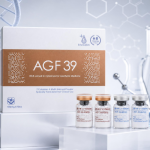
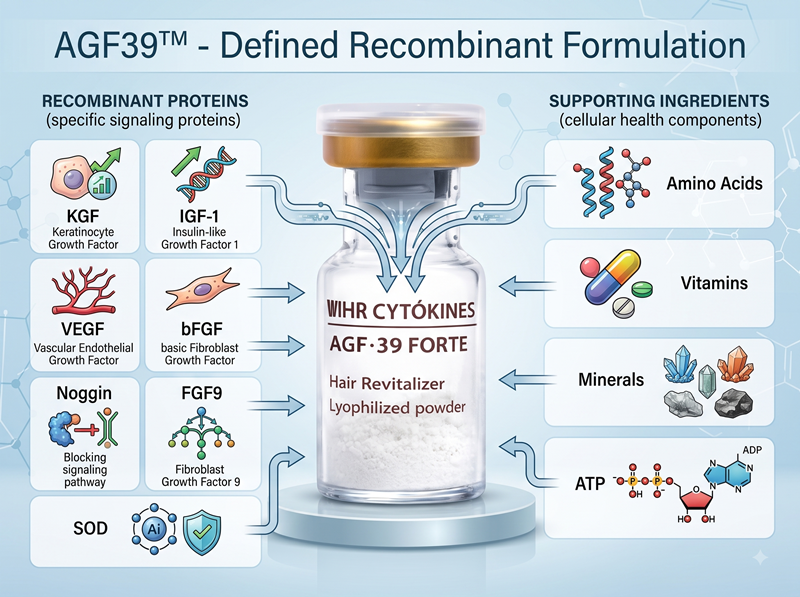
AGF39™ is AesMed’s recombinant protein-based formulation developed for professional hair and scalp applications.
According to AesMed’s product information, its recombinant protein components include:
– KGF
– IGF-1
– VEGF
– bFGF
– Noggin
– FGF9
– SOD
The formulation also includes supporting components such as:
– Amino acids
– Vitamins
– Minerals
– ATP
– Glutathione
– Coenzyme-related ingredients
AGF39™ is supplied as a lyophilized formulation.
It illustrates the defined-composition approach because selected recombinant proteins and supporting ingredients are intentionally combined into a predetermined product.
From a distribution perspective, this structure allows the product to be reviewed through specific questions:
– Which proteins are included?
– What functions are they intended to support?
– How is product quality controlled?
– How is the product reconstituted?
– Which professional delivery protocol is recommended?
– What documentation supports the complete formulation?
Why Lyophilization Is Used
Proteins are sensitive biological molecules.
They can be affected by:
– Heat
– Moisture
– Light
– pH
– Oxidation
– Repeated freezing and thawing
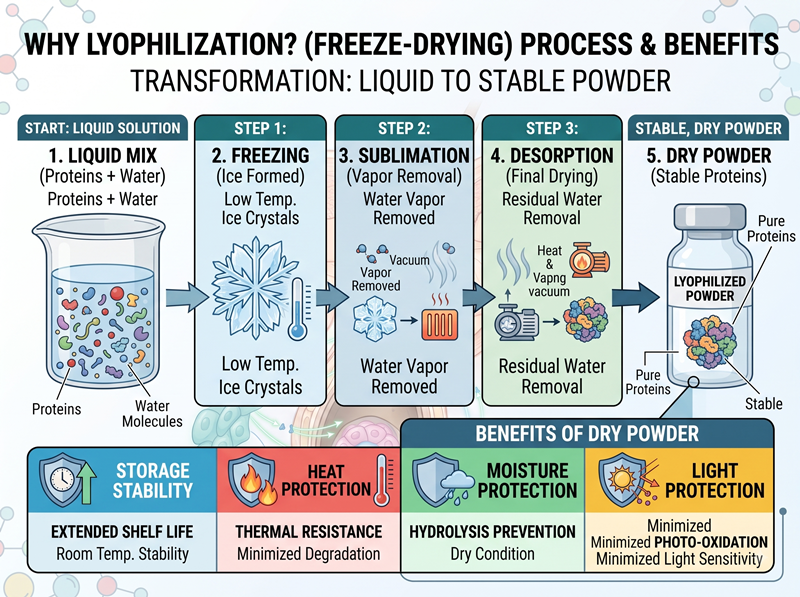
Lyophilization, or freeze-drying, removes water under controlled conditions.
Potential advantages include:
– Improved storage stability
– Reduced water-related degradation
– Easier transportation
– Reconstitution before professional use
However, freeze-drying does not automatically guarantee product stability.
Distributors should confirm:
– Storage temperature
– Shelf life
– Reconstitution instructions
– Recommended diluent
– Stability after reconstitution
– Transportation requirements
Correct storage and handling are essential parts of product quality.
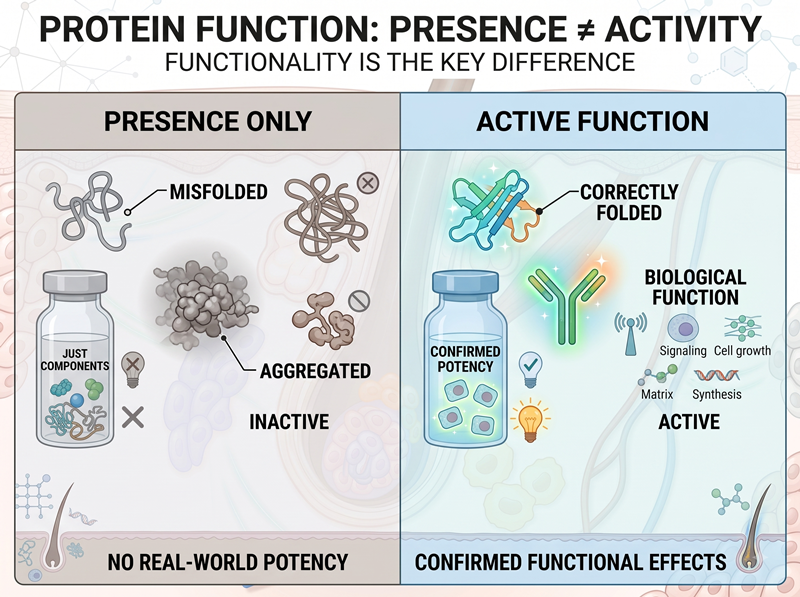
Protein Presence Is Not the Same as Protein Activity
A laboratory test may confirm that a protein is present.
That does not always mean it remains biologically active.
Protein activity can decrease because of:
– Incorrect folding
– Aggregation
– Heat exposure
– Moisture
– Oxidation
– Poor storage
– Incompatible formulation conditions
A strong technical file should therefore include more than an ingredient list.
Relevant quality information may include:
– Identity testing
– Concentration testing
– Purity testing
– Biological-activity or potency testing
– Stability testing
For a distributor, the question should not be only:
Is the protein included?
It should also be:
Does the manufacturer confirm that the protein remains active and stable?
Purity and Process Control
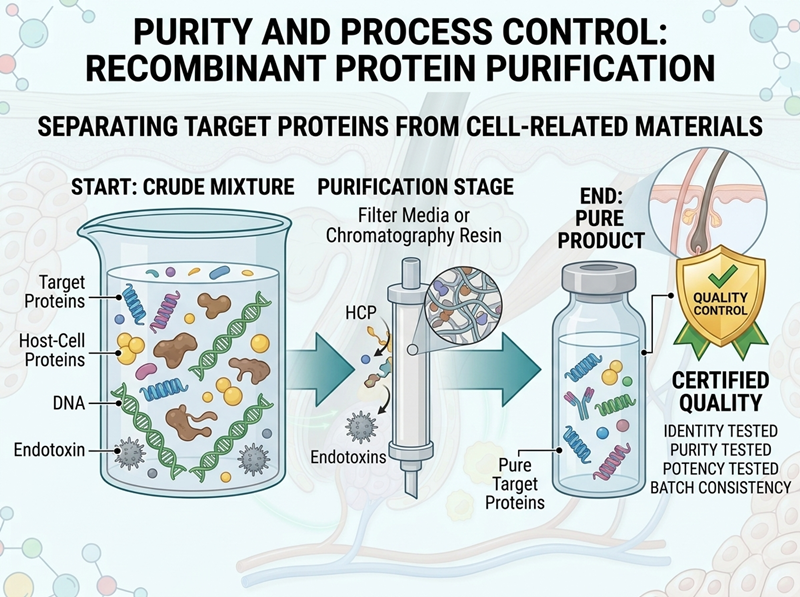
Recombinant proteins are produced using biological host systems.
The target proteins must therefore be separated from production-related materials.
Potential impurities may include:
– Host-cell proteins
– Host-cell DNA
– Protein aggregates
– Degraded protein fragments
– Endotoxin
– Residual processing materials
– Microbial contamination
The exact tests required depend on the host system, product category, intended use, and target country.
Distributors do not need to perform the manufacturing tests themselves, but they should confirm that the manufacturer has an appropriate quality-control system.
Clinical Evidence Must Match the Final Product
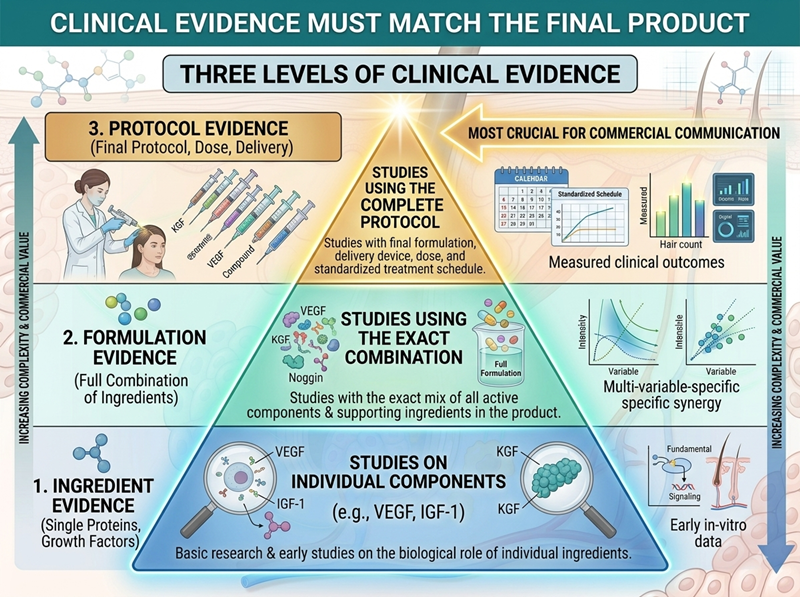
A common commercial mistake is to use evidence for individual growth factors as if it proves the complete formulation.
Evidence should be divided into three levels.
Ingredient Evidence
Research concerning the biological role of one protein, such as VEGF or IGF-1.
Formulation Evidence
Research using the complete combination of proteins and supporting ingredients.
Protocol Evidence
Research using the final formulation with a particular dose, delivery method, and treatment schedule.
For commercial communication, formulation- and protocol-specific evidence is more relevant than general ingredient evidence.
A distributor should ask:
– Was the complete product studied?
– Was the same formulation used?
– Was the same delivery method used?
– Which type of alopecia was included?
– Were objective hair measurements used?
– How long was the follow-up period?
The Delivery Method Is Part of the Evaluation
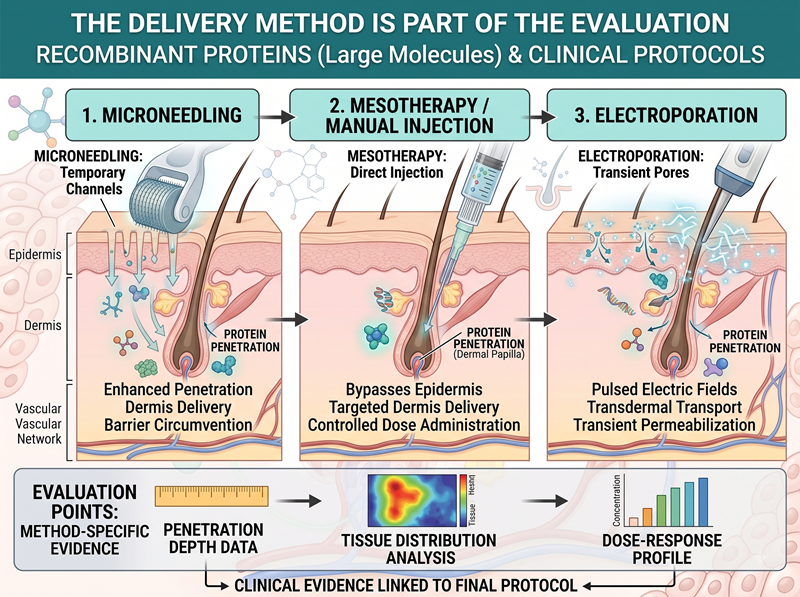
Recombinant proteins are relatively large biological molecules and may have limited penetration through intact scalp skin.
Professional protocols may therefore use:
– Microneedling
– Mesotherapy
– Manual injection
– Mesogun
– Electroporation
The delivery method can influence:
– Tissue penetration
– Product distribution
– Effective dose
– Safety
– Clinical results
The evidence for a product used with microneedling cannot automatically be transferred to injection or electroporation.
Distributors should confirm that:
– The recommended method is clearly defined.
– Product–device compatibility is supported.
– The route is permitted in the target market.
– Clinical evidence reflects the recommended protocol.
Key Questions for Distributors
Before distributing a recombinant Cytokines Mesotherapy product, request answers to the following questions.
Product Composition
– Which recombinant proteins are included?
– Are their amounts or specifications defined?
– Which supporting ingredients are included?
Manufacturing
– Which biological production systems are used?
– How are the proteins purified?
– Are relevant impurities controlled?
Potency
– Is biological activity tested?
– Is potency confirmed for each batch or final formulation?
Stability
– Is the product liquid or lyophilized?
– What are the storage and transportation conditions?
– How long is it stable after reconstitution?
Clinical Use
– Which hair-loss condition is targeted?
– Which professional delivery method is recommended?
– Is the treatment protocol standardized?
Evidence
– Is there evidence for the final formulation?
– Were objective clinical outcomes measured?
– Are the study limitations clearly presented?
Regulatory Status
– How is the product classified in the target market?
– Are its claims and delivery route permitted?

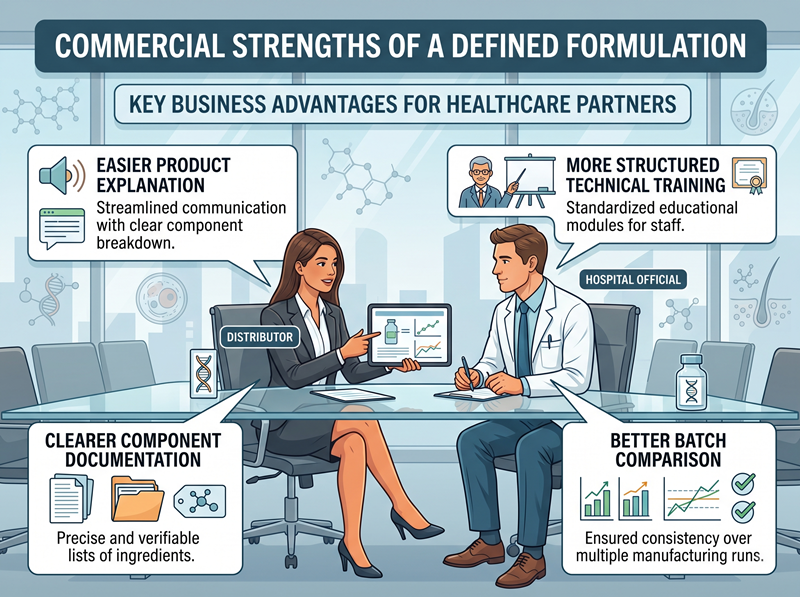
Commercial Strengths of a Defined Formulation
A clearly defined recombinant protein product may offer commercial advantages such as:
– Easier product explanation
– More structured technical training
– Clearer component documentation
– Better batch comparison
– More consistent treatment protocols
– Easier differentiation from Conditioned Media or Exosome products
These benefits are particularly valuable when working with:
– Medical clinics
– Dermatologists
– Hair-restoration professionals
– Importers
– Regulatory consultants
– Local distributors
However, commercial positioning should remain evidence-based.
Defined composition should be presented as a quality and standardization characteristic—not as automatic proof of superior clinical results.
Marketing Claims That Need Careful Review
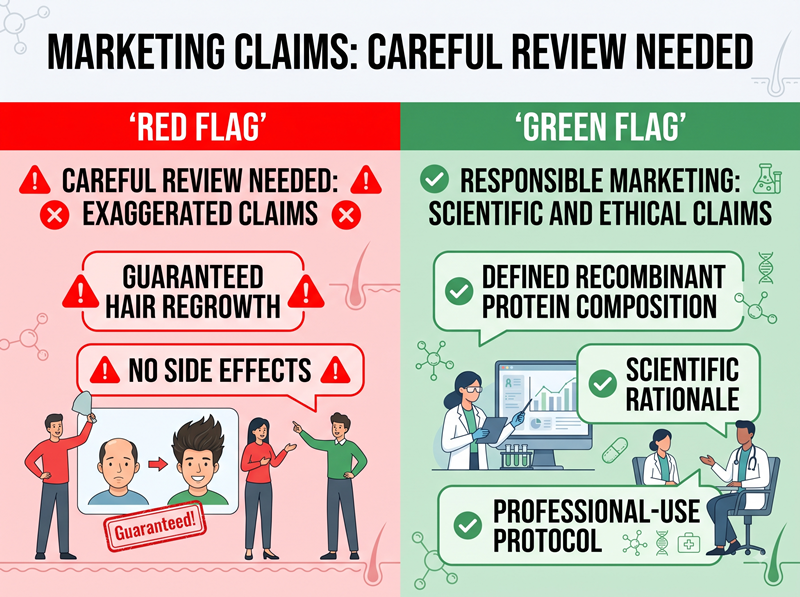
Distributors should be cautious with claims such as:
– Guaranteed hair regrowth
– Works for every alopecia type
– More growth factors mean better results
– Clinically proven because each ingredient has research
– Permanent follicle regeneration
– No side effects
More appropriate communication focuses on:
– Defined recombinant protein composition
– Controlled manufacturing
– Professional-use protocol
– Product-specific documentation
– Scientific rationale
– Available clinical evidence
– Clear limitations
Responsible marketing protects both the distributor and the healthcare customer.
Key Takeaway
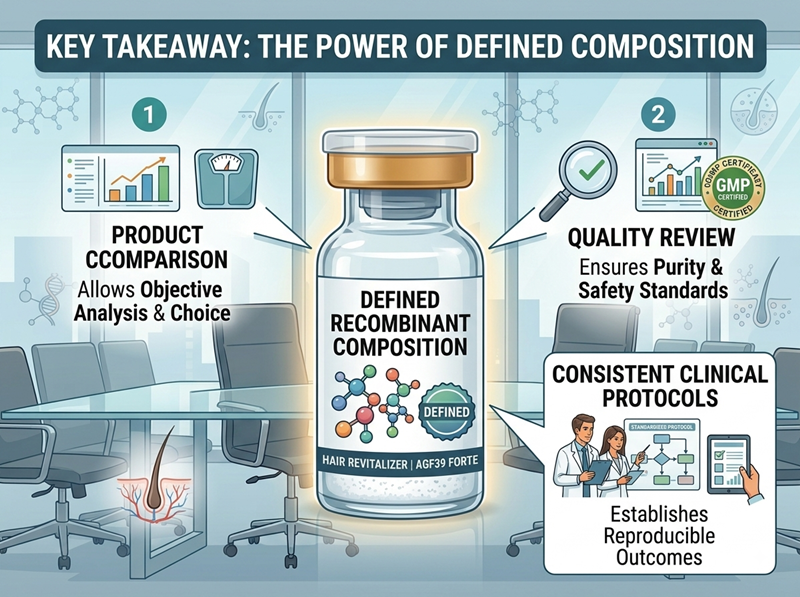
Recombinant protein-based products are built by selecting, producing, purifying, and combining specific signaling proteins.
Their main characteristic is defined composition.
This means that a manufacturer may identify:
– Which proteins are included
– How they are produced
– How their quality is controlled
– How they are formulated
– How the final product should be used
For distributors of Cytokines Mesotherapy for Alopecia products, defined composition can support:
– Product comparison
– Technical education
– Quality review
– Consistent clinical protocols
– Clearer market positioning
However, product evaluation should extend beyond the ingredient list.
The distributor should also review:
– Protein activity
– Purity
– Stability
– Batch consistency
– Delivery method
– Clinical evidence
– Regulatory status
In Part 4, we will examine Exosomes, extracellular vesicles, Secretome, and Conditioned Media—and explain why these terms should never be used interchangeably when evaluating hair-growth products.

This article is provided for scientific, educational, and business-information purposes only. It does not constitute medical advice, diagnosis, a treatment recommendation, or confirmation of regulatory approval. Product classification, permitted claims, distribution requirements, and authorized delivery methods vary by country and jurisdiction. Distributors and healthcare professionals should review current product-specific technical, clinical, and regulatory documentation before commercialization or professional use.
“Some of the images were created using Miricanvas and Gemini.”