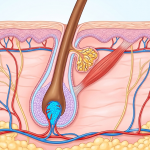
Exosome-based products are not made simply by adding a known ingredient to a serum.
They begin with living source cells. These cells are cultured under controlled conditions, and the extracellular vesicles, or EVs, released into the culture medium are then collected, concentrated, separated, purified, tested, and formulated.
For this reason, the quality of an Exosome-based product cannot be judged by particle count alone.
The final product may be influenced by:
• Source-cell type and quality
• Cell-culture conditions
• Collection timing
• EV concentration, separation, and purification
• Biological potency
• Safety controls
• Storage and transportation
• Batch-to-batch consistency
For distributors, the key question should therefore not simply be:
“How many particles are in the vial?”
A more important question is:
“Which cells produced the material, how was it manufactured, and are its quality and biological activity consistently controlled?
1. Exosome Products Begin with Source Cells
Exosome-based products begin with living cells.
Possible source cells include:
• Adipose-derived stromal cells
• Umbilical cord-derived stromal cells
• Bone marrow-derived stromal cells
• Dermal papilla cells
• Fibroblasts
• Platelets
• Plant cells
• Other cell types
Different source cells may release extracellular vesicles containing different proteins, lipids, RNA cargo, and other biological materials.
As a result, two products marketed as “Exosomes” may be biologically different.
Distributors should confirm:
• The exact source-cell type
• The tissue of origin
• Whether the source is human, animal, plant, or another origin
• Whether the source is traceable
• Why the source was selected
When human-derived cells are used, additional considerations may include donor eligibility, infectious-disease screening, tissue traceability, ethical procurement, and informed consent.

2. Cell Banking and Passage Control Matter
Commercial manufacturing requires repeated cell expansion.
A structured manufacturing system may use:
• A master cell bank
• A working cell bank
• Controlled production batches
A cell-bank system can help manufacturers begin production from a consistent biological source.
Cell passage is also important.
As cells are repeatedly expanded, they may change in:
• Growth rate
• Metabolism
• Protein secretion
• EV production
• EV cargo
• Biological activity
Manufacturers should therefore establish an acceptable passage range and monitor cell quality throughout production.
The same cell type should not automatically be assumed to produce identical vesicles after unlimited expansion.

3. Culture Conditions Are Part of the Product
Even when the same source-cell type is used, different culture conditions may produce different EV characteristics.
Important variables include:
• Culture medium
• Nutrient conditions
• Oxygen level
• Temperature
• pH
• Cell density
• Culture duration
• Bioreactor system
The culture medium itself may contain biological materials such as proteins, growth factors, lipoproteins, or extracellular vesicles.
If these external materials are not properly controlled, they may be collected together with EVs released by the intended source cells.
Manufacturers may use terms such as:
• Serum-free
• Xeno-free
• Animal-component-free
• Chemically defined
These terms are not interchangeable.
Some manufacturers also use preconditioning, priming, hypoxic culture, or three-dimensional culture to modify cellular behavior before EV collection.
Such approaches may be scientifically meaningful, but claims such as “enhanced Exosomes” should be supported by manufacturing, characterization, and potency data.
The word “enhanced” alone is not a quality standard.

4. Conditioned Media and Exosomes Are Not the Same
After cells are cultured, the surrounding fluid may be collected as Conditioned Media.
Conditioned Media may contain:
• Extracellular vesicles
• Soluble cytokines
• Growth factors
• Metabolites
• Culture-medium components
• Cell debris
• Materials released from damaged cells
Conditioned Media is therefore a starting mixture for further processing.
It is not automatically a purified Exosome product.
Additional processing is required to remove cells and debris and then concentrate, separate, and purify the extracellular-vesicle fraction.
This distinction is commercially important.
Conditioned Media, EV-enriched preparations, and purified EV preparations should not automatically be described as the same “Exosome” product.
5. Concentration Is Not the Same as Purification
Because extracellular vesicles may initially be present at relatively low concentrations, manufacturers often use concentration methods such as:
• Ultrafiltration
• Tangential flow filtration
• Centrifugal concentration
• Precipitation
However:
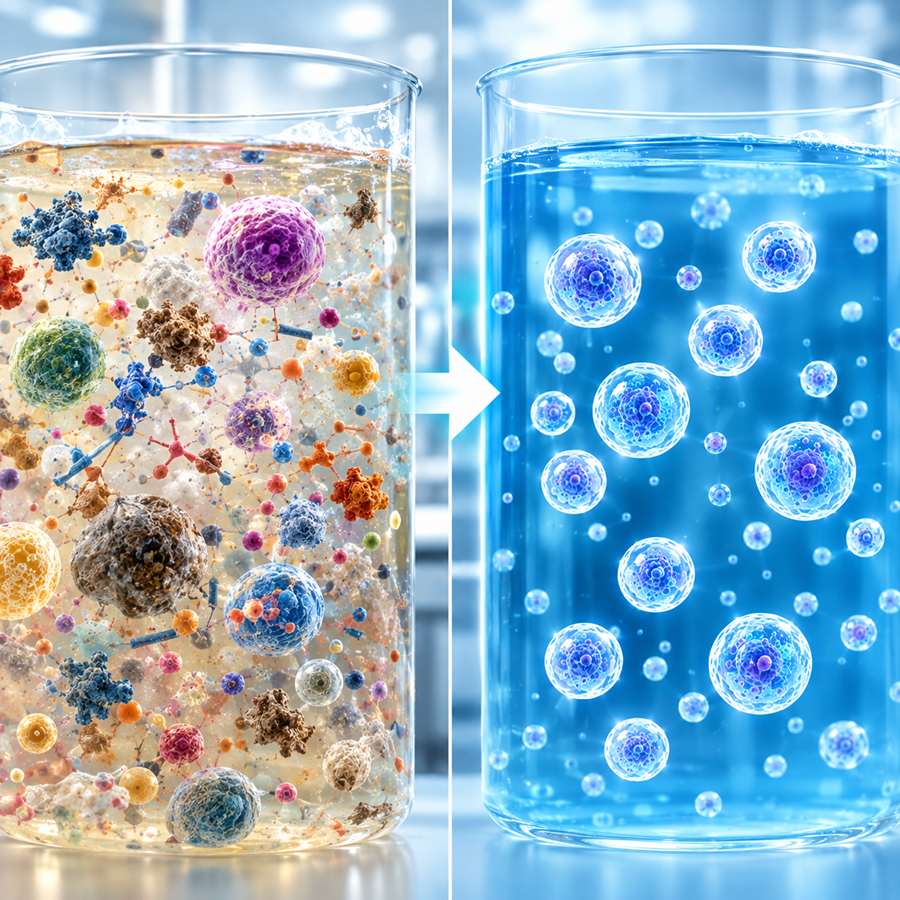
Concentration does not equal purification.
A concentration step may increase both:
• Desired extracellular vesicles
• Undesired proteins and particles
Purification is intended to reduce unwanted materials such as:
• Soluble proteins
• Lipoproteins
• Protein aggregates
• Residual DNA
• Cell debris
• Culture-medium components
• Processing residues
A product described as “highly concentrated” should therefore not automatically be assumed to be highly purified.

6. More Particles Do Not Automatically Mean Better Quality
Exosome products are often promoted with large particle numbers, such as:
• One billion particles
• Five billion particles
• Ten billion particles
Particle count may be useful as one product specification, but it cannot independently confirm:
• Whether every particle is actually an Exosome or EV
• Purity
• Vesicle integrity
• Relevant biological cargo
• Biological activity
• Effective clinical dose
Two products with the same particle count may differ substantially in:
• Source cells
• Culture conditions
• Purity
• Cargo
• Stability
• Potency
A more complete quality assessment may therefore include:
• Particle size and distribution
• Particle concentration
• EV-associated markers
• Contamination markers
• Morphological analysis
• Residual DNA and protein
• Purity
• Biological potency
Distributors should evaluate multiple complementary tests rather than relying on one attractive number.

7. Why Potency Matters
Potency refers to the ability of a product to produce an intended biological response.
For a hair-related product, potency testing may examine effects related to:
• Dermal papilla cell activity
• Cell proliferation
• Cell migration
• Oxidative-stress response
• Vascular signaling
• Hair-related signaling pathways
A useful potency test should be:
• Relevant to the intended product concept
• Quantitative
• Repeatable
• Sensitive to manufacturing changes
• Suitable for batch comparison
This leads to an important commercial question:
The issue is not only how many particles are present, but whether the preparation still performs the biological function it is intended to perform.

8. Safety, Stability, and Batch Consistency
Because Exosome-based products originate from living cells and cell-culture systems, safety control is essential.
Depending on the product category and route of administration, testing may include:
• Sterility
• Bioburden
• Endotoxin
• Mycoplasma
• Adventitious agents
• Residual processing materials
Products intended for topical use may require different safety documentation from products promoted for intradermal injection.
The intended delivery route should therefore match the available safety and regulatory documentation.
Storage conditions may also affect:
• Vesicle aggregation
• Membrane integrity
• Cargo stability
• Biological potency
Freeze-dried products may offer advantages in transport and storage, but lyophilization itself does not prove quality or stability.
Relevant supporting information may include:
• Particle recovery after reconstitution
• Particle-size distribution
• Potency
• Shelf life
• Recommended diluent
• Stability after reconstitution
Commercial distribution also requires batch-to-batch consistency.
Repeated production batches should be compared for characteristics such as:
• Source-cell identity
• Passage number
• Cell viability
• Particle concentration and size
• Marker profile
• Purity
• Residual DNA
• Potency
• Sterility
• Endotoxin
• Mycoplasma
• Stability
A single successful batch is not enough to establish long-term manufacturing reliability.

9. Skin Regeneration and Hair Regeneration Should Be Evaluated Separately
Exosomes and extracellular vesicles are being actively studied in regenerative medicine because of their potential roles in intercellular communication, inflammation modulation, angiogenesis, cell proliferation, and tissue repair.
In areas such as skin regeneration, wound healing, skin aging, and tissue repair, a relatively broader body of preclinical and early clinical research has accumulated, and encouraging regenerative effects have been reported.
However, even in these fields, manufacturing standardization and large-scale randomized clinical evidence remain under development.
The situation is more uncertain in hair-loss treatment and hair regeneration.
Early studies involving Exosome- or EV-based approaches have reported encouraging findings, including possible improvements in hair density or hair thickness.
However, the current evidence remains limited by factors such as:
• Small patient populations
• Different source cells
• Different manufacturing and purification methods
• Different particle doses
• Non-standardized delivery methods
• Combination with procedures such as microneedling
• Short or inconsistent follow-up periods
• Different outcome measurements
For this reason, it is currently difficult to conclude that Exosome-based approaches provide consistent and well-established clinical efficacy for hair loss or hair regeneration across products and protocols.
A more appropriate scientific statement is:
“Exosome-based approaches show promising regenerative potential in skin and tissue-repair applications. In hair-loss treatment, however, early studies are encouraging, but current clinical evidence remains insufficient to establish consistent efficacy or standardized treatment outcomes.”
This distinction is important.
Evidence supporting skin or tissue regeneration should not automatically be used as proof of clinical hair regrowth.
Providing a broad range of nutrients and biologically active materials to skin cells may support cellular activity and proliferation. From this perspective, it may be reasonable in principle to suggest that such an environment could also support the health and activity of scalp cells, which are part of the skin.
However, supporting scalp-cell activity is not the same as promoting hair growth.
This distinction is important because hair growth is governed by a highly regulated biological cycle rather than by scalp condition alone.
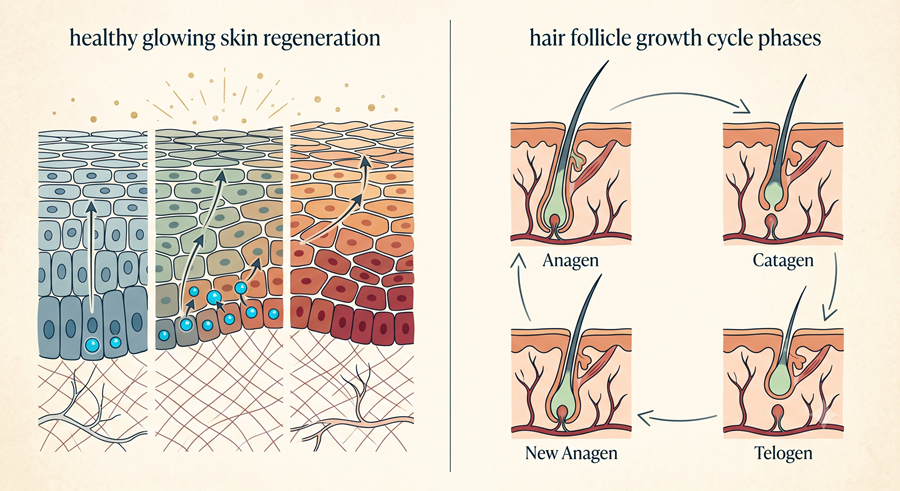
Hair follicles repeatedly progress through distinct phases:
• Anagen, the active growth phase
• Catagen, the transition and regression phase
• Telogen, the resting phase
Therefore, meaningful promotion of hair growth requires more than simply improving the nutritional or regenerative environment of the scalp. From a hair-cycle perspective, an effective hair-growth strategy should ultimately help maintain or increase the proportion of follicles in the anagen phase while reducing the proportion remaining in or entering the telogen phase.
This is where the biological complexity of Exosome-based products becomes particularly important.
Extracellular vesicles derived from adult stem or stromal cell cultures may contain a broad and heterogeneous mixture of signaling molecules. Some of these signals may potentially support cell growth or tissue regeneration, while others may be neutral or may participate in biological pathways that are not favorable to sustained hair growth.
In other words, the biological cargo of an Exosome preparation is not necessarily composed exclusively of hair-growth-promoting factors.
Because the types and concentrations of these signaling factors may vary substantially according to the source cells, culture conditions, and manufacturing process, it may be difficult to determine whether a particular Exosome preparation contains the specific combination of signals required to favorably regulate the hair cycle.
At the same time, the concentrations of many individual signaling molecules within Exosome-based preparations may be relatively low. This may help explain why the presence of diverse biological signals does not necessarily translate into either strong adverse effects or clearly measurable hair-growth effects.
For the specific objective of promoting hair growth, therefore, the number of Exosome particles or the overall richness of biological nutrients may be less important than whether the preparation delivers appropriate hair-growth-related signals at biologically meaningful concentrations.
From this perspective, a hair-growth product would ideally be evaluated according to whether it can provide:
• Clearly identified hair-growth-related signaling factors
• An appropriate balance of signals relevant to hair-cycle regulation
• Sufficient biological activity
• Reproducible concentrations
• Consistent batch-to-batch performance
• Clinical evidence demonstrating visible hair-growth outcomes
Many commercially available Exosome products, however, do not yet provide detailed quantitative information about the specific factors related to hair growth or hair regression contained within the final formulation.
In addition, it may be difficult to determine whether such factors are present at concentrations sufficient to produce a meaningful biological or clinical effect on the hair follicle.
For distributors, this creates an important commercial consideration.
The selection of an Exosome-based hair product should therefore not rely primarily on:
• A large number of particles
• General regenerative claims
• Rich nutritional content
• Stem-cell-derived positioning
• Skin-regeneration evidence alone
Instead, distributors should examine whether the product has clearly characterized hair-related biological activity and whether the final commercial formulation has demonstrated meaningful and reproducible outcomes in patients.
This is particularly important in the hair-loss market because treatment outcomes can be directly perceived by patients themselves. Changes in hair density, hair thickness, shedding, and overall appearance are often visible in the mirror and may also be noticed through the patient’s own tactile perception of the hair and scalp.
As a result, marketing claims that are not supported by clinically meaningful outcomes may eventually become apparent to both patients and clinics.
Likewise, activation of dermal papilla cells or hair-related signaling pathways in laboratory studies does not automatically demonstrate sustained hair regeneration in patients.
10. Essential Questions for Distributors
Before evaluating an Exosome-based hair product for distribution, distributors should review several areas.
Source
• Which cells are used?
• What is the tissue origin?
• Is the source traceable?
• Is a cell-bank system used?
• What passage range is permitted?
Manufacturing
• Which culture medium is used?
• Are culture conditions standardized?
• How are EVs concentrated, separated, and purified?
Quality
• How are particle size and concentration measured?
• Which EV-related markers are tested?
• Are purity and residual DNA evaluated?
Potency
• Is biological activity measured?
• Is the assay relevant to hair or dermal papilla biology?
• Is potency assessed in commercial batches?
Safety and Stability
• Are sterility, endotoxin, and mycoplasma tested?
• Are storage and transportation conditions validated?
• Is biological activity maintained throughout shelf life?
Clinical Evidence
• Was the exact final commercial product studied?
• Which type of hair loss was evaluated?
• Was the recommended dose and delivery method used?
• Can the effect of the product be separated from the effect of microneedling or other combined procedures?

11. Commercial Red Flags
Additional verification is warranted when a supplier:
• Discloses only particle count
• Does not identify the source cells
• Uses Conditioned Media and Exosome as identical terms
• Cannot explain the separation or purification process
• Provides no potency information
• Cannot provide data from multiple batches
• Claims effectiveness for all types of hair loss
• Uses skin-regeneration studies as direct evidence of hair-regrowth efficacy
• Uses research from unrelated Exosome products
• Claims “permanent follicle regeneration” or “guaranteed hair regrowth” without product-specific evidence
• Promotes injection without route-specific safety and regulatory documentation
These issues do not automatically mean a product is unsuitable, but they indicate that further technical review is necessary.

Key Takeaway
Exosome-based hair products are influenced by the entire manufacturing system:
- Source-cell selection
- Cell banking and passage control
- Controlled culture
- Conditioned Media collection
- Removal of cells and debris
- EV concentration and separation
- Purification
- Characterization
- Potency and safety testing
- Formulation, stability, and batch consistency
For distributors, the most important evaluation criteria are:
• Source-cell transparency
• Controlled manufacturing
• Appropriate purification
• Multiple characterization methods
• Biological potency
• Safety
• Stability
• Batch consistency
• Commercial-scale reproducibility
One additional principle is especially important in the hair-loss market:
Exosome technology may have regenerative potential, but regenerative potential and clinically established hair-loss efficacy are not the same thing.
The research supporting skin and tissue regeneration should not automatically be extended to hair regeneration.
Although early hair-loss studies are promising, there is not yet sufficient evidence to state that Exosome-based products consistently produce reliable hair-regrowth outcomes across different products, source cells, manufacturing methods, and clinical protocols.
For this reason, each Exosome-based hair product should be evaluated individually based on its source cells, manufacturing process, potency, final formulation, delivery method, safety documentation, and product-specific clinical evidence.


This article is provided for scientific, educational, and business-information purposes only.
It does not constitute medical advice, diagnosis, a treatment recommendation, or confirmation of regulatory approval.
Exosome and extracellular-vesicle products may differ substantially in source cells, manufacturing process, purification, biological activity, safety, clinical evidence, and regulatory status.
Evidence from skin regeneration, wound healing, or laboratory cell studies should not automatically be interpreted as proof of clinical hair regeneration for a specific commercial product.
Distributors and healthcare professionals should review current product-specific technical, clinical, quality, and regulatory documentation before commercialization or professional use.