The global market for professional hair-loss products is expanding beyond conventional topical treatments and oral medications.
Distributors and business professionals are increasingly reviewing products described as:
- Cytokines Mesotherapy for Alopecia
- Recombinant growth-factor formulations
- Exosome-based products
- Stem Cell Conditioned Media
- Secretome-based solutions
- Regenerative scalp treatments
These product categories may appear to belong to the same field because they all refer to cellular communication, regeneration, or the hair-follicle environment.
However, they do not contain the same materials, follow the same manufacturing process, or require the same quality-control standards.
Before comparing products, a distributor needs to understand one basic principle:
Hair growth is controlled by a network of biological signals rather than by one ingredient or one pathway.
This first article in our nine-part series explains the signaling concept behind hair growth and introduces the basic difference between recombinant protein-based and Exosome-based approaches.
The Hair Follicle Is a Living Mini-Organ
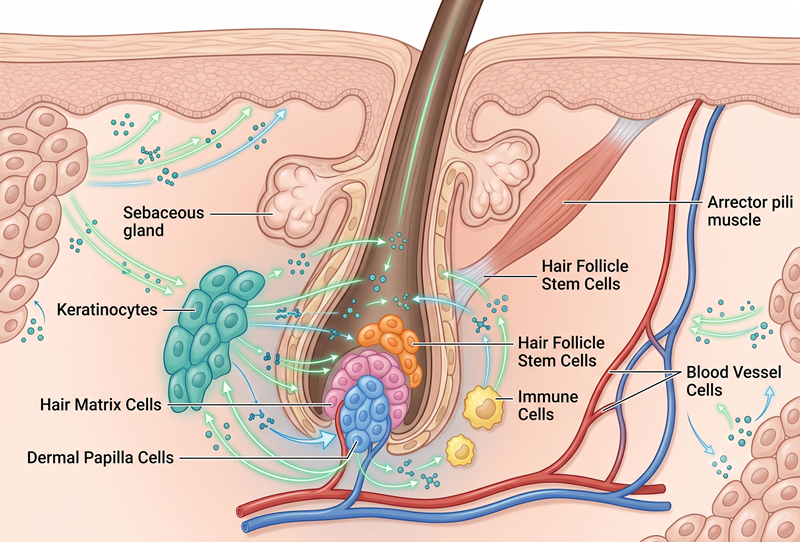
A visible hair strand is produced by a complex structure located inside the scalp: the hair follicle.
The follicle contains or interacts with several types of cells, including:
- Dermal papilla cells
- Keratinocytes
- Hair matrix cells
- Hair-follicle stem cells
- Blood-vessel cells
- Immune cells
- Dermal sheath cells
These cells continuously exchange biological information.
The signals help regulate:
- When hair begins to grow
- How long active growth continues
- How thick the hair shaft becomes
- When the follicle enters a resting stage
- How the follicle responds to hormones, inflammation, stress, or aging
The hair follicle should therefore be understood as a small biological system rather than a simple root that needs nutrition.
The Hair-Growth Cycle
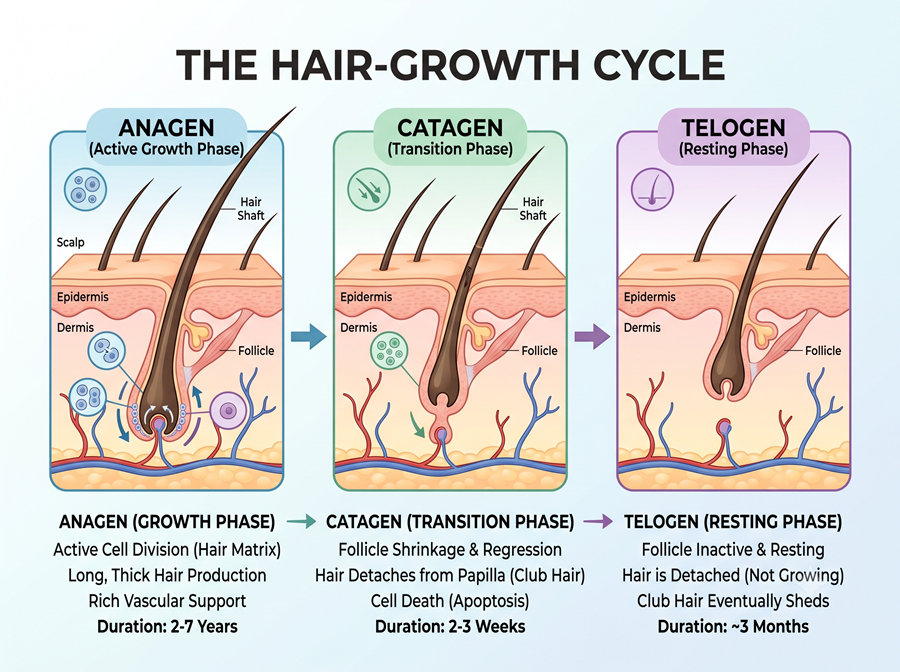
Hair follicles repeatedly move through different stages.
Anagen: Active Growth
During anagen, cells inside the follicle divide actively and produce the hair shaft.
The follicle requires:
- Cellular activity
- Nutritional and vascular support
- Growth-related signals
- Communication between dermal and epithelial cells
The length of the anagen phase strongly influences how long and thick the hair can grow.
Catagen: Transition
Catagen is a short transition stage.
Active hair production slows, and the lower part of the follicle begins to regress in a controlled manner.
Telogen: Rest
During telogen, the follicle remains relatively inactive.
The existing hair may eventually shed before the follicle begins a new growth cycle. Hair loss can occur when the balance among these stages changes. For example, follicles may remain in the resting phase longer, enter the resting phase too early, or become progressively smaller over repeated cycles
What Are Cellular Signals?
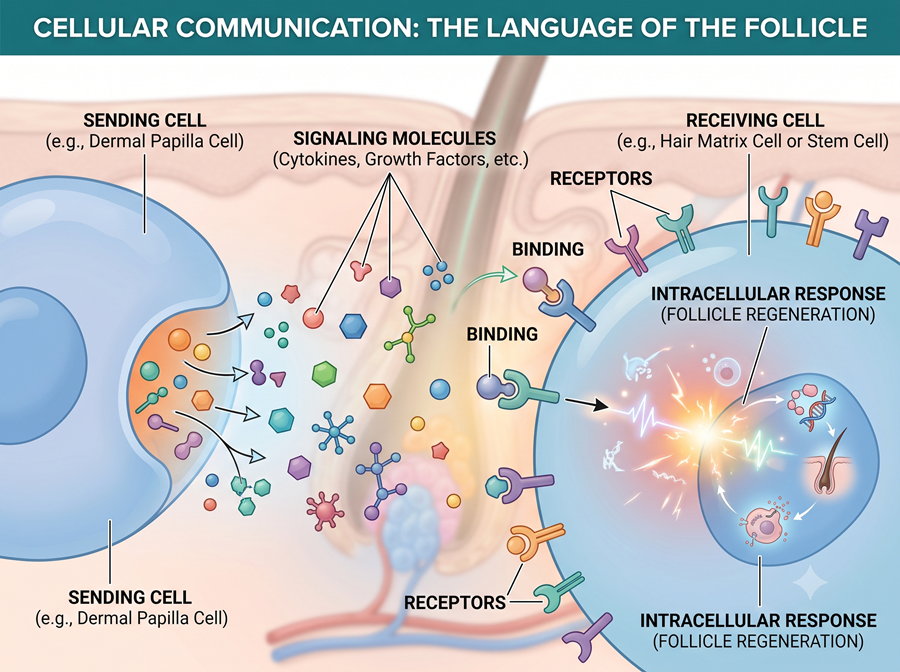
Cells communicate through many types of biological signals.
Among the most relevant to professional hair-loss products are:
- Cytokines
- Growth factors
- Hormones
- Enzymes
- Lipids
- RNA and other nucleic acids
These signals may influence:
- Cell proliferation
- Cell survival
- Tissue repair
- Blood-vessel support
- Inflammation
- Oxidative stress
- Hair-cycle regulation
A product designed for the scalp may attempt to deliver selected signals or influence the environment in which follicular cells communicate.
What Are Cytokines?
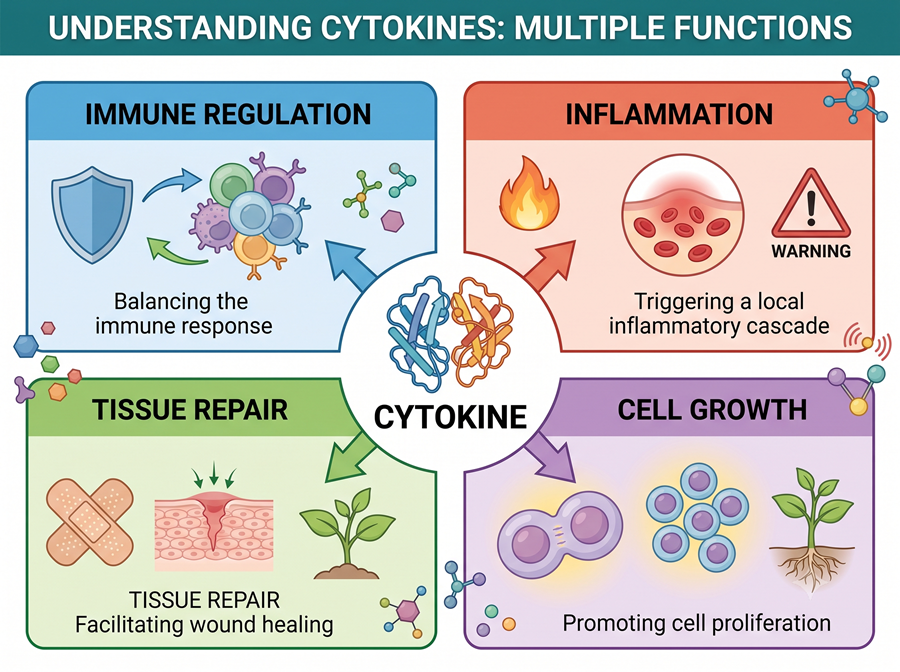
Cytokines are signaling proteins used by cells to communicate.
They participate in many biological processes, including:
- Immune regulation
- Inflammation
- Tissue repair
- Cell growth
- Cell survival
The word “cytokine” does not describe one specific ingredient.
It refers to a broad group of proteins with different functions.
This is important for distributors because a product promoted as a “cytokine product” should disclose:
- Which cytokines are included
- How they were produced
- How much is included
- Whether they remain biologically active
The word alone is not enough to define product quality.
What Are Growth Factors?
Growth factors are signaling proteins that mainly influence cell growth, proliferation, survival, migration, or differentiation.
The terms “cytokine” and “growth factor” may overlap.
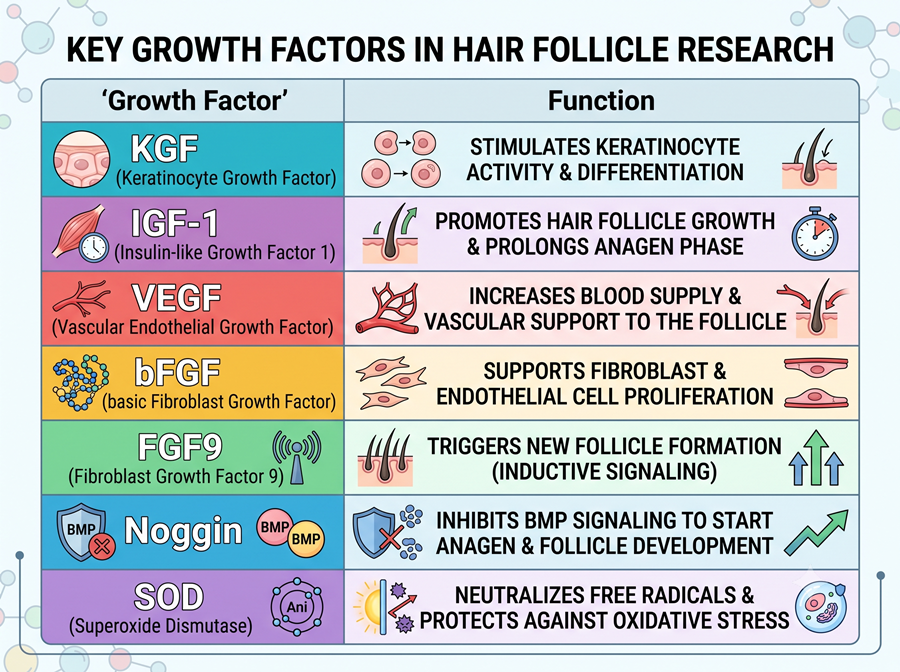
Proteins frequently discussed in hair-follicle research include:
- KGF
- IGF-1
- VEGF
- bFGF
- FGF9
- Noggin
- SOD
These proteins are associated with different areas of follicular biology.
For example, they may relate to:
- Keratinocyte activity
- Dermal papilla signaling
- Vascular support
- Oxidative-stress regulation
- Hair-cycle signaling
They should not be treated as identical ingredients.
A product containing several growth factors may be designed to support multiple aspects of the follicular environment, but the number of ingredients alone does not establish clinical performance.
Why One Ingredient Is Usually Not Enough
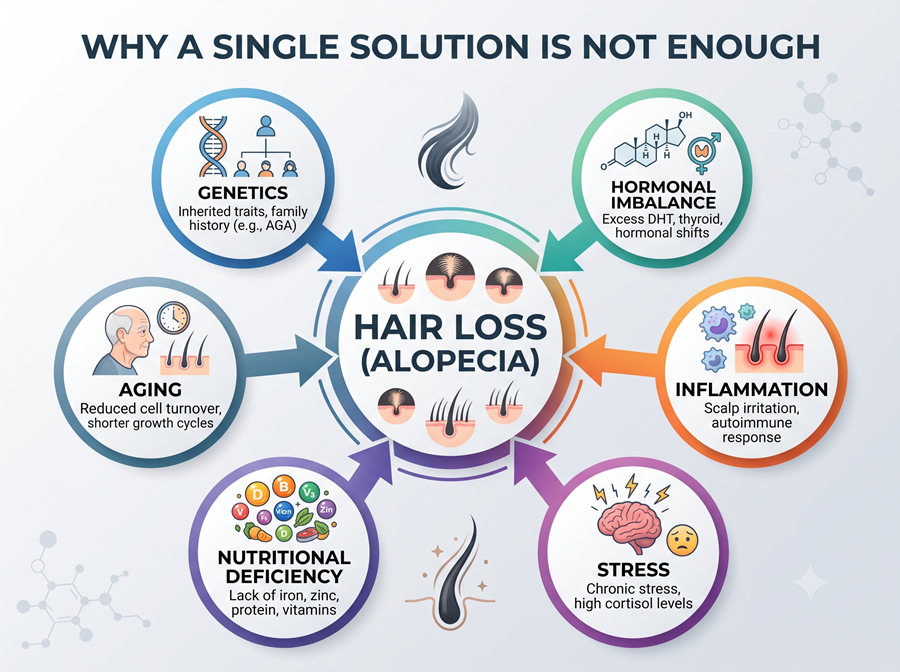
Hair loss can be influenced by many factors, including:
- Genetics
- Androgen signaling
- Inflammation
- Autoimmune activity
- Nutritional deficiency
- Hormonal conditions
- Medication
- Aging
- Stress
- Follicular miniaturization
For this reason, hair loss is rarely explained by the absence of one growth factor.
A product may support one pathway while leaving other causes unchanged.
This is why professional hair-loss protocols often combine:
- Multiple biological signals
- Delivery procedures
- Scalp-care products
- Medical treatment
- Patient-specific management
From a distribution perspective, products should not be presented as universal solutions for every type of alopecia.
Their intended use, target customer, treatment protocol, and supporting evidence should be clearly defined.
Two Main Signaling-Based Approaches
Two technology categories are increasingly discussed in the hair-growth market.
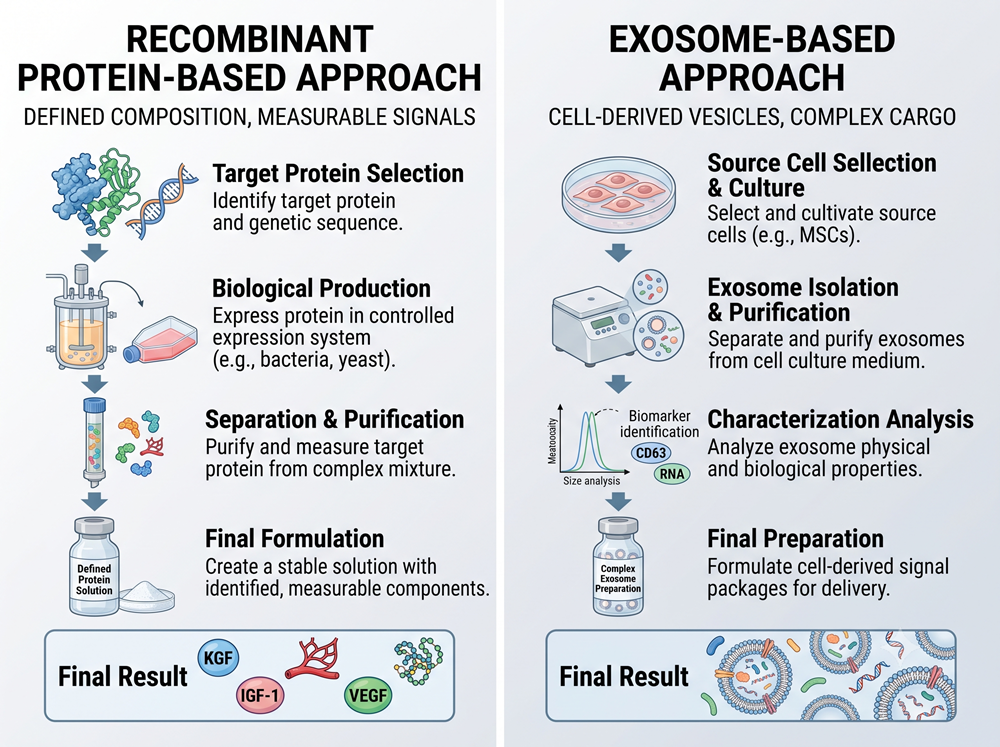
1. Recombinant Protein-Based Approach
A recombinant protein is produced by introducing a selected genetic sequence into a controlled biological production system.
The general process is:
- Select the target protein.
- Produce it through a biological expression system.
- Separate and purify it.
- Test its identity, concentration, purity, and activity.
- Combine it with other selected ingredients when required.
The final formulation can therefore be designed with identified and predetermined components.
This is often referred to as a defined-composition approach.
2. Exosome-Based Approach
An Exosome-based preparation begins with living source cells.
- The general process is:
- Select and culture the source cells.
- Collect the fluid surrounding the cells.
- Concentrate and separate extracellular vesicles.
- Purify and characterize the vesicle preparation.
- Test its physical and biological properties.
The final preparation may contain vesicles carrying:
- Proteins
- Lipids
- RNA
- Other cell-derived cargo
Its composition depends heavily on the source cells and manufacturing process.
This is therefore a more process-defined approach.
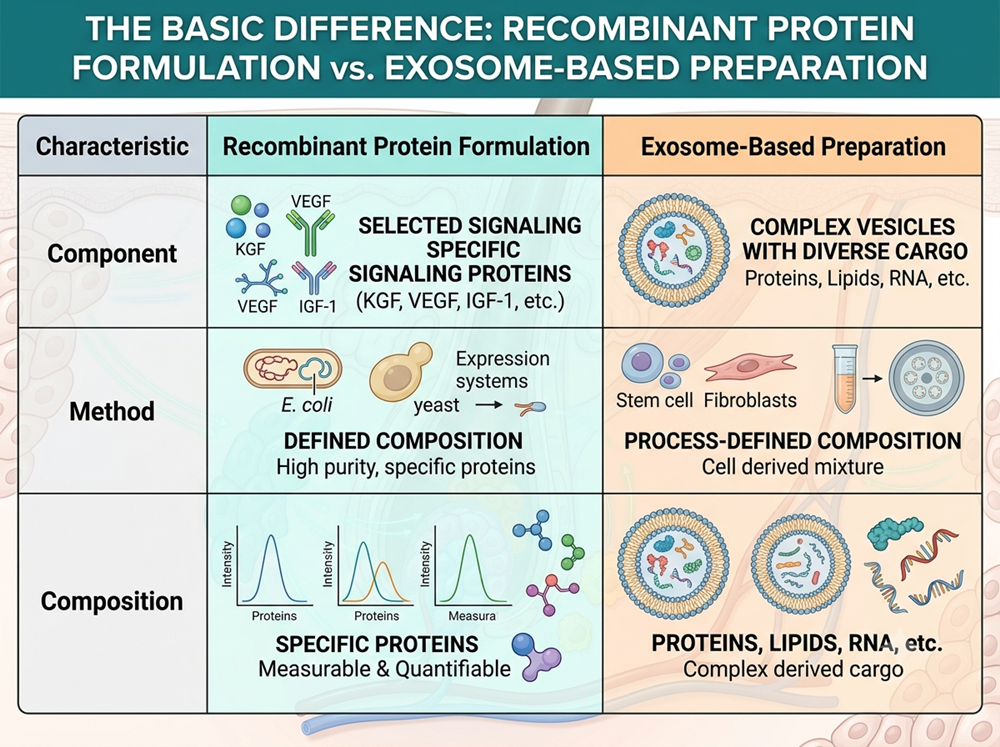
The Basic Difference
The clearest distinction is how biological information is delivered.
Recombinant Protein Formulation
Delivers selected and measurable signaling proteins.
The manufacturer may specify:
- Which proteins are present
- The amount of each protein
- Supporting ingredients
- Product specifications
Exosome-Based Preparation
Delivers complex vesicles produced by source cells.
The final characteristics may vary according to:
- Cell type
- Donor
- Passage number
- Culture medium
- Oxygen conditions
- Separation method
- Purification
- Storage
In simple terms:
Recombinant formulations deliver selected signals, while Exosome-based preparations deliver complex cell-derived packages of signals.
Neither model is automatically superior.
They require different manufacturing, documentation, and commercial evaluation standards.
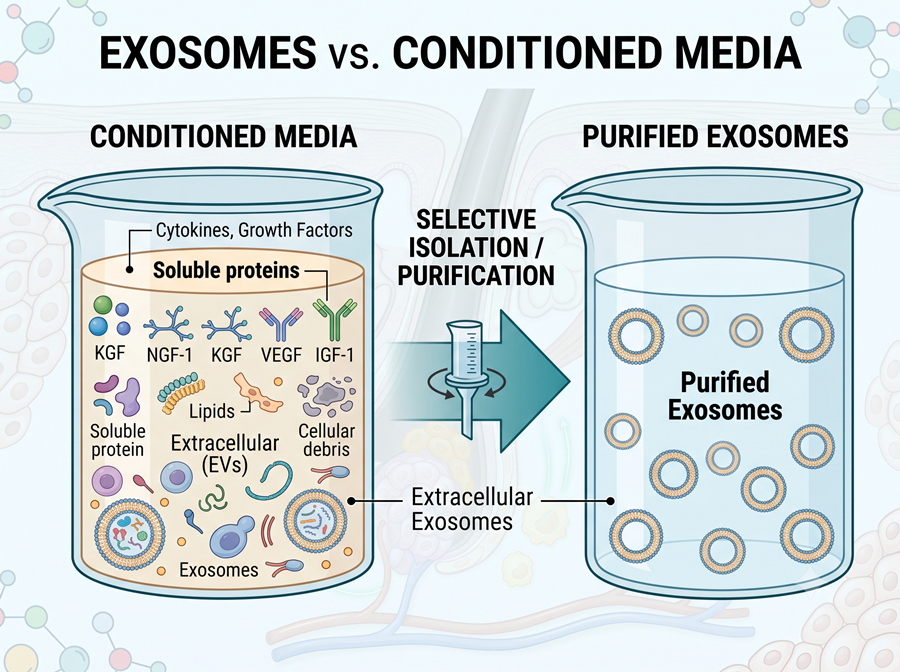
Exosomes Are Not the Same as Conditioned Media
This distinction is especially important for distributors.
Conditioned Media is the total fluid collected after cells have been cultured.
It may contain:
- Soluble proteins
- Cytokines
- Growth factors
- Extracellular vesicles
- Metabolites
- Culture-medium components
- Cell-derived debris
Exosomes or other extracellular vesicles may be present in Conditioned Media, but they represent only part of the total mixture.
Additional separation and purification are required to produce an EV- or Exosome-enriched preparation.
Therefore, the following terms should not be used as if they mean the same thing:
- Exosome
- Extracellular vesicle
- Conditioned Media
- Stem Cell Conditioned Media
- Secretome
A distributor should request an exact technical description of the material rather than relying only on marketing terminology.
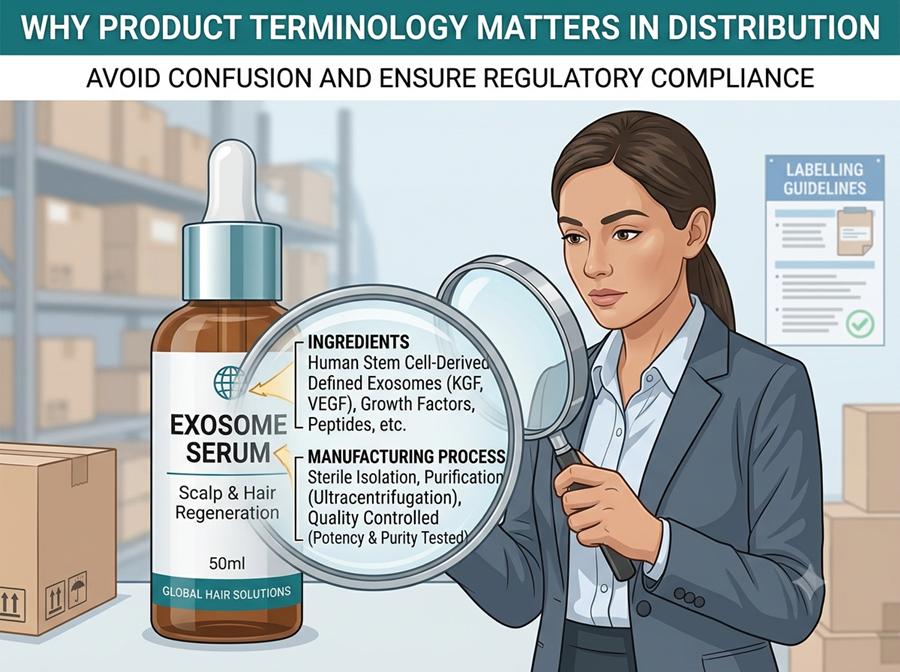
Why Product Terminology Matters in Distribution
Incorrect or exaggerated terminology can create several business risks:
- Misleading product claims
- Regulatory problems
- Difficulty comparing suppliers
- Confusion among clinics
- Inconsistent distributor training
- Loss of buyer confidence
For example, a product labeled “Exosome” may actually be:
- Concentrated Conditioned Media
- An EV-enriched solution
- A multi-ingredient serum
- A Secretome-based product
Similarly, a “growth-factor solution” may contain:
- Recombinant proteins
- Cell-derived proteins
- Platelet-derived material
- Synthetic peptides
- Unspecified biological mixtures
The distributor should verify what the product actually contains
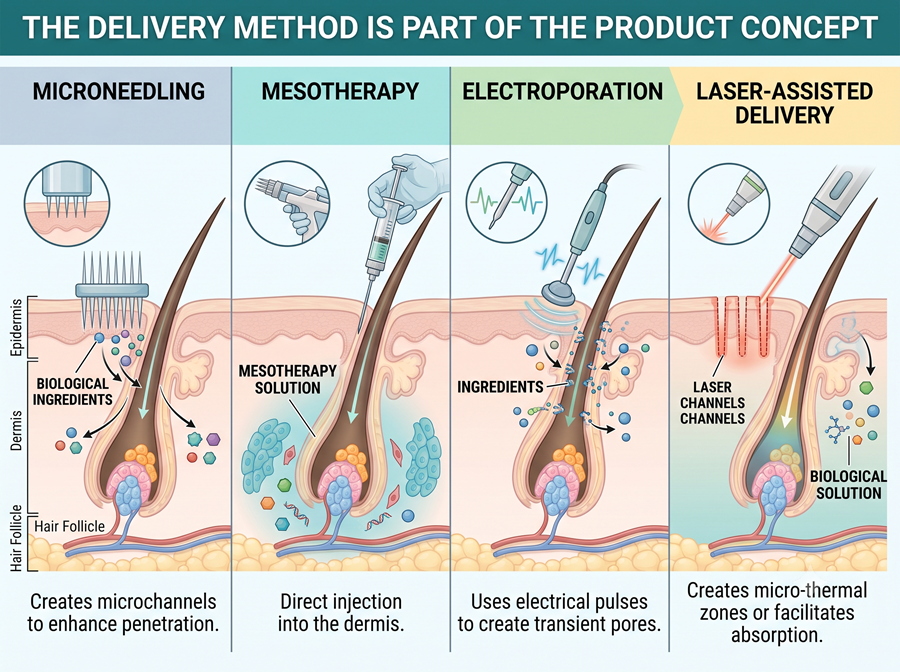
The Delivery Method Is Part of the Product Concept
Biological ingredients do not automatically reach the intended follicular area when placed on the scalp.
Professional protocols may use:
- Microneedling
- Mesotherapy
- Manual injection
- Mesogun
- Electroporation
- Laser-assisted delivery
The delivery method can affect:
- Penetration
- Tissue distribution
- Effective dose
- Safety
- Treatment consistency
It may also produce biological effects of its own.
For example, microneedling can create temporary microchannels while activating wound-healing signals.
Therefore, the result of a combined treatment should not automatically be attributed only to the solution.
From a commercial perspective, the product and delivery method should be evaluated as one protocol when they are intended to be used together.
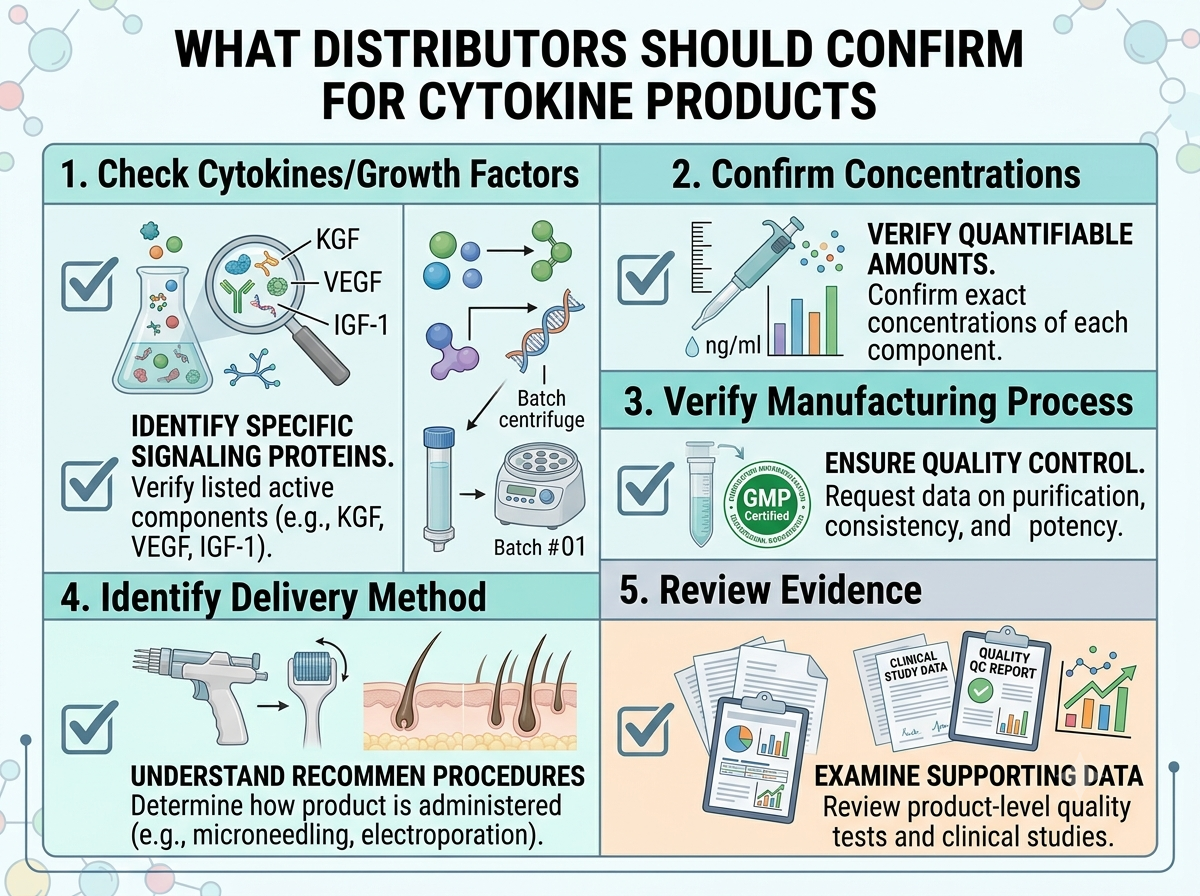
What Distributors Should Confirm First
Before reviewing detailed clinical claims, distributors should ask five basic questions.
1. What is the product category?
Is it a recombinant protein formulation, Conditioned Media, Secretome, EV preparation, or Exosome-based product?
2. What exactly does it contain?
Are the proteins, cells, vesicles, or supporting ingredients clearly identified?
3. How was it manufactured?
Is the process based on recombinant protein production or cell culture and vesicle separation?
4. How is quality measured?
Does the manufacturer provide information on identity, concentration, purity, potency, stability, and batch consistency?
5. How is it intended to be used?
Is the product intended for topical use, microneedling, electroporation, mesotherapy, or another professional procedure?
These questions create the foundation for product comparison.
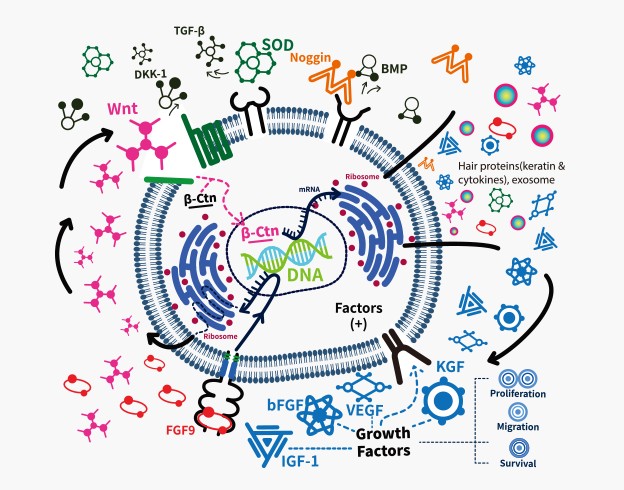
What This Means for Cytokines Mesotherapy Products
A Cytokines Mesotherapy for Alopecia product may use selected signaling proteins as part of a professional scalp protocol.
When evaluating such a product, distributors should confirm:
- Whether the cytokines or growth factors are recombinant
- Which proteins are included
- Whether their concentrations are specified
- Whether the formulation is lyophilized or liquid
- How it should be reconstituted
- Which delivery method is recommended
- Whether the complete protocol has supporting evidence
A list of scientifically relevant proteins is useful, but it should be supported by product-level quality information.
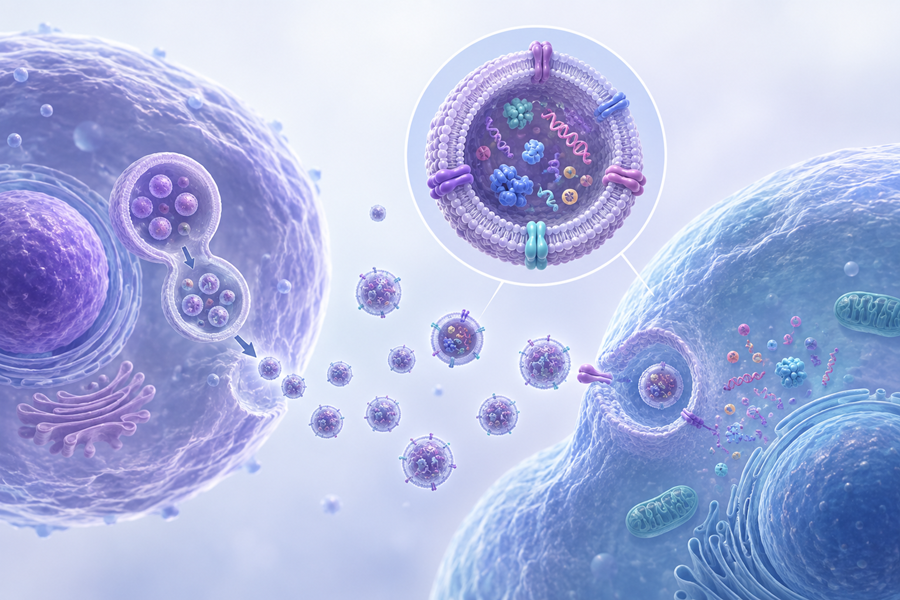
What This Means for Exosome-Based Products
For Exosome-based products, distributors should confirm:
- The exact source cell
- Whether the material is Exosomes, EVs, or Conditioned Media
- How the vesicles were separated and purified
- How particle size and concentration were measured
- Whether non-vesicular impurities were evaluated
- Whether biological potency was tested
- Whether batches are consistent
- Whether the intended use is permitted in the target market
The term “Exosome” should be treated as the beginning of product evaluation, not the conclusion.

Key Takeaway
Hair growth is regulated by a network of cells and biological signals.
This helps explain why both recombinant protein-based and Exosome-based products are being developed for professional hair-loss applications.
The two approaches are connected to the same broad idea—cellular communication—but they are fundamentally different.
- Recombinant protein formulations deliver selected and measurable proteins.
- Exosome-based preparations deliver complex cell-derived vesicles and cargo.
- Conditioned Media is not the same as purified Exosomes.
- A delivery method may influence both product performance and clinical results.
- Technology names do not establish quality or effectiveness.
For distributors and business professionals, the most important first step is to understand exactly what the product is.
Only then can manufacturing quality, clinical evidence, regulatory status, and commercial suitability be evaluated.
In Part 2, we will examine dermal papilla cells, the signaling center of the hair follicle, and explain why both Cytokines Mesotherapy and Exosome-based products often focus on this cell population.

Medical and Regulatory Disclaimer
This article is provided for scientific, educational, and business-information purposes only. It does not constitute medical advice, diagnosis, a treatment recommendation, or confirmation of regulatory approval. Product classification, permitted claims, distribution requirements, and authorized delivery methods vary by country and jurisdiction. Distributors and healthcare professionals should review current product-specific technical, clinical, and regulatory documentation before commercialization or professional use.
“Some of the images were created using Miricanvas and Gemini.”