When evaluating professional hair-growth products, distributors frequently encounter claims such as:
- Supports dermal papilla cells
- Activates hair-follicle signaling
- Promotes the anagen phase
- Supports follicular regeneration
- Delivers growth-related signals
To assess these claims, it is important to understand the role of dermal papilla cells.
Dermal papilla cells are specialized cells located at the base of the hair follicle. They do not directly produce the visible hair shaft, but they help coordinate many of the signals that control hair growth and cycling.
This is why dermal papilla cells are frequently used as a key biological target in research involving:
- Cytokines Mesotherapy for Alopecia
- Recombinant growth factors
- Extracellular vesicles
- Exosome-based products
- Scalp-delivery devices
- Combination hair-growth protocols
For distributors and business professionals, understanding dermal papilla cells helps clarify how products are positioned, what evidence should be requested, and which marketing claims require closer review.
Where Are Dermal Papilla Cells?
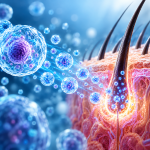
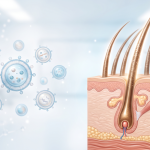
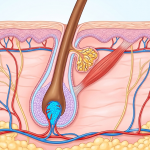
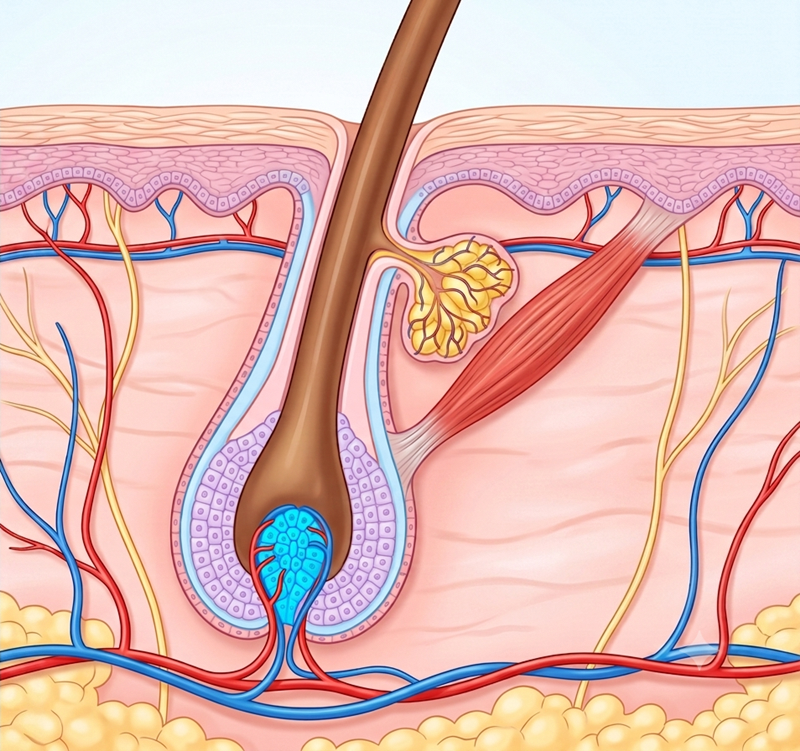
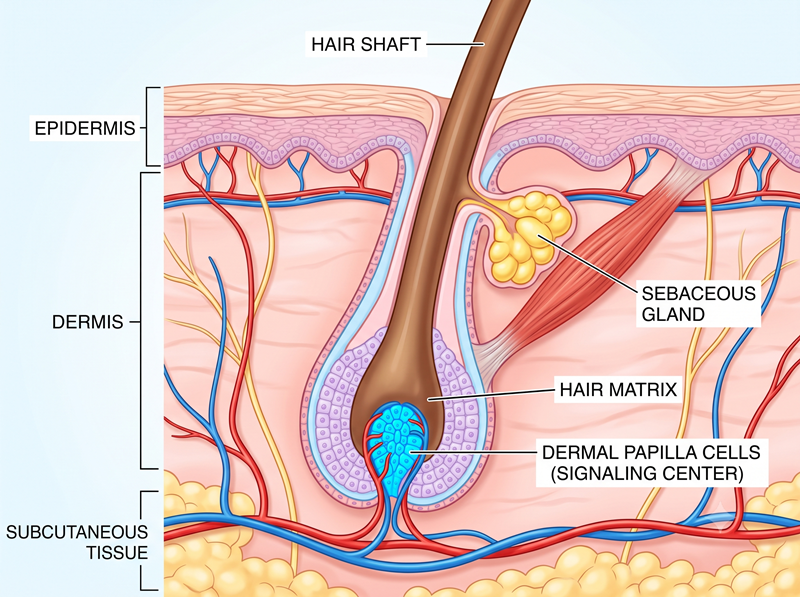
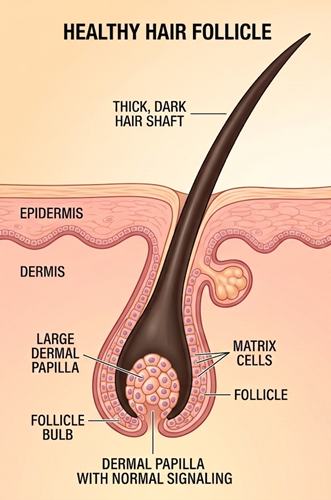
The dermal papilla is located at the bottom of the hair follicle.
It consists of a small group of specialized cells surrounded by hair-producing cells, supporting tissue, and blood vessels.
Its position allows it to receive information from the scalp environment and communicate with other follicular cells.
Dermal papilla cells may respond to:
- Hormones
- Growth factors
- Inflammatory signals
- Oxidative stress
- Nutritional and vascular conditions
- Signals from nearby epithelial cells
They then release or regulate signals that influence the behavior of the follicle.
For this reason, the dermal papilla is often described as a signaling center rather than a structure that physically builds the hair shaft.
What Do Dermal Papilla Cells Control?
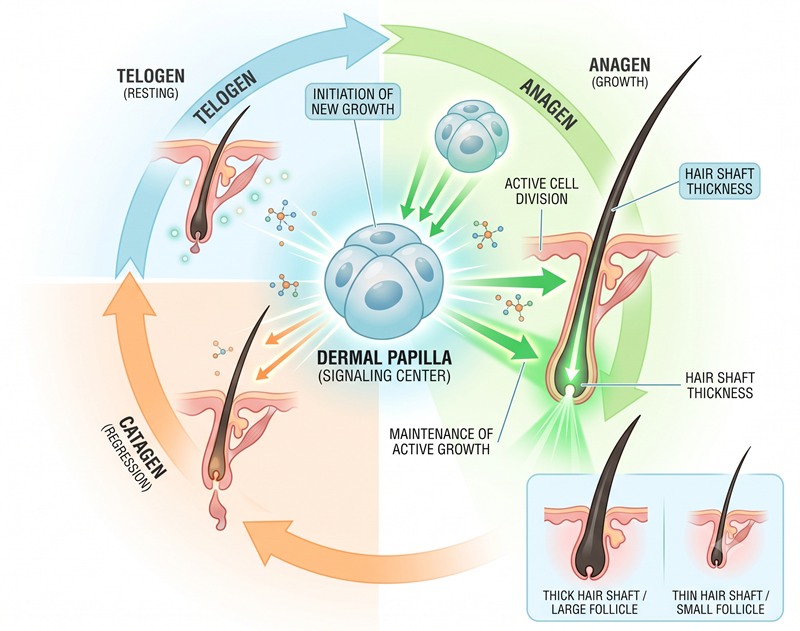
Dermal papilla cells participate in processes related to:
- Initiation of a new hair-growth phase
- Maintenance of active hair growth
- Hair-shaft thickness
- Follicle size
- Communication with hair matrix cells
- Interaction with hair-follicle stem cells
- Response to androgen-related signals
Their activity changes during the hair cycle.
During the anagen phase, dermal papilla cells communicate actively with surrounding hair-producing cells.
As the follicle enters catagen and telogen, the signaling environment changes.
When a new growth cycle begins, communication between the dermal papilla and nearby stem or progenitor cells becomes important again.
The Dermal Papilla Does Not Work Alone
Although dermal papilla cells are important, they do not independently control hair growth.
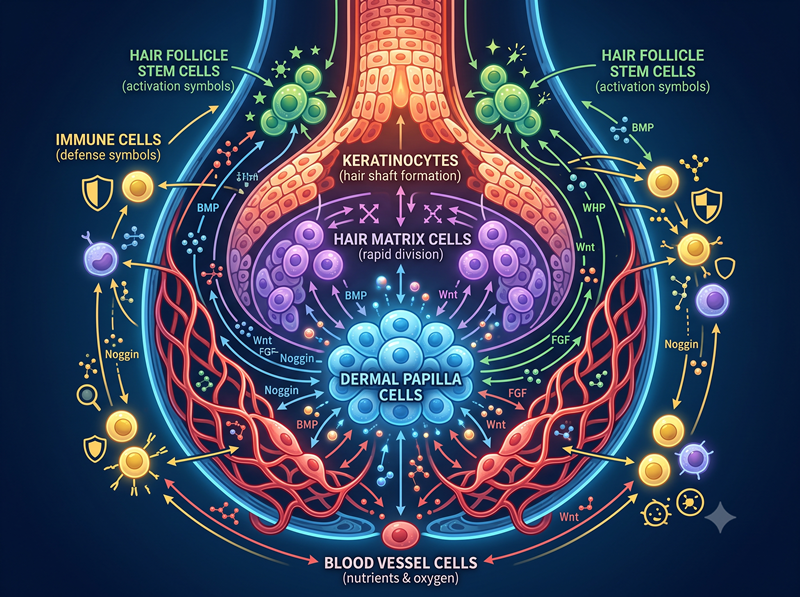
The hair follicle operates through communication among several cell groups.
Hair Matrix Cells
Hair matrix cells divide rapidly during the active growth phase and contribute directly to formation of the hair shaft.
Dermal papilla cells provide signals that help regulate their activity.
Keratinocytes
Keratinocytes form major parts of the hair shaft and follicular structures.
They respond to signaling proteins and also produce signals of their own.
Hair-Follicle Stem Cells
Hair-follicle stem cells act as a regenerative reserve.
They remain relatively inactive during resting periods and become activated when a new hair cycle begins.
Blood-Vessel Cells
Active follicles require oxygen, nutrients, and circulating signals.
Vascular support is therefore part of the follicular environment.
Immune Cells
Immune and inflammatory signals can influence follicular activity.
This is especially relevant when distinguishing androgenetic alopecia from autoimmune or inflammatory hair-loss conditions.
The follicle should therefore be viewed as a communication network rather than a group of independent cells.
Why Dermal Papilla Cells Matter in Androgenetic Alopecia
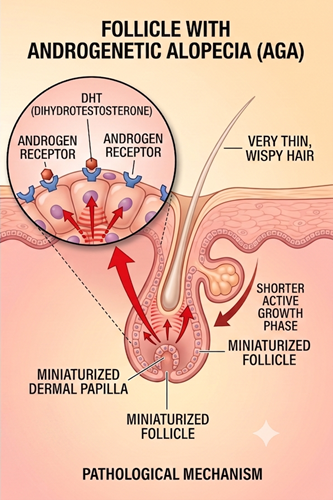
Androgenetic alopecia involves progressive miniaturization of genetically susceptible follicles.
In these follicles, androgen-related signaling can change the behavior of dermal papilla cells.
Over repeated hair cycles, the follicle may show:
- Shorter active growth periods
- Longer resting periods
- Reduced hair-shaft diameter
- Smaller follicular structures
- Gradual loss of visible density
Dermal papilla cells are important in this process because they contain androgen receptors and influence surrounding hair-producing cells.
However, androgenetic alopecia is not caused by dermal papilla cells alone.
Genetics, hormones, follicular sensitivity, aging, inflammation, and other factors may also contribute.
For distributors, this means that a product described as supporting dermal papilla cells should not automatically be marketed as a complete solution for every cause of hair loss.
Major Signals Related to Dermal Papilla Activity
Several signaling proteins are frequently discussed in hair-follicle research.
They have different roles and should not be treated as interchangeable ingredients.
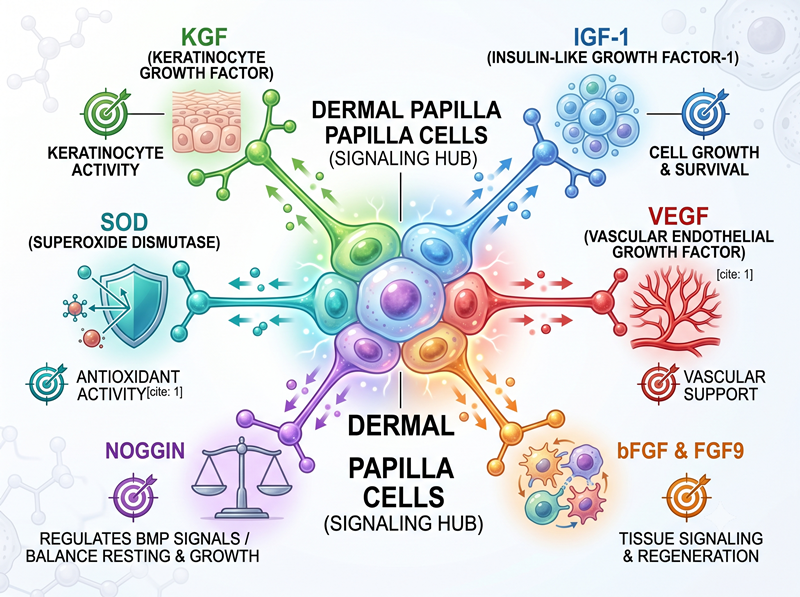
KGF
KGF is associated mainly with epithelial and keratinocyte activity.
It may support communication between dermal and epithelial parts of the follicle.
IGF-1
IGF-1 is related to cell growth, survival, and metabolic signaling.
It has been investigated in connection with dermal papilla cells, keratinocytes, and maintenance of the active growth phase.
VEGF
VEGF is associated with vascular support.
It may relate to the blood-vessel environment surrounding actively growing follicles.
bFGF and FGF9
These proteins belong to the fibroblast growth factor family.
They have been studied in relation to tissue signaling, follicular development, cell activity, and regeneration.
Noggin
Noggin regulates selected BMP-related signals.
This may influence the balance between resting and growth-related conditions within the follicle.
SOD
SOD is an antioxidant enzyme associated with regulation of oxidative stress.
It may help support the local cellular environment, although antioxidant activity alone cannot address every cause of alopecia.
The commercial value of a multi-protein formulation depends not only on the presence of these ingredients but also on their identity, concentration, activity, stability, and supporting evidence.
How Cytokines Mesotherapy Relates to Dermal Papilla Cells
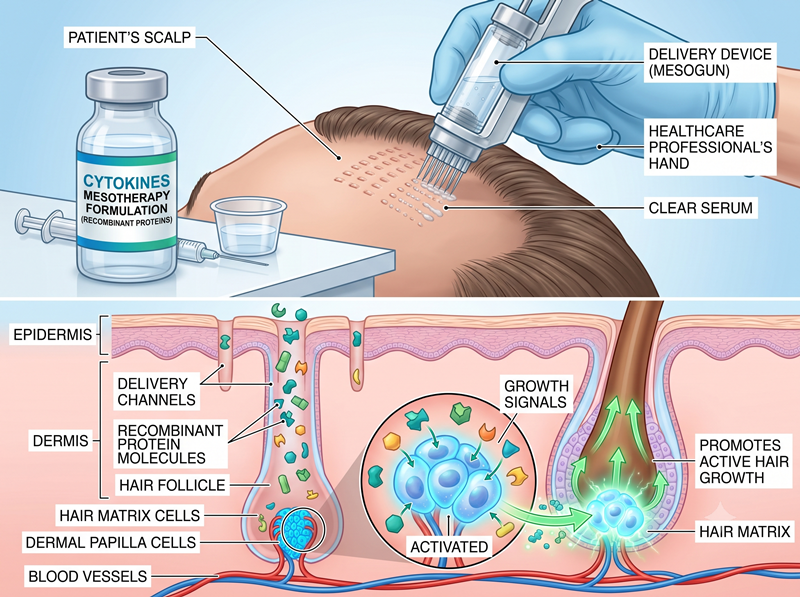
Cytokines Mesotherapy for Alopecia may use selected signaling proteins as part of a professional scalp protocol.
The general concept is:
1. Select signaling proteins related to follicular biology.
2. Produce and formulate those proteins.
3. Deliver them to the scalp using a professional method.
4. Support communication within the follicular environment.
A defined recombinant protein formulation may allow the manufacturer to specify:
- Which proteins are included
- The amount of each protein
- Supporting ingredients
- Storage and reconstitution conditions
- Recommended delivery protocol
AGF39™ is an example of this defined-composition approach. AesMed’s materials identify recombinant protein components including KGF, IGF-1, VEGF, bFGF, Noggin, FGF9, and SOD, together with amino acids, vitamins, minerals, and other supporting ingredients.
For distributors, the important point is not simply that a formulation contains growth factors.
The key questions are:
– Are the individual proteins clearly identified?
– Are their concentrations controlled?
– Is biological activity tested?
– Is the complete formulation supported by clinical or technical documentation?
– Is the recommended professional protocol clearly defined?
How Exosome-Based Products Relate to Dermal Papilla Cells
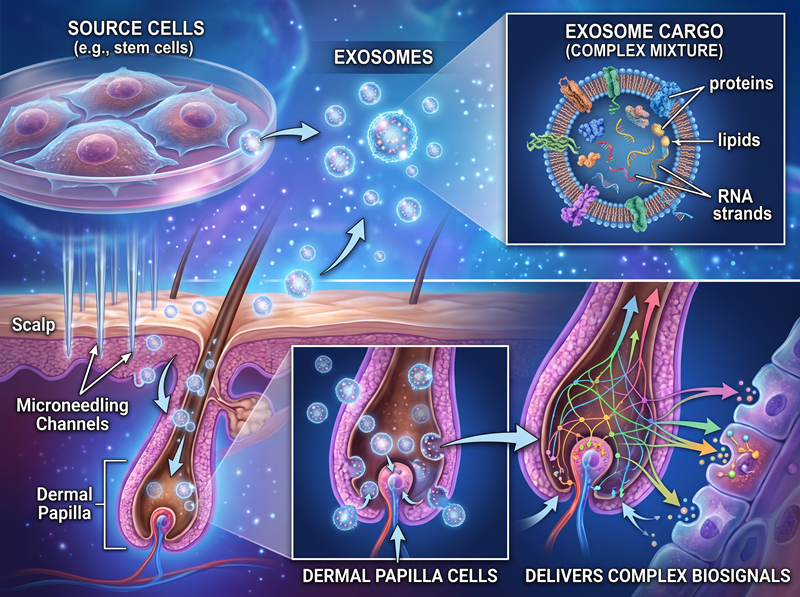
Exosome-based products use extracellular vesicles released by source cells.
These vesicles may carry:
– Proteins
– Lipids
– RNA
– Other biological cargo
Research has explored whether these vesicles can influence dermal papilla cells through multiple signals delivered together.
The general concept is:
1. Culture selected source cells.
2. Collect the substances released by those cells.
3. Separate or enrich extracellular vesicles.
4. Characterize the resulting preparation.
5. Evaluate its effect on target cells such as dermal papilla cells.
The biological cargo may vary according to:
- Source-cell type
- Donor
- Cell passage
- Culture medium
- Oxygen conditions
- Collection timing
- Separation and purification
- Storage
This means that two products described as Exosomes may not produce the same dermal papilla response.
A distributor should not rely only on a claim such as “activates dermal papilla cells.”
The manufacturer should explain:
- Which cells produced the vesicles
- How the vesicles were separated
- How they were characterized
- How biological activity was evaluated
- Whether repeated batches produce comparable results
Laboratory Evidence and Clinical Evidence Are Different
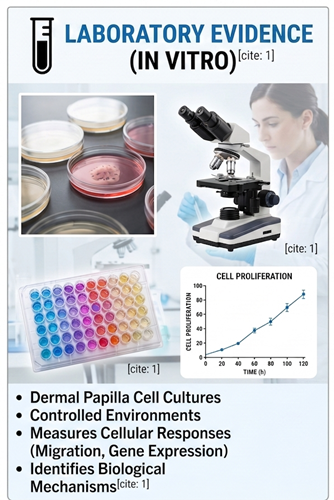
Dermal papilla cells are frequently used in laboratory research.
Researchers may measure:
- Cell proliferation
- Cell survival
- Cell migration
- Growth-related gene expression
- Signaling-pathway activity
- Resistance to oxidative stress
These results help identify possible biological mechanisms.
However, a positive laboratory result does not automatically prove visible hair regrowth in patients.
A cell-culture study cannot fully reproduce:
- The scalp barrier
- The complete hair follicle
- Hormonal conditions
- Immune activity
- Product delivery
- The full hair cycle
- Differences among patients
Distributors should therefore separate:
Laboratory Evidence
Shows that a product may influence dermal papilla cells under controlled experimental conditions.
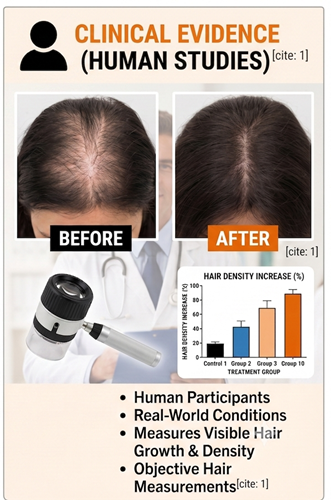
Clinical Evidence
Shows whether the complete product and protocol produce measurable outcomes in people.
Both forms of evidence are useful, but they answer different questions.
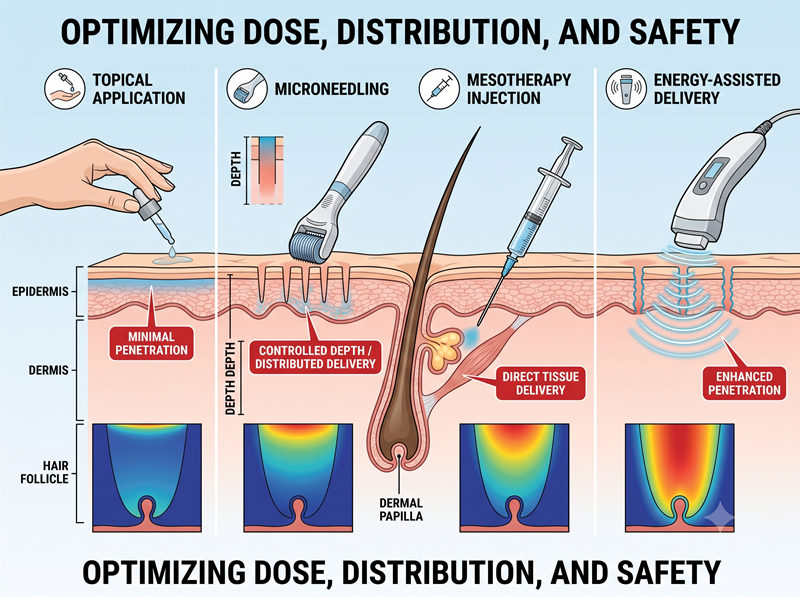
Why the Delivery Method Matters
A product may contain biologically active proteins or vesicles, but it must reach the intended tissue.
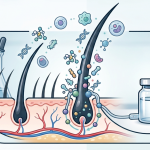
Professional delivery methods may include:
- Microneedling
- Mesotherapy
- Manual injection
- Mesogun
- Electroporation
- Energy-assisted delivery
The delivery method affects:
- Penetration
- Tissue distribution
- Effective dose
- Safety
- Treatment consistency
It may also have biological effects of its own.
Microneedling, for example, can create temporary microchannels and trigger wound-healing signals.
Therefore, a study using a product with microneedling primarily supports the combined protocol unless it includes an appropriate microneedling-only control.
For commercial evaluation, the product and delivery method should be reviewed together.
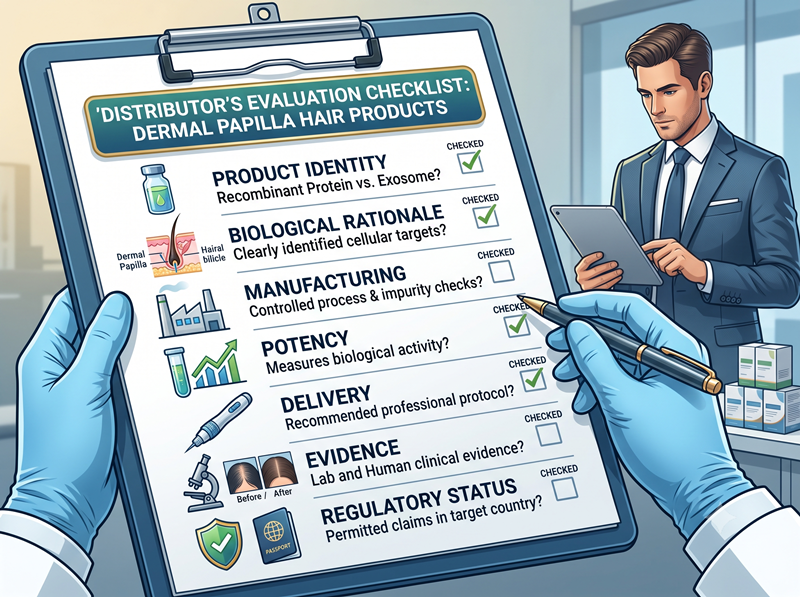
A Distributor’s Evaluation Checklist
Before distributing a product that claims to support dermal papilla cells, confirm the following.
Product Identity
– Is it a recombinant protein formulation, Exosome preparation, Conditioned Media, or another product type?
– Are the active components clearly described?
Biological Rationale
– Which follicular cells are the intended targets?
– Which signaling functions are proposed?
– Are the claims reasonable for the intended hair-loss condition
Manufacturing
– How are the proteins or vesicles produced?
– Is the process controlled?
– Are relevant impurities evaluated?
Potency
– Does the manufacturer measure biological activity?
– Is the test related to dermal papilla or hair-follicle function?
Delivery
– Which professional method is recommended?
– Is the product compatible with the device or technique?
– Is the protocol standardized?
Evidence
– Is there laboratory evidence?
– Is there human clinical evidence?
– Was the exact final product studied?
– Were objective hair measurements used?
Regulatory Status
– How is the product classified in the target country?
– Are the proposed claims and delivery methods permitted?
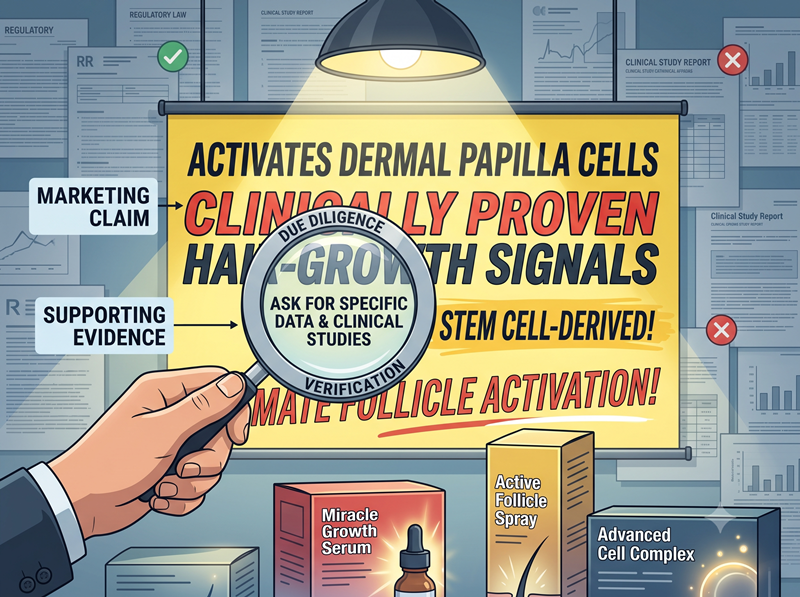
Common Marketing Claims That Need Clarification
Distributors should request supporting information when they see claims such as:
“Activates Dermal Papilla Cells”
Ask which test was used and whether the result came from laboratory or human research.
“Promotes the Anagen Phase”
Ask how the hair-cycle change was measured.
“Contains Hair-Growth Signals”
Ask which signals are present and how their identity and quantity were verified.
“Stem Cell-Derived”
Ask whether the product contains living cells, Conditioned Media, Secretome, or extracellular vesicles.
“Clinically Proven”
Ask for the exact study, product, dose, delivery method, patient diagnosis, and follow-up period.
Clear supporting documentation helps protect both distributors and customers from exaggerated or ambiguous claims.
Key Takeaway
Dermal papilla cells are an important signaling center of the hair follicle.
They communicate with:
- Hair matrix cells
- Keratinocytes
- Hair-follicle stem cells
- Blood vessels
- Immune cells
- Supporting tissue
Both Cytokines Mesotherapy and Exosome-based approaches may be designed to influence this signaling environment.
However, they do so differently.
- Recombinant protein formulations deliver selected and measurable signaling proteins.
- Exosome-based preparations deliver complex cell-derived vesicles and cargo.
- Laboratory activation of dermal papilla cells does not automatically prove clinical hair growth.
- The complete product, manufacturing process, delivery method, and clinical evidence must be evaluated together.
For distributors, the value of the dermal papilla concept is practical.
It provides a clear framework for asking:
- What is being delivered?
- Which cells are being targeted?
- How is biological activity measured?
- Does the clinical evidence support the commercial claim?
In Part 3, we will examine recombinant proteins in more detail and explain why defined composition is an important consideration when evaluating Cytokines Mesotherapy products.

This article is provided for scientific, educational, and business-information purposes only. It does not constitute medical advice, diagnosis, a treatment recommendation, or confirmation of regulatory approval. Product classification, permitted claims, distribution requirements, and authorized professional use vary by country and jurisdiction. Distributors and healthcare professionals should review current product-specific technical, clinical, and regulatory documentation before commercialization or use.
“Some of the images were created using Miricanvas and Gemini.”