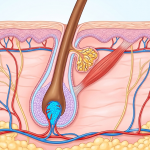
Professional hair-growth products are often promoted with claims such as:
• Clinically proven
• Promotes hair growth
• Activates dermal papilla cells
• Increases hair density
• Supports the anagen phase
• Regenerates hair follicles
However, laboratory studies, animal research, case reports, and controlled human studies do not provide the same level of evidence.
A positive laboratory result does not automatically prove visible hair growth in patients, and a small clinical study does not prove that every product in the same category will produce the same result.
For distributors, the most important question is:
Does the evidence support the exact final product, recommended protocol, and intended patient group?
This article provides a practical framework for evaluating clinical evidence for Cytokines Mesotherapy and Exosome-based hair products without overstating preliminary findings.
1. Start by Identifying the Level of Evidence
Scientific evidence develops in stages.
Laboratory Studies
Laboratory research may examine:
• Dermal papilla cell activity
• Cell proliferation
• Cell survival
• Gene expression
• Hair-related signaling
• Oxidative-stress response
These studies help explain possible biological mechanisms, but they do not prove visible or durable hair growth in patients.
Animal Studies
Animal studies may provide information about:
• Tissue response
• Hair-cycle changes
• Dose
• Early safety
• Possible mechanisms
However, animal skin and hair cycles differ from those of humans. These studies should therefore be considered preclinical evidence.
Case Reports and Small Studies
Case reports and pilot studies can identify early signals of benefit or possible adverse events.
However, they may be affected by:
• Natural hair-cycle variation
• Photography conditions
• Patient expectations
• Concurrent treatments
• Lack of a control group
A study involving only a small number of patients should generally be described as preliminary rather than definitive.
Controlled Human Studies
Controlled clinical studies provide stronger evidence because they compare the active treatment with:
• Placebo
• Saline
• Vehicle
• No treatment
• Standard treatment
• Delivery procedure alone
Well-designed randomized controlled trials can reduce bias, but study quality still depends on sample size, blinding, diagnosis, outcome measurements, and follow-up duration.

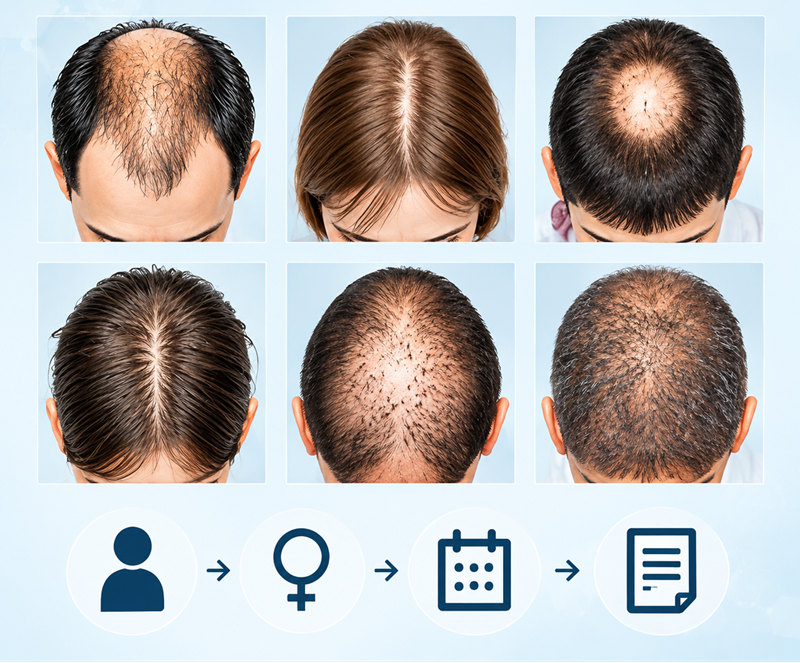
2. Confirm Which Type of Hair Loss Was Studied
Hair loss is not a single disease.
Major conditions include:
• Male androgenetic alopecia
• Female pattern hair loss
• Alopecia areata
• Telogen effluvium
• Cicatricial alopecia
• Hair loss related to medical conditions
A product studied in androgenetic alopecia should not automatically be promoted for every type of alopecia.
Distributors should confirm:
• Patient diagnosis
• Age and sex
• Disease severity
• Disease duration
• Previous treatments
• Inclusion and exclusion criteria
Commercial claims should match the condition that was actually studied.
3. Confirm the Exact Product Used in the Study
Broad terms such as “growth factors” or “Exosomes” do not identify a complete product.
A “growth-factor” product may contain recombinant proteins, platelet-derived materials, Conditioned Media, or other mixed ingredients.
Similarly, an “Exosome” product may actually be:
• Purified extracellular vesicles
• EV-enriched material
• Conditioned Media
• Secretome
• A multi-ingredient commercial serum
The study should ideally identify:
• Product name
• Manufacturer
• Composition or source cells
• Dose
• Storage conditions
• Preparation method
• Treatment schedule
Research on one product should not automatically be used to support another product with a different formulation or manufacturing process.

4. Ingredient Evidence Is Not Product Evidence
This distinction is particularly important for Cytokines Mesotherapy.
Evidence may exist at three levels:
Ingredient Evidence
Research on an individual protein such as:
• IGF-1
• VEGF
• KGF
• bFGF
This may explain why the ingredient was selected.
Formulation Evidence
Research using the complete combination of proteins and supporting ingredients.
Protocol Evidence
Research using the final formulation together with a defined:
• Dose
• Delivery method
• Treatment interval
• Number of sessions
For commercial communication, formulation and protocol evidence are more relevant than general ingredient research.
For example, evidence showing that VEGF participates in vascular signaling does not prove that every VEGF-containing product increases hair density.
AGF39™ contains identified recombinant proteins and supporting ingredients as a complete formulation. Its evaluation should therefore distinguish evidence for individual components from evidence generated with the complete AGF39™ protocol.

5. One Exosome Study Cannot Represent the Entire Category
Exosome-based products may differ substantially in:
• Source cells
• Donor
• Culture conditions
• Separation methods
• Purification
• Particle concentration
• Biological cargo
• Potency
• Storage
Therefore, research involving adipose-derived EVs cannot automatically support a product derived from umbilical cord cells, dermal papilla cells, plants, or another source.
Distributors should confirm whether the evidence matches:
• The same source-cell type
• A comparable manufacturing process
• The same product category
• The recommended dose
• The recommended delivery method
General Exosome research may support the technology concept, but it does not independently prove the effectiveness of a specific commercial product.

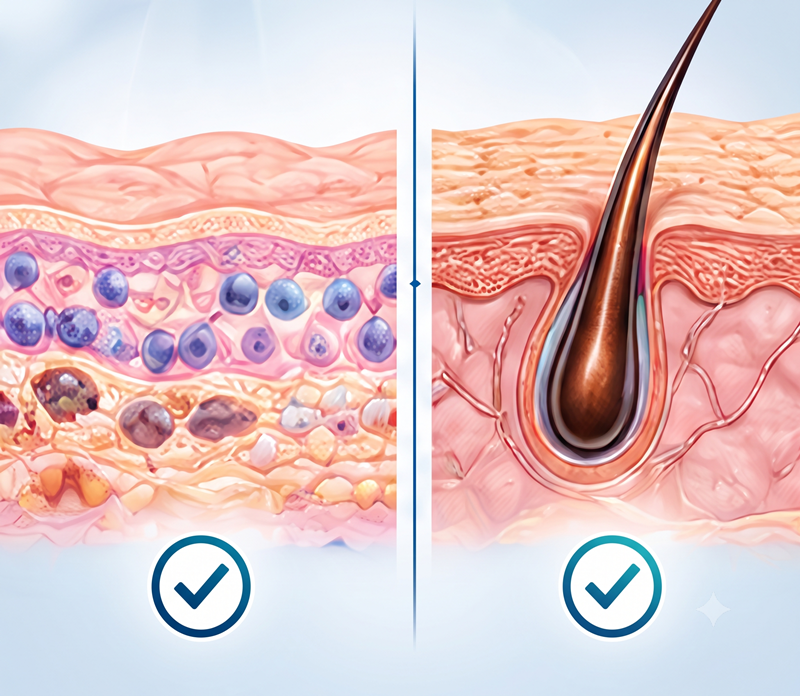
6. Skin Regeneration and Hair Regeneration Should Be Evaluated Separately
This distinction is particularly important when reviewing Exosome-based hair products.
Exosomes and extracellular vesicles have been extensively investigated in regenerative and aesthetic medicine for their potential roles in:
• Intercellular communication
• Inflammation modulation
• Angiogenesis
• Collagen remodeling
• Cell proliferation
• Tissue repair
In skin regeneration, wound healing, facial rejuvenation, and skin-aging applications, a broader body of preclinical and early clinical evidence has accumulated.
Recent reviews suggest potential benefits for wound healing and skin regeneration, although standardization, regulation, and large high-quality clinical trials remain important limitations.
The evidence for hair-loss treatment and hair regeneration is less established.
A 2025 systematic review identified 11 clinical studies of Exosome-based treatments for hair loss. Although all reported improvement in at least one hair-related parameter, the authors emphasized that the evidence was limited by small sample sizes, heterogeneous study designs, and varying follow-up periods. More standardized randomized controlled trials are still needed.
A 2026 systematic review of Exosome-based therapies for androgenetic alopecia also reported promising early findings, but noted major limitations including small studies, lack of controls, inconsistent outcome measures, manufacturing variability, and insufficient long-term evidence.
Accordingly, a balanced interpretation is:
Exosome-based approaches show promising regenerative potential, particularly in skin and tissue-repair applications. In hair-loss treatment, however, current evidence remains preliminary and is not yet sufficient to establish consistent efficacy across different products and treatment protocols.
This distinction matters because:
Supporting skin or scalp regeneration is not the same as proving hair regeneration.
Hair growth depends on a specific biological cycle involving:
• Anagen — active growth
• Catagen — regression
• Telogen — resting
Therefore, a hair-growth product should ideally demonstrate effects directly relevant to:
• Hair-follicle biology
• Anagen maintenance
• Hair density
• Hair-shaft thickness
• Reduction in shedding
• Clinically visible improvement
Skin-regeneration evidence alone should not be used as direct proof of hair-regrowth efficacy.
7. The Delivery Method Can Affect the Result
Professional hair products may be delivered using:
• Microneedling
• Mesotherapy
• Manual injection
• Mesogun
• Electroporation
• Energy-assisted delivery
These procedures may have biological effects of their own.
Microneedling, for example, can:
• Create temporary microchannels
• Improve topical penetration
• Activate wound-healing signals
• Influence local growth-factor activity
If a study combines a product with microneedling, improvement may result from:
• The product
• Microneedling
• The combination of both
Without a procedure-only control group, the result should generally be described as evidence for the combined protocol, not the product alone.

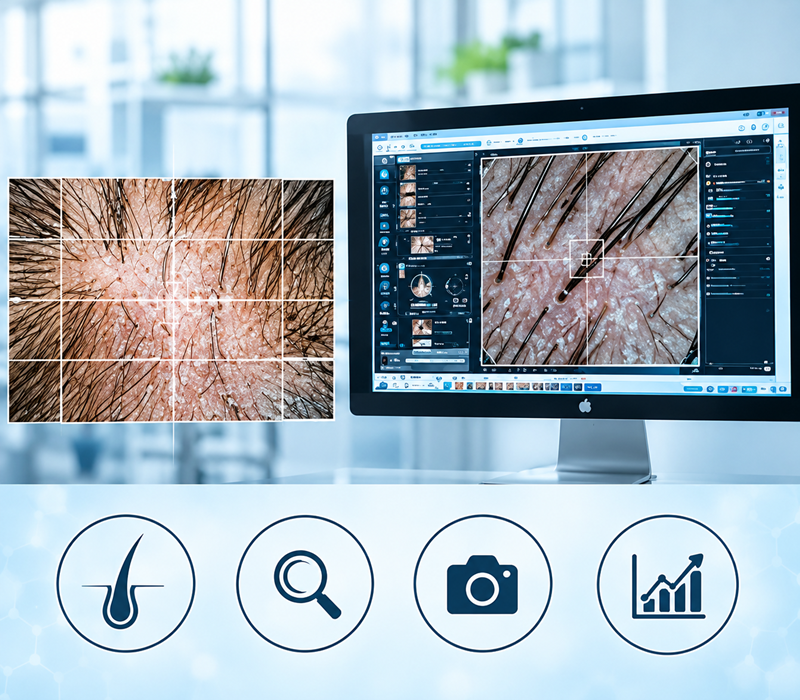
8. Objective Measurements Matter
Reliable hair studies should use standardized outcome measurements.
These may include:
• Hair count
• Hair density
• Terminal hair count
• Hair-shaft diameter
• Digital trichoscopy
• Phototrichogram
• Standardized global photography
• Patient-reported outcomes
Before-and-after photographs alone are not sufficient.
Photographs can be affected by:
• Lighting
• Camera angle
• Hair length
• Hairstyle
• Hair wetness
• Magnification
• Scalp positioning
A strong study combines standardized photography with objective numerical measurements.
9. Statistical Significance Is Not the Same as Clinical Meaning
A result can be statistically significant but too small to matter to patients.
Distributors should consider:
• Absolute increase in hair count
• Percentage improvement
• Change in hair diameter
• Baseline severity
• Visible scalp coverage
• Patient satisfaction
• Treatment burden
• Durability
The practical question is not only:
Was the result statistically significant?
It is also:
Was the improvement visible, meaningful, and relevant to patients?

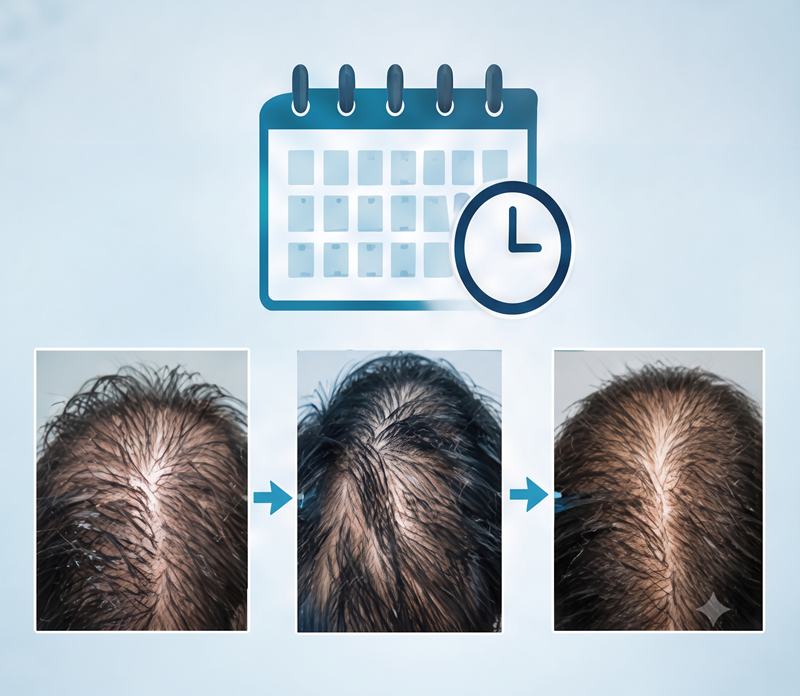
10. Follow-Up Duration Matters
Hair growth is slow.
Short studies may identify changes in:
• Shedding
• Hair-shaft diameter
• Patient satisfaction
• Scalp condition
Longer follow-up is needed to evaluate:
• Hair density
• Maximum treatment response
• Durability
• Recurrence
• Maintenance requirements
• Delayed adverse events
A positive result after three months does not guarantee that the improvement will remain after six or twelve months.
Distributors should review both treatment duration and follow-up duration.
11. Safety Evidence Must Match the Delivery Route
Safety depends on both the product and the method of administration.
Potential procedure-related adverse events include:
• Pain
• Bleeding
• Bruising
• Swelling
• Infection
• Irritation
• Pigmentation changes
• Scarring
Product-related concerns may include:
• Allergic reactions
• Endotoxin
• Microbial contamination
• Protein aggregates
• Residual DNA
• Unwanted biological materials
A product tolerated after topical application cannot automatically be considered safe for injection.
Distributors should confirm:
• Which route was studied
• Which adverse events were monitored
• Whether mild and serious events were reported
• Whether product-related and procedure-related risks were separated

12. How to Read Supplier Claims
When a supplier says “Clinically Proven,” request:
• The full study
• Exact product name
• Patient diagnosis
• Sample size
• Control group
• Delivery method
• Follow-up period
When a supplier says “Increases Hair Density,” request:
• Numerical change
• Measurement method
• Comparison group
• Timing of measurement
When a supplier says “Activates Dermal Papilla Cells,” determine whether the evidence comes from:
• Laboratory studies
• Animal research
• Human clinical studies
When a supplier says “Better Than Existing Treatments,” request a direct comparative clinical trial.
Indirect comparison between unrelated studies is not sufficient.

Can Recombinant Proteins and Exosomes Be Compared Directly?
At present, claims that one category is universally superior should be treated cautiously.
Studies often differ in:
• Product composition
• Source cells
• Patient diagnosis
• Dose
• Delivery method
• Treatment schedule
• Outcome measurement
• Follow-up
For example, a growth-factor study in women using microneedling cannot be directly compared with an Exosome study in men using injection.
A reliable comparison requires a head-to-head study using:
• Similar patient groups
• Standardized delivery
• Comparable treatment schedules
• Objective outcomes
• Appropriate controls
Without such research, distributors should focus on product-specific quality and evidence rather than universal technology claims.

Key Takeaway
Clinical evidence should be evaluated according to the exact product and protocol, not according to the popularity of a technology category.
For Cytokines Mesotherapy and Exosome-based hair products:
• Laboratory studies explain possible mechanisms.
• Animal studies provide preclinical evidence.
• Small human studies provide preliminary signals.
• Controlled human trials provide stronger clinical evidence.
• Ingredient evidence does not automatically prove the final formulation.
• One Exosome product cannot represent every Exosome product.
• Delivery methods can independently influence outcomes.
• Before-and-after photographs are not enough.
• Safety evidence must match the delivery route.
• Claims of superiority require direct comparative studies.
For Exosome-based products in particular, distributors should distinguish between general regenerative evidence and hair-specific clinical evidence.
Skin and tissue-regeneration research is promising, but this evidence should not automatically be translated into claims of proven hair regeneration.
The strongest commercial claims are those supported by evidence matching:
1. The exact final product
2. The intended hair-loss condition
3. The recommended dose
4. The recommended delivery method
5. The complete treatment schedule
6. Objective clinical outcomes
7. Adequate follow-up
The most reliable question for a distributor is therefore:
Does the clinical evidence support this exact product, used in this exact way, for this exact type of hair loss?

Medical and Regulatory Disclaimer
This article is provided for scientific, educational, and business-information purposes only.
It does not constitute medical advice, diagnosis, a treatment recommendation, or confirmation of regulatory approval.
Clinical evidence, product classification, permitted claims, and authorized delivery methods vary by product, country, and jurisdiction.
Evidence from skin regeneration, wound healing, laboratory studies, or unrelated Exosome products should not automatically be interpreted as proof of clinical hair regeneration for a specific commercial product.
Distributors and healthcare professionals should review current product-specific clinical, technical, quality, and regulatory documentation before commercialization or professional use.
“Some of the images were created using Chatgpt and Gemini.”