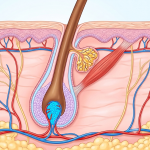
Professional hair-loss treatment products may contain recombinant proteins, cytokines, growth factors, or extracellular vesicles.
However, the presence of biologically relevant ingredients does not guarantee that those ingredients will reach the intended scalp tissue while maintaining their biological activity.
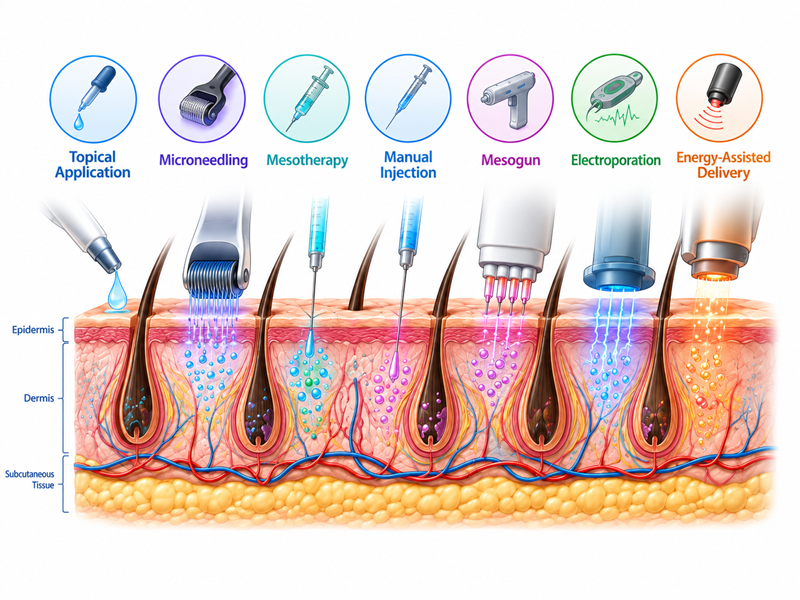
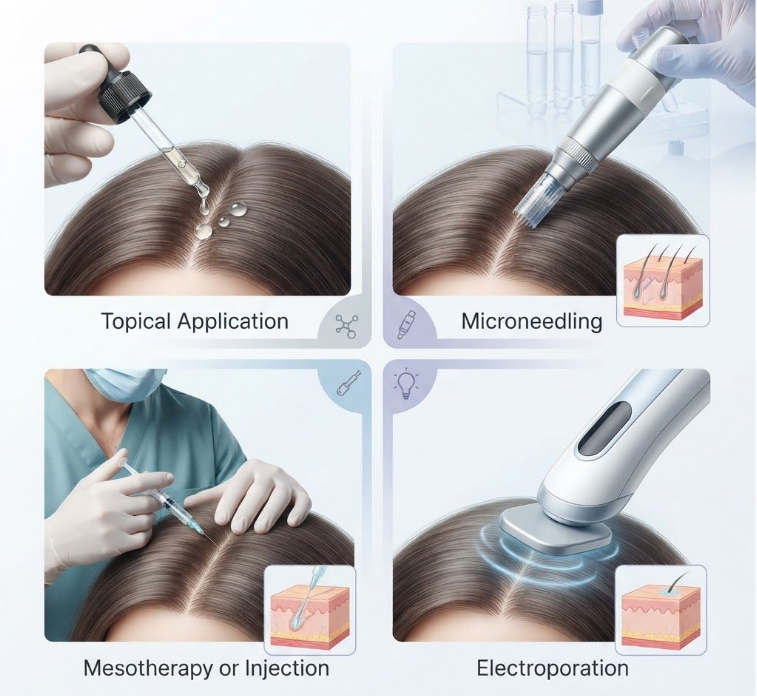
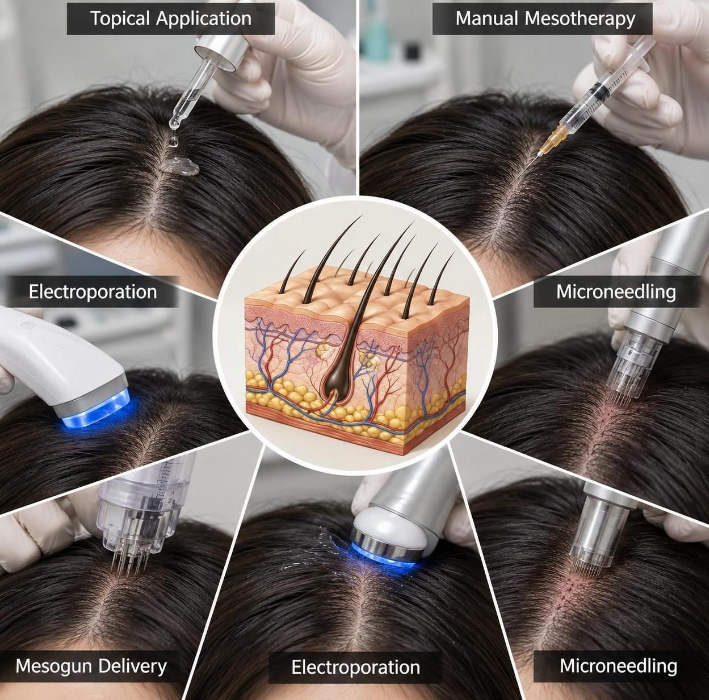
This is why professional protocols may combine hair-growth products with delivery methods such as:
• Topical application
• Microneedling
• Mesotherapy
• Manual injection
• Mesogun
• Electroporation
• Energy-assisted delivery
For distributors, the delivery method is not simply a minor procedural detail.
It may influence:
• Product penetration
• Tissue distribution
• Effective dose
• Treatment consistency
• Patient comfort
• Safety
• Regulatory classification
• Interpretation of clinical evidence
The key commercial principle is:
When a product and a delivery method are intended to be used together, they should be evaluated as one complete protocol.
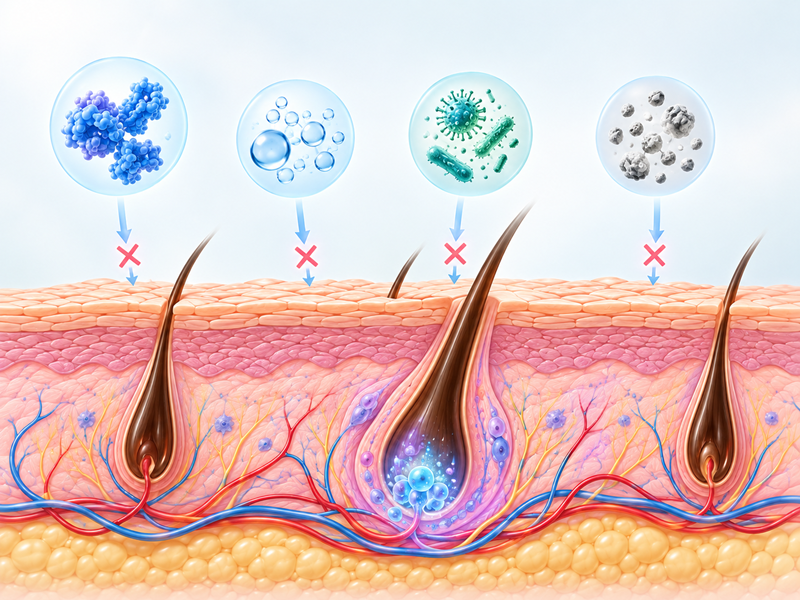
Why Scalp Delivery Can Be Difficult
The outer layer of the skin acts as a protective barrier.
This barrier limits the entry of:
• Large molecules
• Water-soluble substances
• Microorganisms
• Unwanted particles
Recombinant proteins and extracellular vesicles are generally larger and more complex than conventional small-molecule ingredients.
Their ability to reach deeper follicular structures may depend on:
• Product formulation
• Molecular or particle size
• Scalp condition
• Contact time
• Delivery device
• Treatment technique
Simply applying a product to the scalp does not automatically prove that its active material reaches dermal papilla cells or other intended targets.
Topical Application
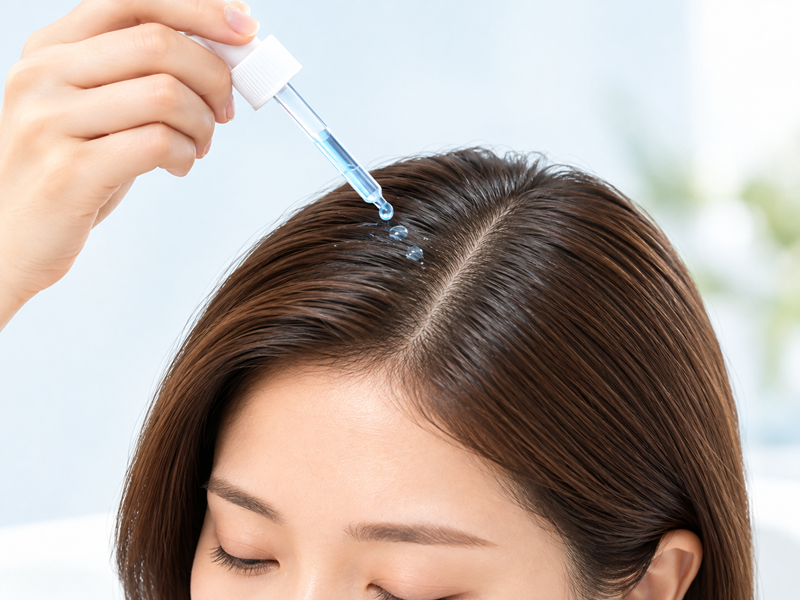
opical application places a solution, serum, gel, or spray directly on the scalp.
Potential Advantages
• Noninvasive
• Easy to apply
• Limited procedural pain
• Suitable for repeated use
• Lower equipment requirements
Main Limitations
• Restricted skin penetration
• Product loss on the hair
• Uneven scalp coverage
• Variable contact time
• Dependence on patient adherence
For distributors, evidence for topical use should demonstrate that the final formulation is suitable for scalp application and remains stable throughout its intended use.
Evidence for an injected product should not automatically be applied to topical use, and vice versa.
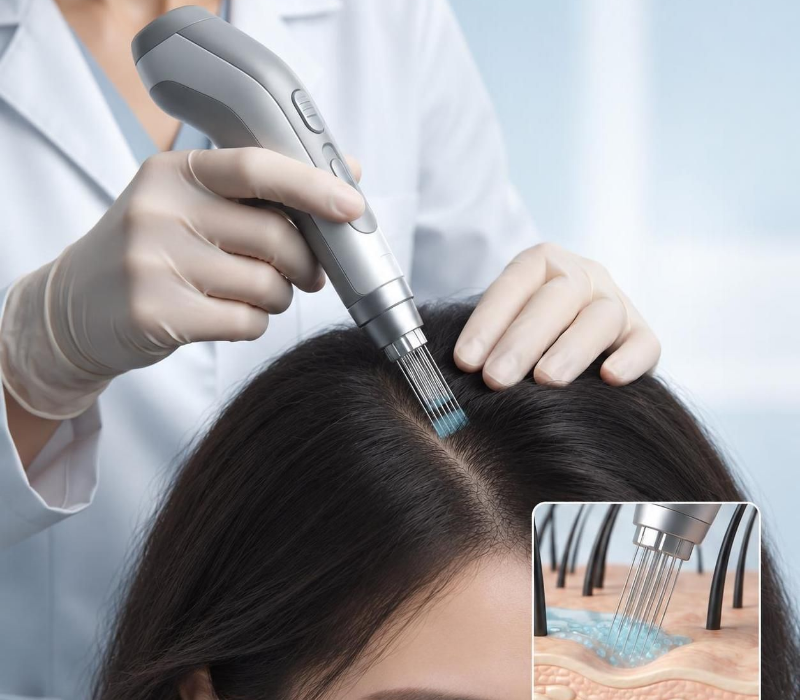
Microneedling
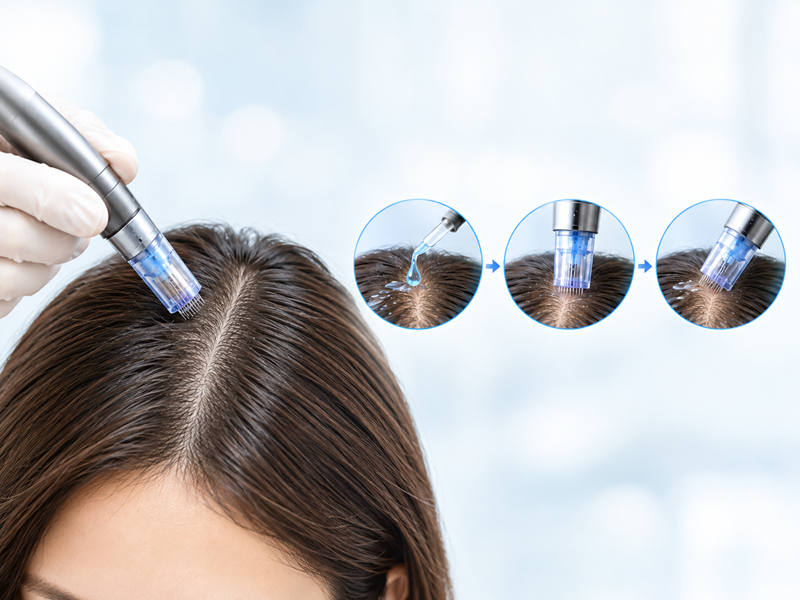
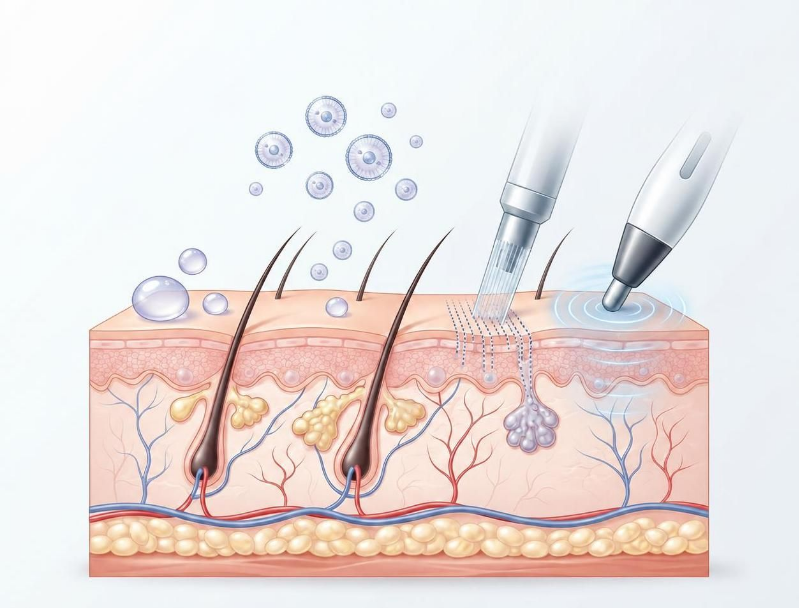
Microneedling uses fine needles to create controlled microchannels in the scalp and can be considered one type of mesotherapy technique.
A product may be applied:
• Before microneedling
• During the procedure
• Immediately after the procedure
Microneedling may support product penetration, but it may also activate biological responses of its own.
These responses may include:
• Wound-healing signals
• Local inflammatory responses
• Endogenous growth-factor release
• Tissue-remodeling pathways
This means that a positive result from a product combined with microneedling may reflect:
1 The product itself
2 The microneedling procedure
3 The combined effect of both
A clinical study without a microneedling-only control group cannot fully separate these effects.
Microneedling Is Not One Standardized Procedure
Protocols may differ in:
• Needle depth
• Device type
• Number of passes
• Treatment pressure
• Needle speed
• Session interval
• Total number of sessions
• Clinical endpoint
A deeper needle setting does not automatically produce better results.
Greater depth may also increase:
• Pain
• Bleeding
• Inflammation
• Infection risk
• Recovery time
For reliable distribution and clinic training, manufacturers should provide clearly defined microneedling protocols.
Mesotherapy
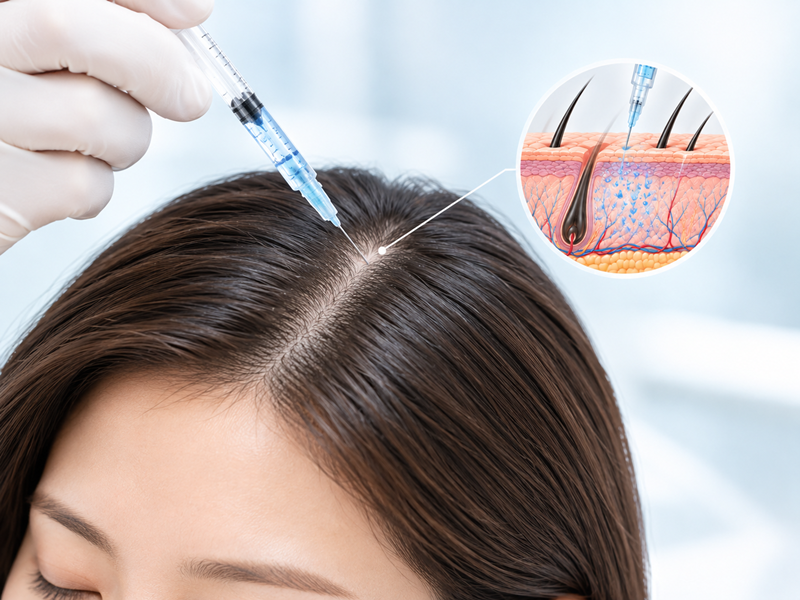
Mesotherapy is a treatment technique designed to achieve both a physical stimulation effect through needling and a pharmacological effect through product delivery.
Depending on the depth, mesotherapy may deliver small amounts of a formulation at defined intervals into:
• The epidermal layer (IED)
• The superficial dermis (IDS)
• The deeper dermis (IDP)
The formulation can be delivered through manual injection or a mesogun.
Microneedling using a multi-needle device to deliver an applied formulation into the superficial skin can also be considered a mesotherapy technique.
In professional hair-loss care, mesotherapy formulations may contain ingredients that are individually produced, characterized, and subjected to appropriate safety testing, including endotoxin testing where applicable.
These may include:
• Identified recombinant proteins
• Identified cytokines
• Identified growth factors
• Identified amino acids
• Identified vitamins
• Identified drugs
Mesotherapy is a delivery technique, not a standardized ingredient or product category.
Two mesotherapy protocols may differ in:
• Product composition
• Concentration
• Injection depth
• Volume per point
• Point spacing
• Treatment frequency
• Total dose
Therefore, the term “mesotherapy” alone is not sufficient to compare clinical protocols.
Cytokines Therapy for Alopecia
Cytokines Therapy for Alopecia may combine a defined recombinant protein formulation with a professional scalp-delivery procedure.
A general treatment process may include:
1 Assessing the patient and scalp condition
2 Preparing or reconstituting the formulation
3 Dividing the treatment area
4 Delivering small amounts according to a defined protocol
5 Repeating the treatment according to the recommended schedule
6 Evaluating the response using standardized measurements
For distributors, a complete protocol should identify:
• Product dose
• Recommended dilution
• Delivery depth
• Total treatment area
• Session interval
• Number of sessions
• Storage after reconstitution
• Required professional qualifications
A high-quality formulation without a consistent delivery protocol may produce inconsistent outcomes across clinics.
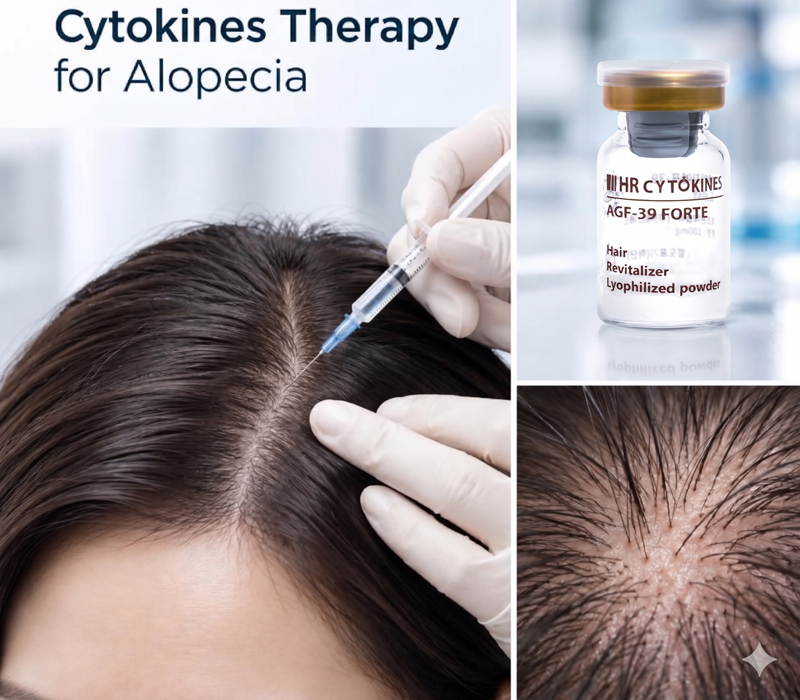
Manual Injection
Manual injection allows clinicians to adjust injection points according to the patient’s scalp condition.
Potential Advantages
• Flexible point selection
• Direct visual control
• Adaptation to individual treatment areas
Main Limitations
• Operator-dependent injection depth
• Uneven dose distribution
• Longer procedure time
• Variation among clinicians
Suppliers should provide sufficient professional training to reduce operator-related variability.
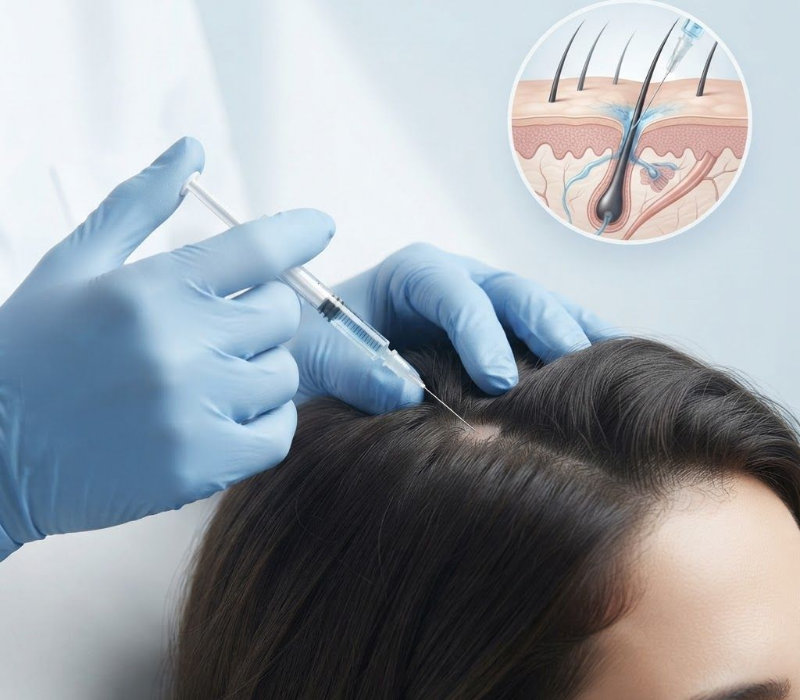
Mesogun Delivery
A mesogun is an automated or semi-automated device designed to deliver repeated small injections.
It may help standardize:
• Volume per injection
• Injection speed
• Treatment interval
• Delivery depth
However, treatment consistency still depends on:
• Device calibration
• Needle condition
• Product viscosity
• Scalp contact
• Operator movement
Automation may reduce some variability, but it does not eliminate the need for professional training and equipment maintenance.
Electroporation
Electroporation uses controlled electrical pulses to temporarily increase the permeability of the skin or cell membrane.
It may support needle-free scalp delivery.
Potential Advantages
• No conventional injection needles
• No concern about needle-related bleeding
• Broad scalp coverage
• Repeatable device settings
• Greater comfort for some patients
Main Considerations
• Device voltage and pulse settings
• Treatment duration
• Electrode contact
• Product conductivity
• Product viscosity
• Protein or vesicle stability
• Scalp hydration
A product should be tested for compatibility with the specific electroporation system.
Evidence generated with one device cannot automatically support another device with different settings or electrodes.
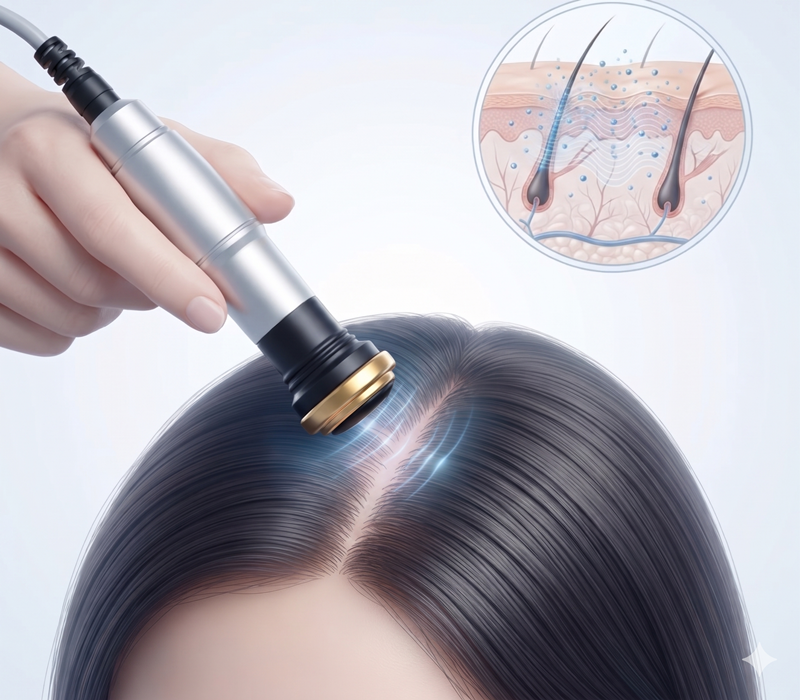
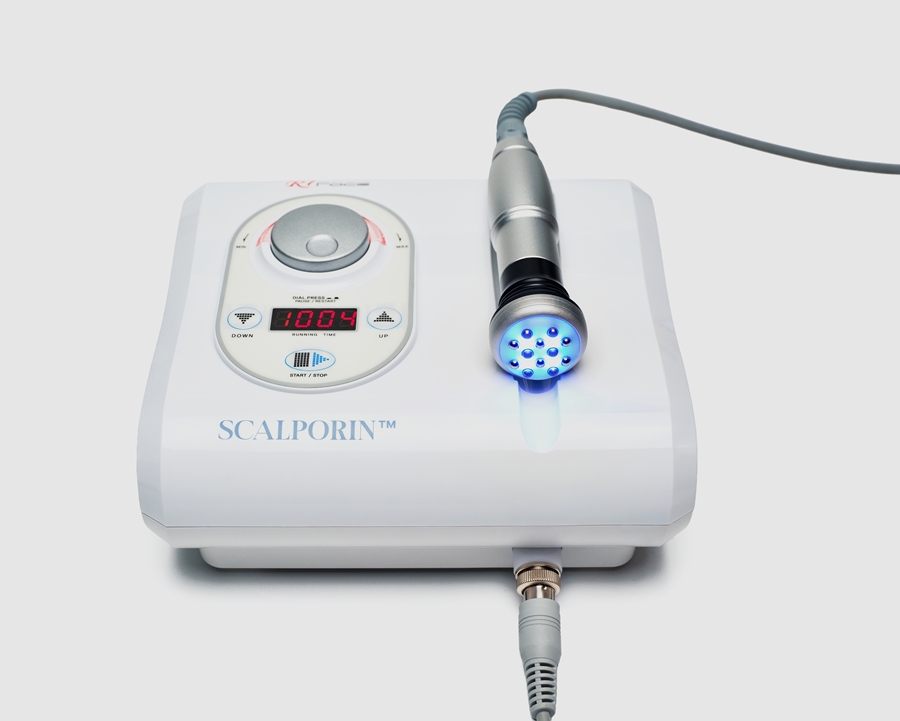
SCALPORIN™ R1 as a Professional Scalp Delivery Device
SCALPORIN™ R1 is AesMed’s electroporation scalp device developed for professional scalp applications.
When AGF39™ or another professional formulation is used with SCALPORIN™ R1, the commercial protocol should define:
• Product preparation
• Device settings
• Treatment duration
• Treatment area
• Session frequency
• Aftercare
• Operator training
The formulation and the device should be presented as a compatible professional system only when supported by relevant technical and clinical documentation.
Evidence for the formulation alone does not automatically establish the performance of the device.
Likewise, evidence for the device alone does not prove the effectiveness of every formulation used with it.
Exosome-Based Products and Delivery Methods
Exosome-based hair products may be used with:
• Topical application
• Microneedling
• Electroporation
• Energy-based procedures
The selected delivery method may influence:
• Vesicle penetration
• Membrane integrity
• Tissue distribution
• Product loss
• Safety
• Biological activity
For example, a product studied with microneedling should not automatically be promoted as clinically proven for electroporation or injection.
Distributors should confirm whether the supplier’s clinical evidence matches the recommended commercial route.
Product–Device Compatibility
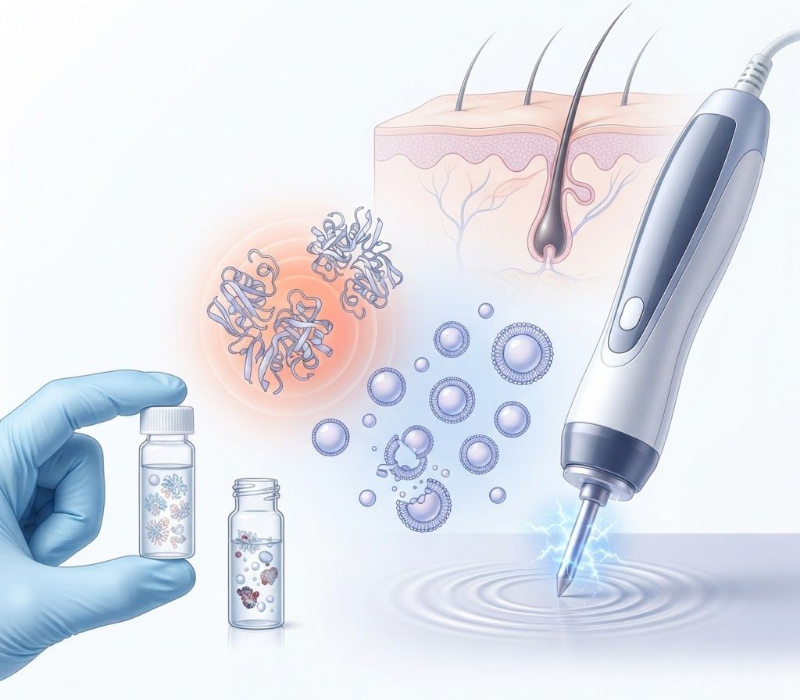
Sensitive biological materials may be affected during delivery.
Recombinant Proteins May Be Affected By
• Heat
• Mechanical stress
• Electrical conditions
• pH
• Incompatible diluents
• Extended preparation time
Extracellular Vesicles May Be Affected By
• Membrane disruption
• Aggregation
• Electrical or mechanical stress
• Repeated freezing and thawing
• Incompatible formulations
Compatibility testing should ideally confirm that the product maintains:
• Physical stability
• Biological activity
• Intended concentration
• Acceptable safety
Nominal Dose vs Delivered Dose
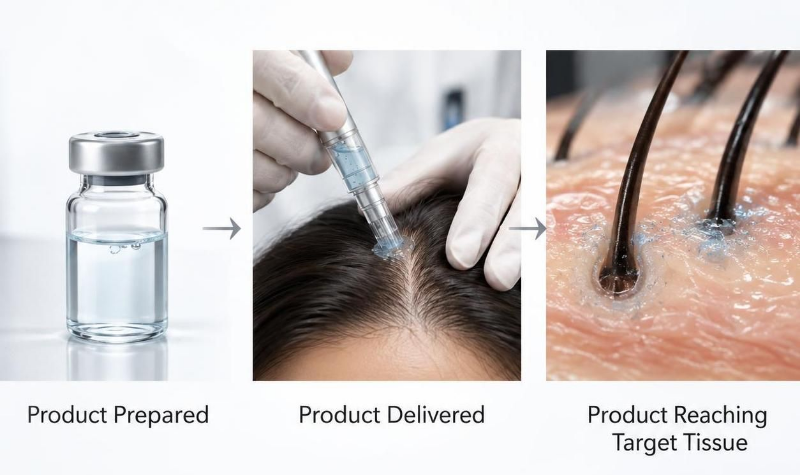
The amount contained in a vial is not necessarily the amount that reaches the scalp tissue.
Product may be lost through:
• Residue in the vial
• Syringe or device dead space
• Leakage
• Retention on the hair
• Surface wiping
• Incomplete penetration
This creates three different concepts.
Nominal Dose
The total amount prepared for the procedure.
Delivered Dose
The amount actually released through the device or needle.
Biologically Available Dose
The active amount that actually reaches the intended target tissue.
Distributors should therefore be cautious when comparing products only by vial volume or concentration without considering the delivery protocol.
Safety Depends on the Delivery Method
Topical Application
Possible concerns include:
• Irritation
• Contact reactions
• Product contamination
Microneedling
Possible concerns include:
• Pain
• Bleeding
• Infection
• Inflammation
• Pigmentation changes
Mesotherapy or Injection
Possible concerns include:
• Pain
• Bruising
• Swelling
• Infection
• Uneven dosing
• Injection-site reactions
• Systemic exposure
Electroporation
Possible concerns include:
• Discomfort
• Skin irritation
• Uneven electrode contact
• Product incompatibility
Safety documentation should match the intended delivery route.
A product tested for topical application should not automatically be promoted for intradermal injection.
Delivery Method and Regulatory Classification
The permitted use of a product may vary depending on:
• Composition
• Intended claims
• Skin penetration
• Delivery route
• Device
• Country-specific regulations
A product registered or notified for topical cosmetic use may not automatically be authorized for:
• Microneedling-assisted delivery
• Mesotherapy
• Intradermal injection
• Electroporation
• Laser-assisted delivery
Similarly, a device authorized for one application is not automatically authorized to deliver every drug, cosmetic, or biological product.
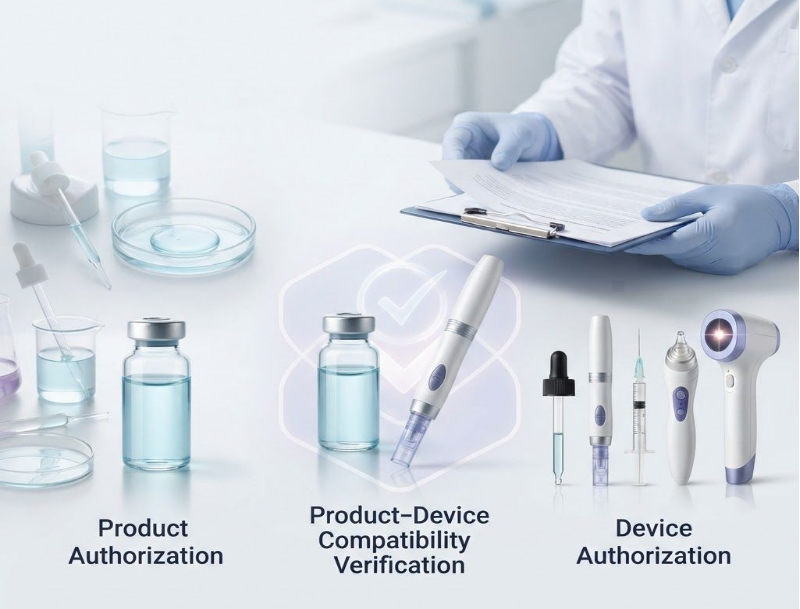
Distributors should therefore verify both:
1 Product authorization
2 Device authorization
They should also confirm whether the specific product–device combination is permitted.
Why Protocol Standardization Matters Commercially
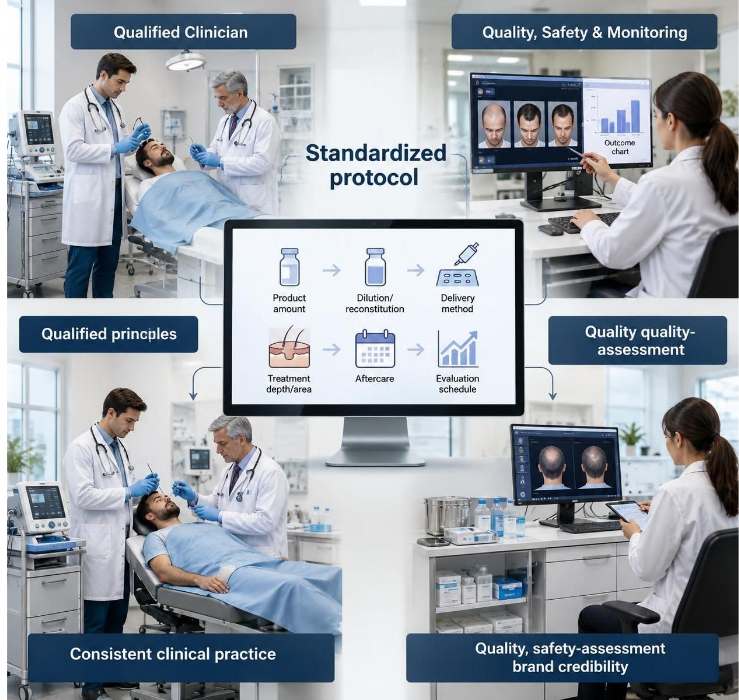
A standardized protocol can support:
• More consistent clinic performance
• Easier professional training
• Better outcome comparison
• Clearer safety management
• Stronger brand credibility
A professional protocol should define:
• Product amount
• Dilution or reconstitution
• Delivery method
• Device settings
• Treatment depth
• Treatment area
• Treatment interval
• Number of sessions
• Aftercare
• Evaluation schedule
Without this information, clinics may develop their own methods, resulting in inconsistent outcomes and greater commercial risk.
Clinical Evidence Should Match the Protocol
Before using a clinical study for marketing purposes, distributors should confirm that the study used:
• The same product
• The same dose
• The same ingredients and the same amount of each ingredient
• The same delivery method
• The same device or comparable settings
• The same treatment schedule
• The same type of hair loss
For example:
• Microneedling evidence should not automatically support injection.
• Injection evidence should not automatically support electroporation.
• Evidence for one Exosome product should not support another source or formulation.
• Evidence for one recombinant protein mixture should not support every cytokine product.
The strongest marketing claim is one that matches the complete commercial protocol.
Distributor Checklist for Delivery Protocols
Before commercializing a professional hair product, distributors should ask the supplier the following questions.
Product Route
• Is the product intended for topical application, microneedling, electroporation, mesotherapy, or injection?
• Is the intended route clearly stated?
Protocol
• What dose is used?
• How is the product prepared?
• What area is treated?
• How frequently is treatment performed?
Device
• Which device is recommended?
• Are device settings standardized?
• Is compatibility testing available?
• Is operator training provided?
Safety
• Are contraindications clearly defined?
• Are adverse-event procedures available?
• Does the safety evidence match the intended delivery route?
Clinical Evidence
• Was the exact product–delivery combination studied?
• Was there a procedure-only control group?
• Were objective outcome measures used?
Regulatory Status
• Is the product permitted for the intended route?
• Is the device authorized for the intended use?
• Are the proposed claims permitted under applicable regulations?

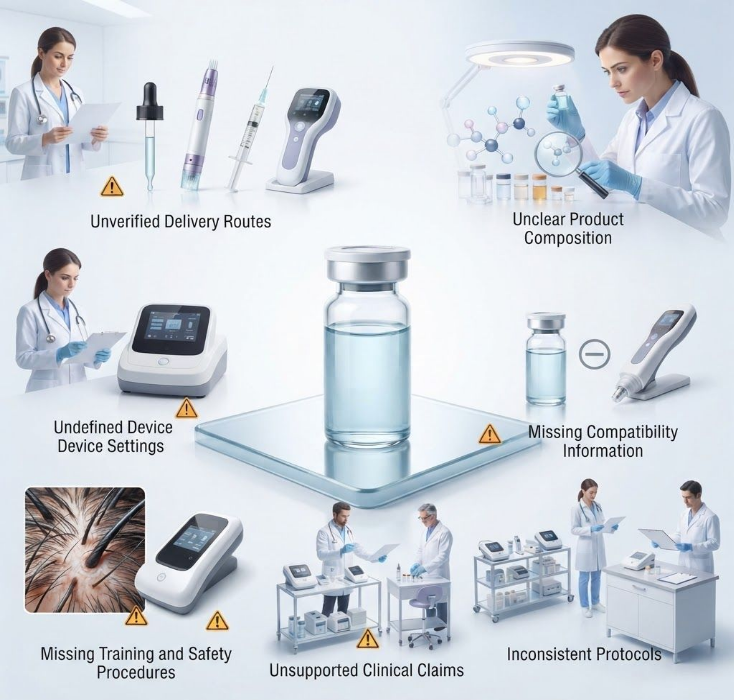
Commercial Red Flags
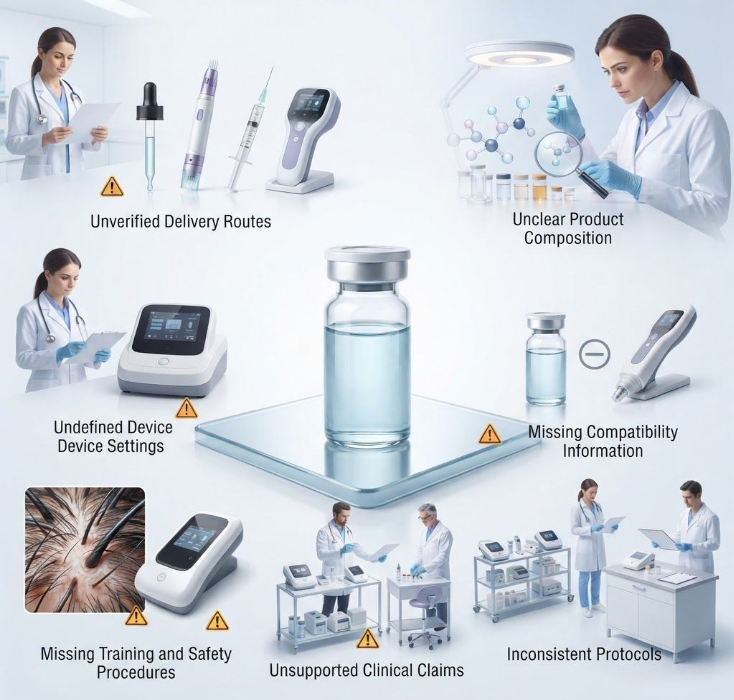
Distributors should request additional verification when a supplier:
• Recommends multiple delivery routes without route-specific evidence
• Cannot clearly identify the product ingredients and the amount of each ingredient
• Does not define needle depth or device settings
• Provides no product–device compatibility information
• Uses microneedling results to support electroporation claims
• Does not provide operator training
• Makes safety claims without route-specific data
• Cannot explain how the protocol was standardized
A flexible protocol may be commercially useful, but flexibility should not mean uncontrolled use.
Key Takeaway
Delivery methods are active and essential components of professional hair-growth protocols.
• Topical application is simple but depends on skin penetration.
• Mesotherapy is a technique that delivers both physical stimulation and pharmacological effects into the epidermal, superficial dermal, or deeper dermal layers.
• Mesotherapy may be performed with injection needles or with multi-needle systems.
• Microneedling is a mesotherapy technique that uses a multi-needle device to create microchannels, maximizing physical stimulation while also supporting the pharmacological effect of applied products.
• Mesogun systems are mechanical devices used for needle-based mesotherapy and may improve consistency, but they still require calibration and professional training.
• Electroporation offers the potential for needle-free delivery but requires product–device compatibility.
• Evidence for one delivery route should not automatically support another route.
For distributors, a product should never be evaluated separately from its intended delivery system.
A complete commercial evaluation should include:
1 Product identity
2 Intended delivery route
3 Product dose
4 Product ingredients and the amount of each ingredient
5 Delivery device or technique
6 Compatibility
7 Protocol standardization
8 Operator training
9 Safety
10 Clinical evidence
In Part 9, the final article in this series, we will combine these criteria into a practical product-evaluation checklist for companies and professionals considering the distribution of Cytokines Mesotherapy or Exosome-based hair-growth products.
“Some of the images were created using Chatgpt and Gemini.”