Exosome-based products have become a fast-growing category in the professional hair and scalp market.
Distributors may encounter products described as:
• Stem cell-derived Exosomes
• Extracellular vesicle products
• Stem Cell Conditioned Media
• Secretome solutions
• Cell-free regenerative products
• Exosome-rich hair serums
These terms are often presented together, but they do not describe the same material.
This distinction is commercially important.
A distributor who cannot clearly explain the difference may face:
• Incorrect product positioning
• Misleading advertising claims
• Regulatory problems
• Difficulty comparing suppliers
• Confusion among clinics and sales teams
The first step in evaluating an Exosome-based hair-growth product is therefore to identify what the product actually contains.
What Are Extracellular Vesicles?
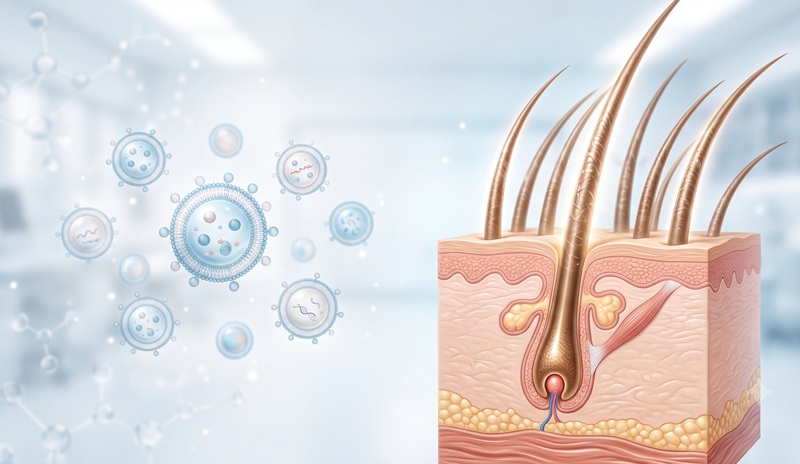
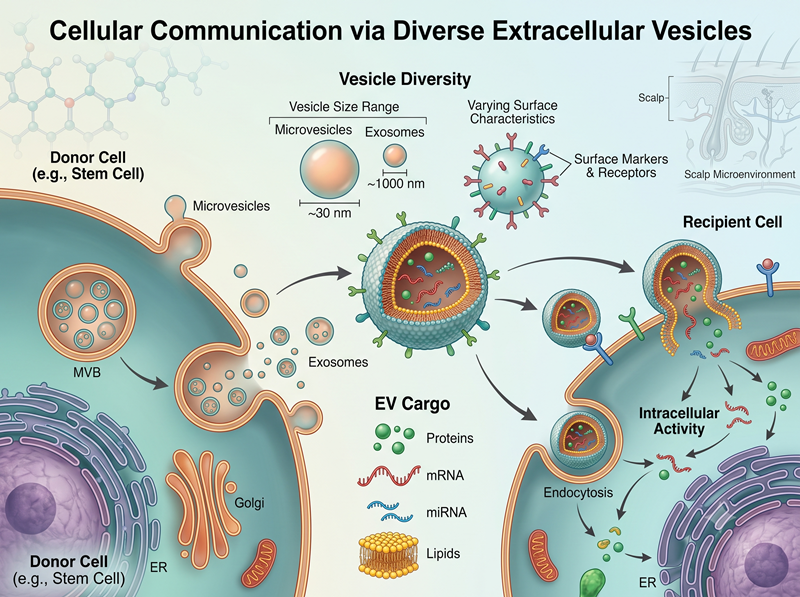
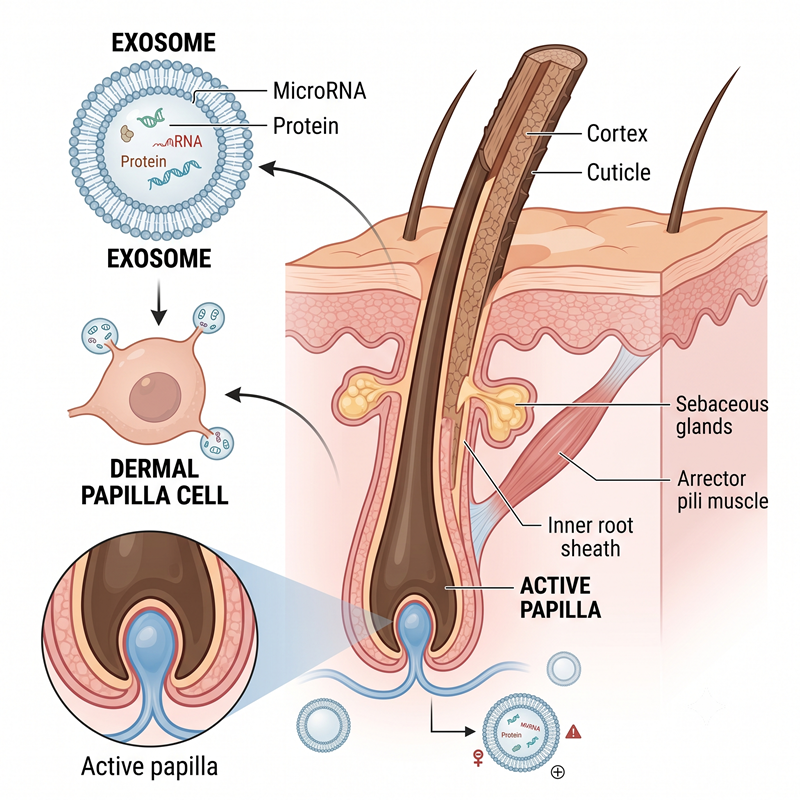
Cells communicate not only through soluble proteins but also through small membrane-bound particles called extracellular vesicles, or EVs.
EVs may carry biological materials such as:
• Proteins
• Lipids
• Messenger RNA
• MicroRNA
• Other nucleic acids
• Metabolites
These materials can participate in communication between cells.
Extracellular vesicles are a broad category. They include particles with different:
• Sizes
• Formation pathways
• Surface characteristics
• Biological cargo
• Functions
An Exosome is generally considered one type of extracellular vesicle.
What Is an Exosome?
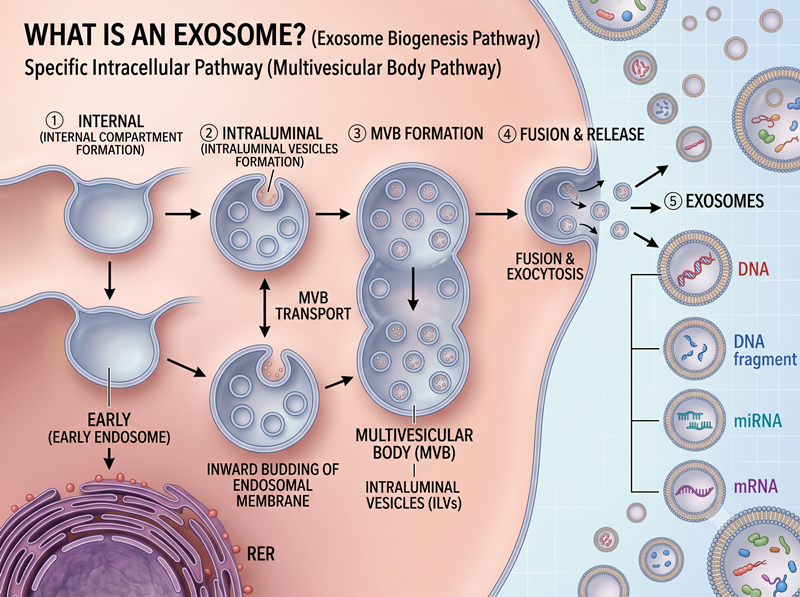
An Exosome is commonly described as a small extracellular vesicle produced through a particular pathway inside a cell.
The basic process can be summarized as follows:
1. The cell forms an internal compartment.
2. Small vesicles develop inside that compartment.
3. The compartment moves toward the outer cell membrane.
4. The vesicles are released outside the cell.
Once released, these vesicles may interact with other cells and transfer biological information.
In hair-growth research, Exosome-based preparations are being studied for their possible effects on:
• Dermal papilla cells
• Keratinocytes
• Hair-cycle signaling
• Vascular support
• Oxidative stress
• Inflammatory responses
However, the term “Exosome” should be used carefully.
In many commercial products, the precise intracellular origin of every particle has not been fully demonstrated. In such cases, broader terms such as “extracellular vesicles” or “EV-enriched preparation” may be more accurate.
Exosomes Are Not Stem Cells
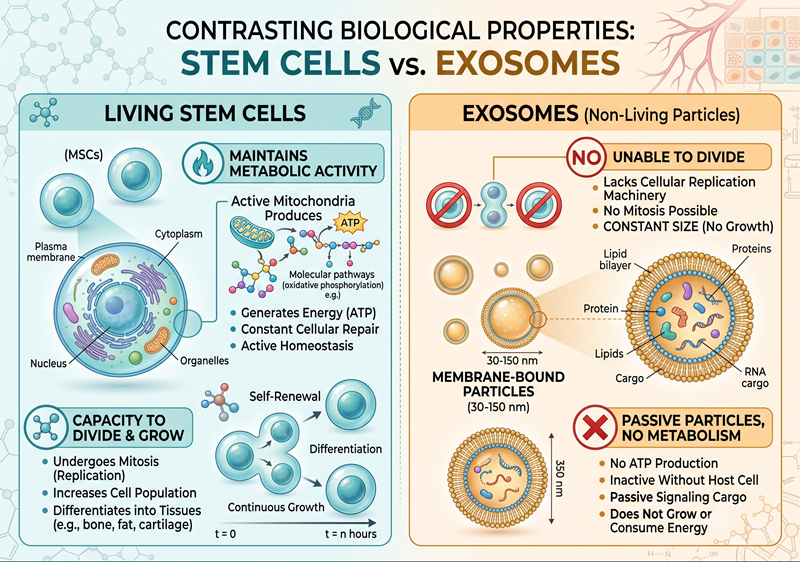
An Exosome may be produced by a stem or stromal cell, but it is not a stem cell.
A stem cell is a living cell that can:
• Maintain metabolism
• Respond to its environment
• Divide
• Produce new cells
• Potentially differentiate
An Exosome is a membrane-bound particle released by a cell.
It cannot:
• Divide
• Grow into another cell
• Replace damaged tissue as a living cell
• Perform complete cellular metabolism
The expression “stem cell-derived Exosomes” means that the vesicles were released by cells described as stem or stromal cells.
It does not mean that the final product contains living stem cells.
For distributors, this difference should be clearly reflected in sales training and promotional materials.
What Is the Secretome?
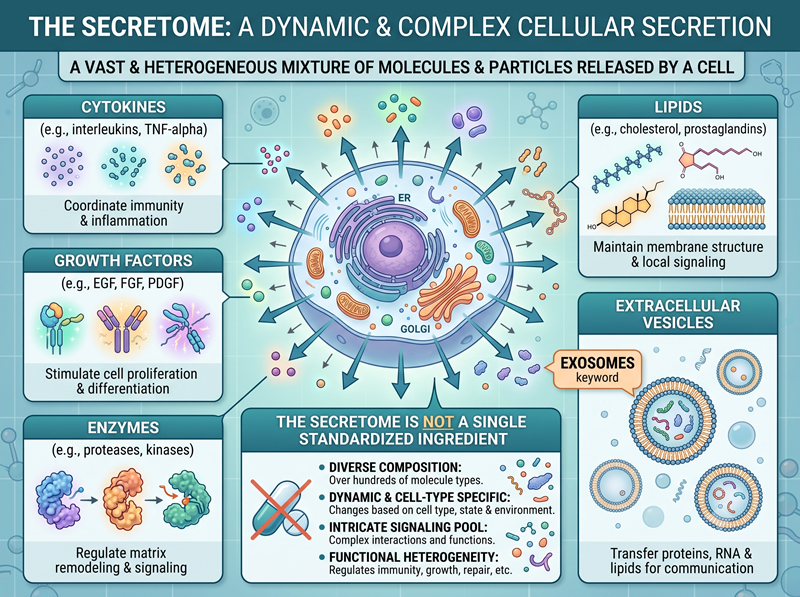
The Secretome is the broad collection of materials released by a cell.
It may include:
• Soluble cytokines
• Growth factors
• Chemokines
• Enzymes
• Extracellular vesicles
• Lipids
• RNA
• Metabolites
Exosomes may form part of the Secretome, but the Secretome is much broader.
Its composition depends on factors such as:
• Cell type
• Donor
• Cell passage
• Culture medium
• Oxygen conditions
• Cell density
• Collection timing
The Secretome is therefore not one standardized ingredient.
A product described only as “Secretome-based” requires additional technical information before it can be properly evaluated.
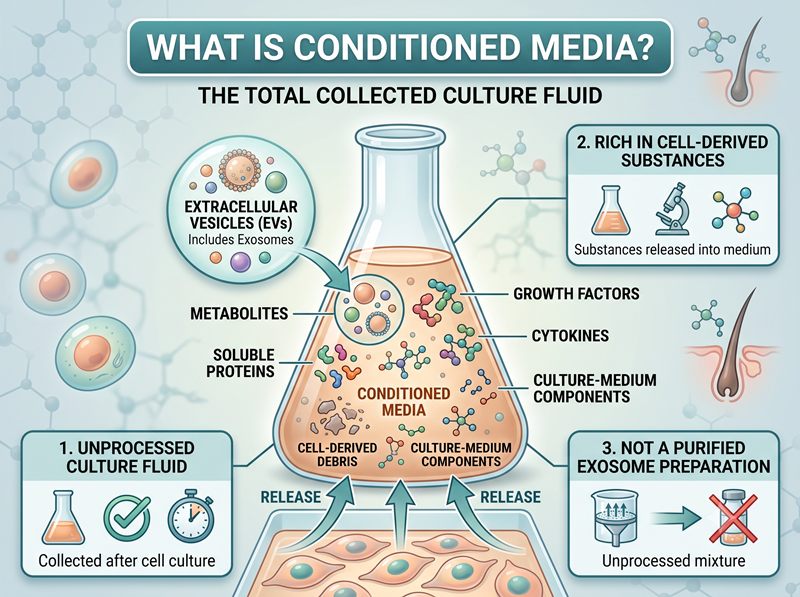
What Is Conditioned Media?
Conditioned Media is the liquid collected after cells have been cultured in it for a certain period.
During culture, cells release different substances into the surrounding medium.
Conditioned Media may therefore contain:
• Soluble proteins
• Cytokines
• Growth factors
• Extracellular vesicles
• Metabolites
• Culture-medium components
• Cell-derived debris
It is the total collected culture fluid before or after limited processing.
Conditioned Media may contain Exosomes, but it is not the same as a purified Exosome preparation.
What Is Stem Cell Conditioned Media?
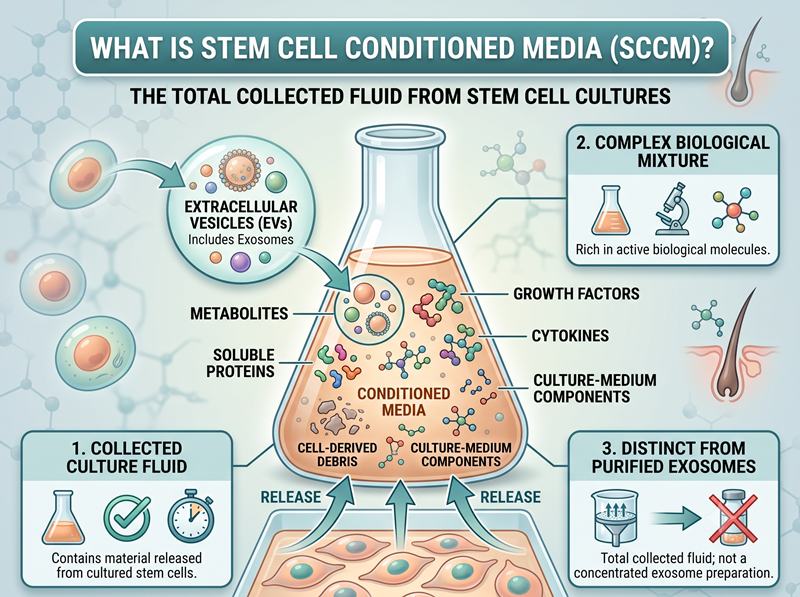
Stem Cell Conditioned Media, or SCCM, is Conditioned Media collected from cultures of cells described as stem or stromal cells.
It may contain:
• Growth factors
• Cytokines
• Extracellular vesicles
• Metabolites
• Other cell-derived substances
Exosomes may be one component of SCCM.
However, SCCM also contains soluble and non-vesicular materials.
A distributor should therefore avoid using the following terms as synonyms:
• Stem Cell Conditioned Media
• Secretome
• Extracellular vesicles
• Exosomes
They refer to related but different materials.
A Simple Way to Understand the Relationship
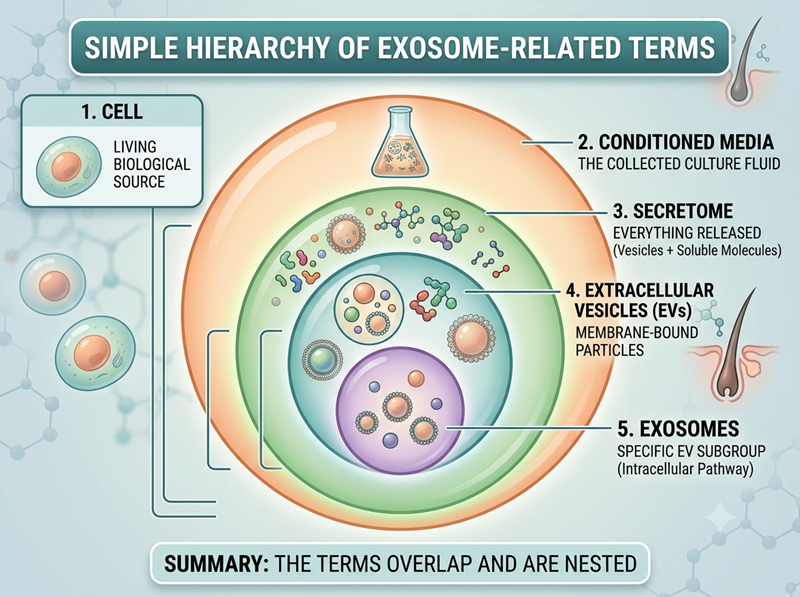
The relationship can be summarized as follows.
Cell
The living biological source.
Secretome
Everything released by the cell.
Conditioned Media
The culture fluid containing released materials and medium components.
Extracellular Vesicles
Membrane-bound particles contained within the Secretome and Conditioned Media.
Exosomes
A subgroup of extracellular vesicles associated with a particular formation pathway.
In simple terms:
Exosomes may be part of the extracellular-vesicle population, EVs may be part of the Secretome, and the Secretome may be collected within Conditioned Media.
The terms overlap, but they are not identical.
Why This Difference Matters in Distribution
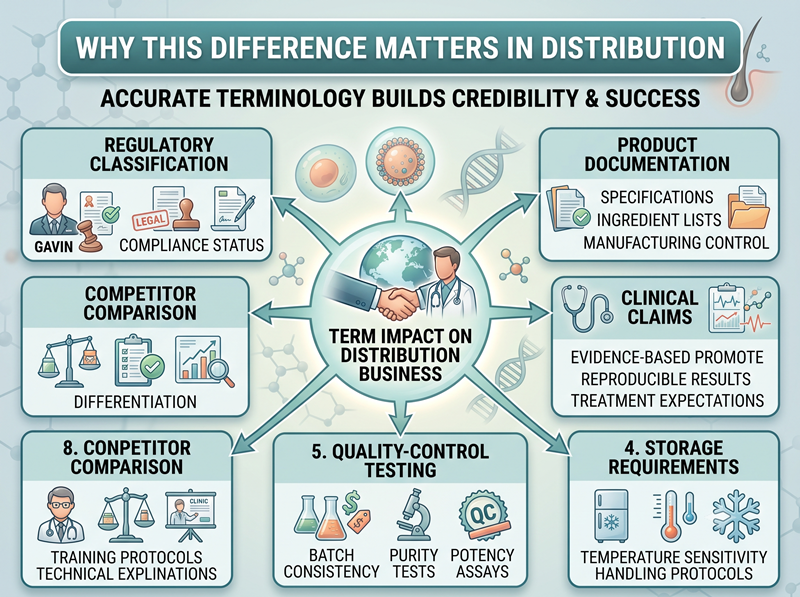
A product’s actual identity affects:
• Regulatory classification
• Product documentation
• Clinical claims
• Storage requirements
• Quality-control testing
• Product pricing
• Clinic education
• Competitor comparison
For example, a concentrated Conditioned Media product and a purified EV preparation may require different technical explanations.
If both are promoted simply as “Exosomes,” buyers may misunderstand:
• The degree of purification
• The active material
• The manufacturing process
• The available evidence
Accurate terminology helps the distributor build long-term credibility with clinics and local regulatory partners.
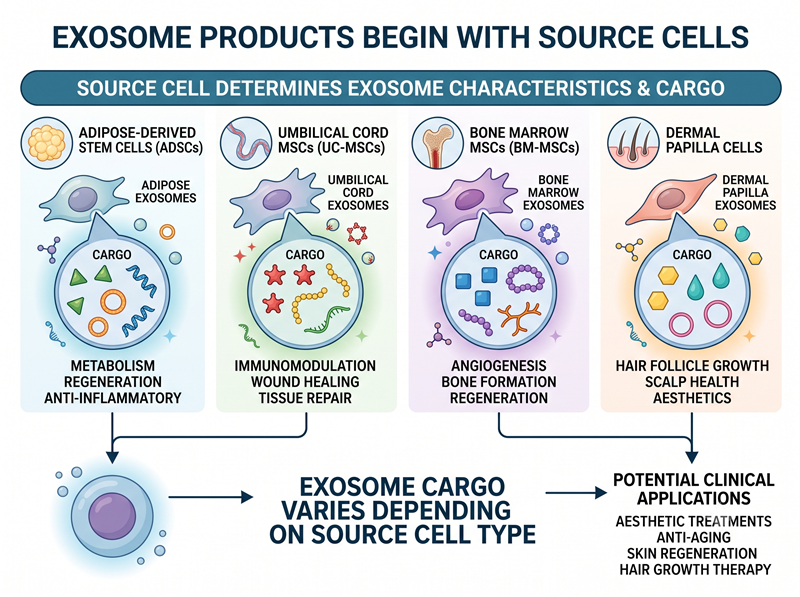
Exosome Products Begin with Source Cells
Unlike recombinant protein formulations, Exosome-based products begin with living source cells.
Commonly discussed sources include:
• Adipose-derived stromal cells
• Umbilical cord-derived stromal cells
• Bone marrow-derived stromal cells
• Dermal papilla cells
• Fibroblasts
• Platelets
• Plant cells
• Other cell types
Different source cells may release vesicles with different:
• Proteins
• Lipids
• RNA cargo
• Surface markers
• Biological activities
This means that two products described as Exosomes may not be equivalent.
A distributor should always ask:
• Which cells produced the vesicles?
• From which tissue were those cells obtained?
• Are the source cells human, animal, plant, or another origin?
• Is the source traceable?
• Is the cell type relevant to the product’s intended positioning?
Culture Conditions Also Affect the Product
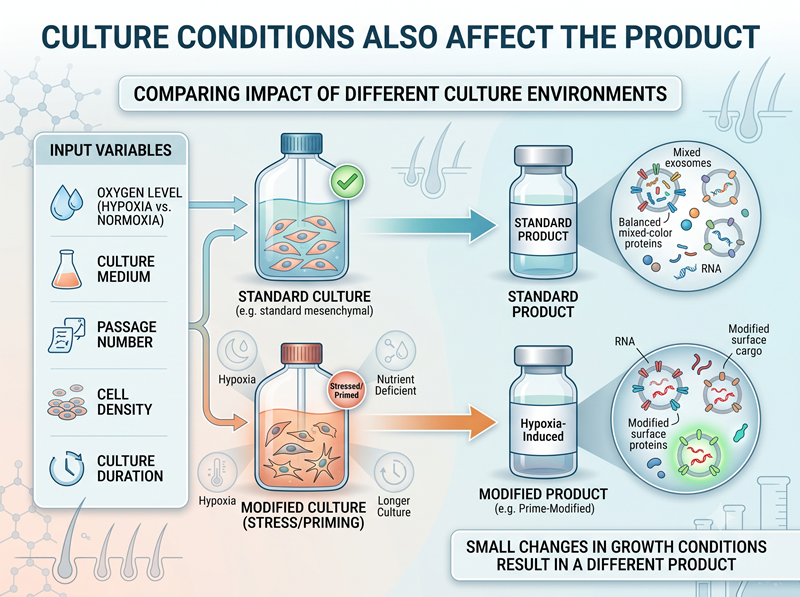
Cells respond to their environment.
As a result, culture conditions can change the quantity and cargo of the vesicles they release.
Important variables include:
• Culture medium
• Cell passage number
• Oxygen level
• Cell density
• Culture duration
• Nutrient conditions
• Cell stress
• Three-dimensional culture
Some manufacturers intentionally change culture conditions to influence the biological characteristics of the final preparation.
This is sometimes described as:
• Preconditioning
• Priming
• Hypoxic culture
• Three-dimensional culture
Such processes may be scientifically meaningful, but they also create a different product.
A claim such as “hypoxia-enhanced Exosomes” should therefore be supported by clear manufacturing and potency information.
Collection, Separation, and Purification
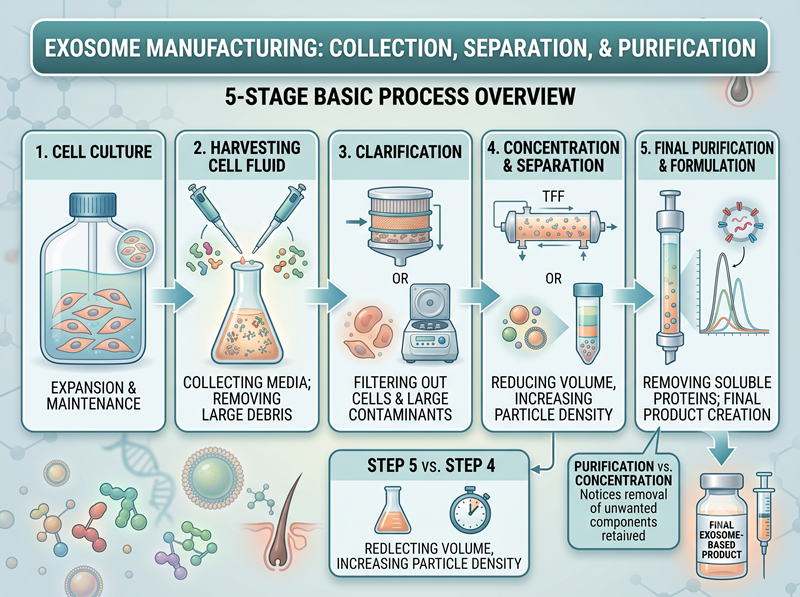
The basic Exosome manufacturing process can be summarized in five stages.
1. Cell Culture
Selected cells are expanded and maintained under controlled conditions.
2. Conditioned Media Collection
The fluid surrounding the cells is collected.
3. Removal of Cells and Debris
Whole cells and large contaminants are removed.
4. EV Concentration and Separation
Extracellular vesicles are concentrated or separated from the collected medium.
5. Purification and Formulation
Additional processing may remove soluble proteins and other unwanted materials before the preparation is formulated.
Common processing methods may involve:
• Filtration
• Centrifugation
• Tangential flow filtration
• Chromatography
• Precipitation
• Combinations of methods
Distributors do not need to become EV-manufacturing specialists.
They should, however, understand the difference between:
• Concentration
• Separation
• Purification
Concentration increases the amount of material per volume.
Purification aims to remove unwanted components.
A concentrated product is not automatically a purified product
Why Particle Count Is Not Enough
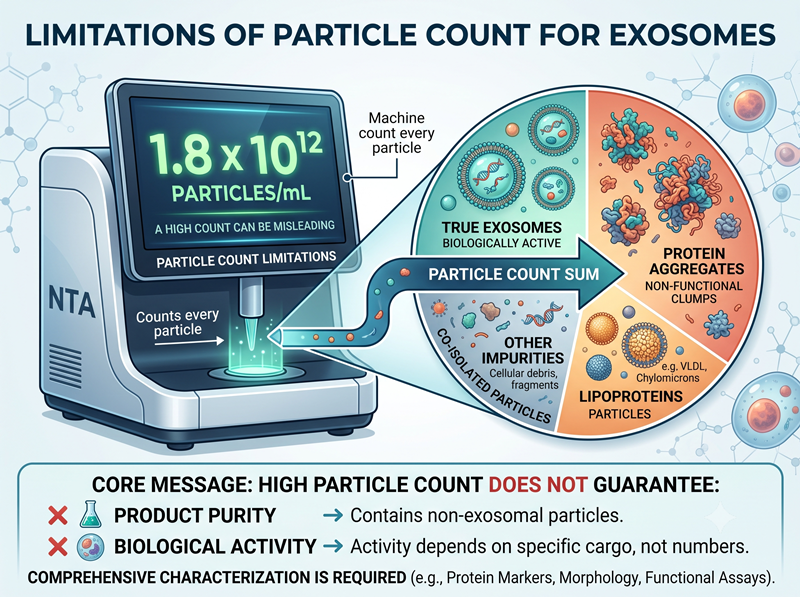
Exosome products are often promoted using particle numbers, such as billions of particles per vial.
Particle count can provide useful information, but it does not independently establish:
• Vesicle identity
• Purity
• Biological cargo
• Potency
• Stability
• Clinical effectiveness
Particle-measuring equipment may also detect:
• Protein aggregates
• Lipoproteins
• Other nanosized materials
Two products may report the same particle count while differing in:
• Source cells
• Purity
• Cargo
• Storage condition
• Biological activity
The number of particles should therefore be evaluated together with other quality information.
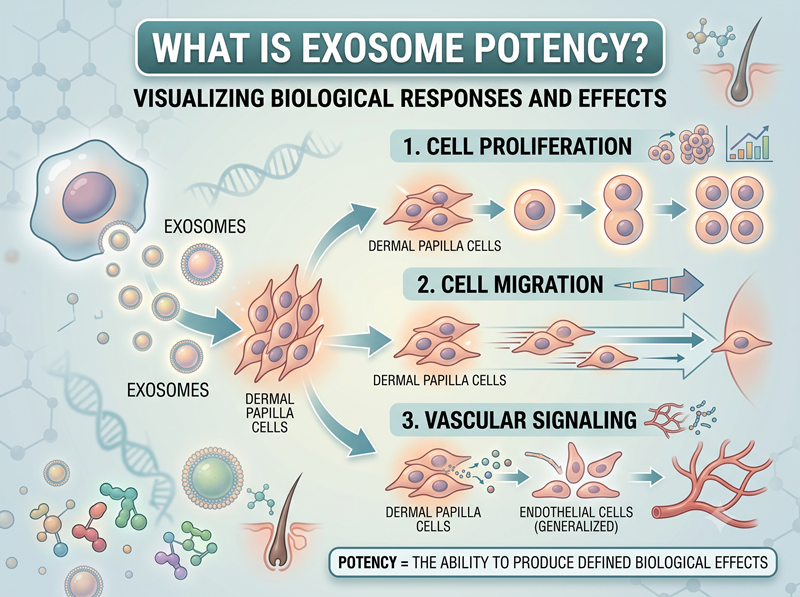
What Is Exosome Potency?
Potency refers to the ability of the preparation to produce a defined biological response.
A hair-related EV product might be tested for its effects on:
• Dermal papilla cell activity
• Cell proliferation
• Cell migration
• Oxidative-stress protection
• Vascular signaling
• Hair-related signaling pathways
A useful potency test should help answer:
Does this batch still perform the intended biological function?
This is different from asking only:
How many particles are present?
For commercial evaluation, biological activity may be more meaningful than a large particle number alone.
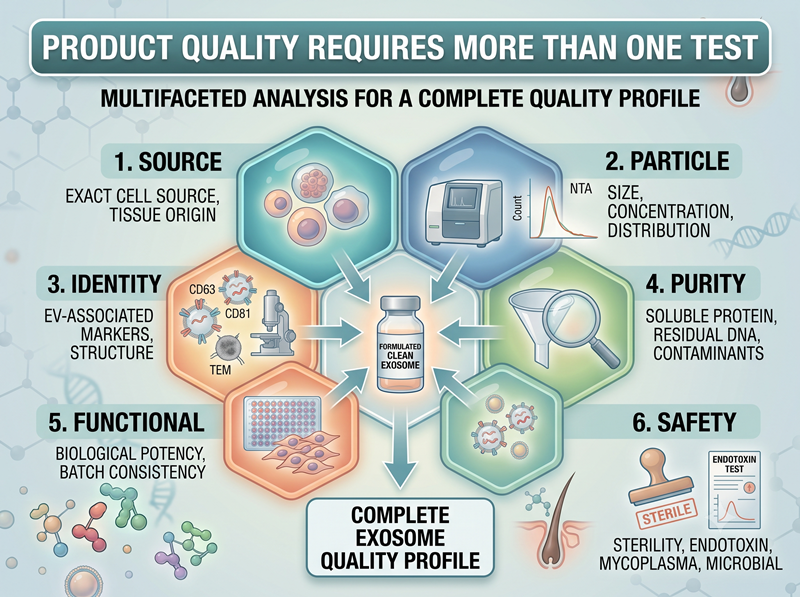
Product Quality Requires More Than One Test
An Exosome-based product may require several types of quality information.
Source Information
• Exact source cell
• Tissue origin
• Donor control, where applicable
• Cell-bank information
Particle Information
• Particle size
• Particle concentration
• Population distribution
Identity Information
• EV-associated markers
• Structural or imaging evidence
• Source-cell documentation
Purity Information
• Soluble-protein contamination
• Residual DNA
• Cell debris
• Non-vesicular particles
• Processing residues
Functional Information
• Biological potency
• Batch comparison
Safety Information
• Sterility
• Endotoxin
• Mycoplasma
• Relevant microbial or viral controls
A certificate reporting only one or two items does not provide a complete quality profile.
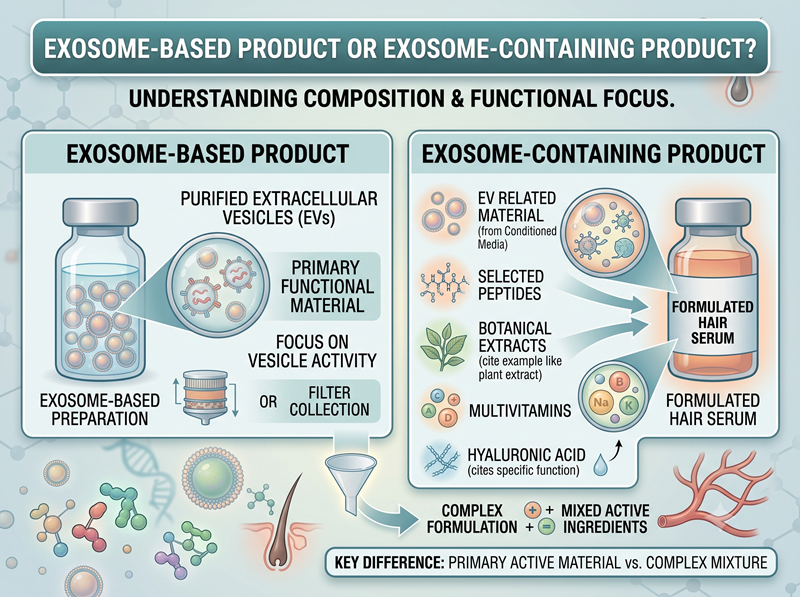
Exosome-Based Product or Exosome-Containing Product?
These expressions may describe different commercial categories.
Exosome-Based Product
The extracellular vesicle preparation is presented as the main functional material.
Exosome-Containing Product
The formulation contains vesicles together with other major ingredients, such as:
• Peptides
• Proteins
• Botanical extracts
• Hyaluronic acid
• Vitamins
• Conditioned Media components
Both types may be commercially valid, but their composition should be described accurately.
The distributor should confirm whether the product is:
• A purified EV preparation
• An EV-enriched preparation
• A Conditioned Media product
• A finished serum containing EV-related material
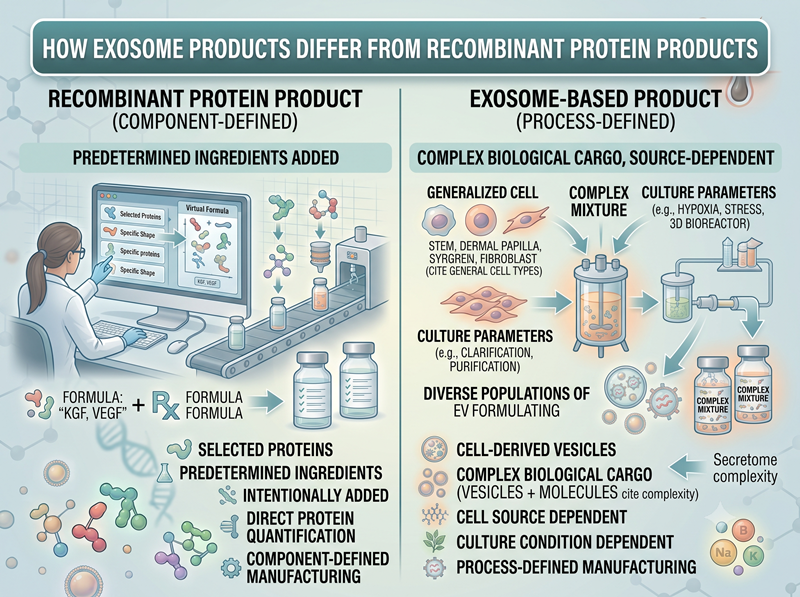
How Exosome Products Differ from Recombinant Protein Products
The two product categories use different design models.
Recombinant Protein Product
• Selected proteins
• Predetermined ingredients
• Direct protein quantification
• Component-defined manufacturing
Exosome-Based Product
• Cell-derived vesicles
• Complex biological cargo
• Strong dependence on cell source and culture
• Process-defined manufacturing
A recombinant product can generally state which selected proteins were intentionally added.
An Exosome product must explain which cells produced the vesicles and how the vesicle preparation was collected and controlled.
Neither model automatically proves better clinical performance.
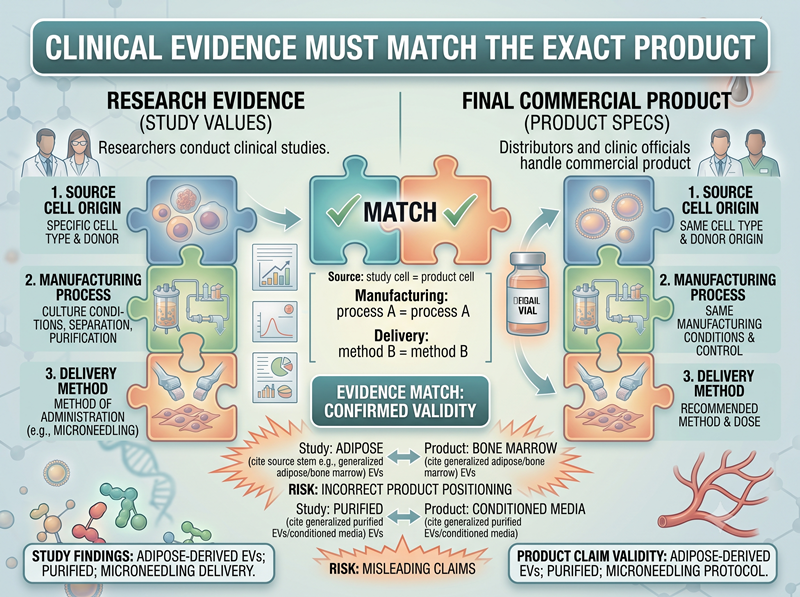
Clinical Evidence Must Match the Exact Product
One of the greatest commercial risks is applying research from one Exosome product to another.
Exosome studies may differ in:
• Source cell
• Culture conditions
• Separation method
• Purity
• Particle dose
• Delivery method
• Patient diagnosis
• Treatment frequency
A study involving adipose-derived EVs cannot automatically support an umbilical cord-derived product.
A study of purified vesicles cannot automatically support Conditioned Media.
A study using microneedling does not necessarily prove the result of topical application alone.
Distributors should request evidence that matches:
• The final commercial product
• The recommended dose
• The recommended delivery method
• The intended type of hair loss
The Delivery Method Is Part of the Product Strategy
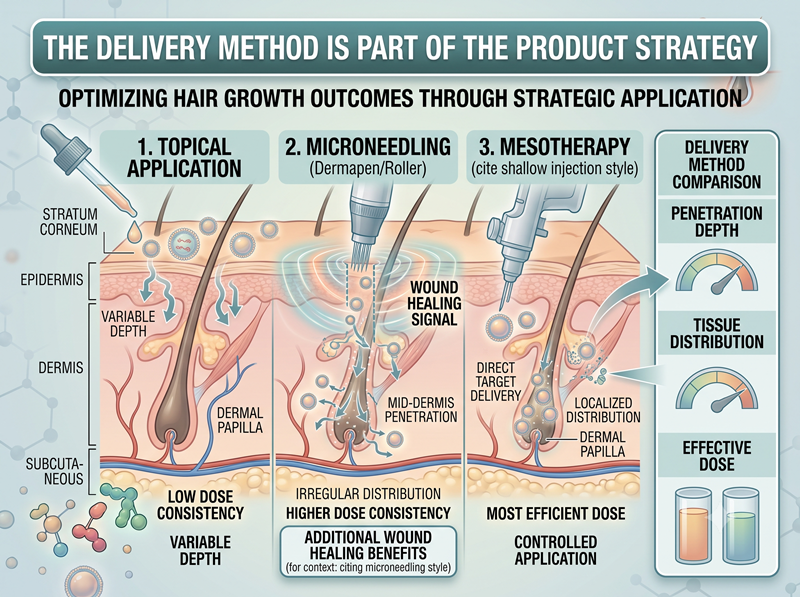
Exosome-based hair products may be used with:
• Topical application
• Microneedling
• Mesotherapy
• Injection
• Electroporation
• Energy-based devices
The delivery method affects:
• Product penetration
• Tissue distribution
• Effective dose
• Safety
• Regulatory classification
It may also produce an independent biological effect.
Microneedling, for example, can stimulate wound-healing signals in addition to improving topical penetration.
Evidence for an Exosome product combined with microneedling should therefore be explained as evidence for the combined protocol unless appropriate controls were used.
Essential Questions for Distributors
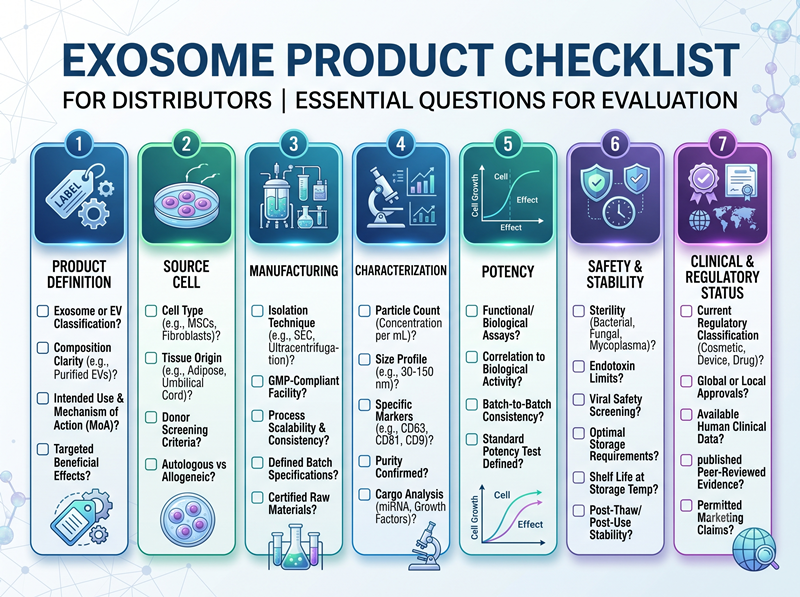
Before entering into an Exosome distribution agreement, ask the supplier the following questions.
Product Definition
• Is the product Exosomes, EVs, Conditioned Media, or Secretome?
• Is it purified, enriched, concentrated, or part of a finished serum?
Source Cell
• Which cells were used?
• What is the tissue source?
• Is the source traceable?
• Is donor screening performed where applicable?
Manufacturing
• What culture medium is used?
• What passage range is permitted?
• How is Conditioned Media collected?
• How are particles separated and purified?
Characterization
• How are particle size and concentration measured?
• Which EV-associated markers are tested?
• Are contaminants and residual DNA evaluated?
Potency
• Is biological activity measured?
• Is the assay relevant to hair or dermal papilla biology?
Safety and Stability
• Are sterility, endotoxin, and mycoplasma tested?
• What are the storage and shipping requirements?
• Is potency maintained throughout shelf life?
Clinical and Regulatory Status
• Was the exact final product studied?
• Which delivery method is recommended?
• How is the product classified in the target market?
• Are the proposed claims permitted?
Marketing Claims That Require Caution
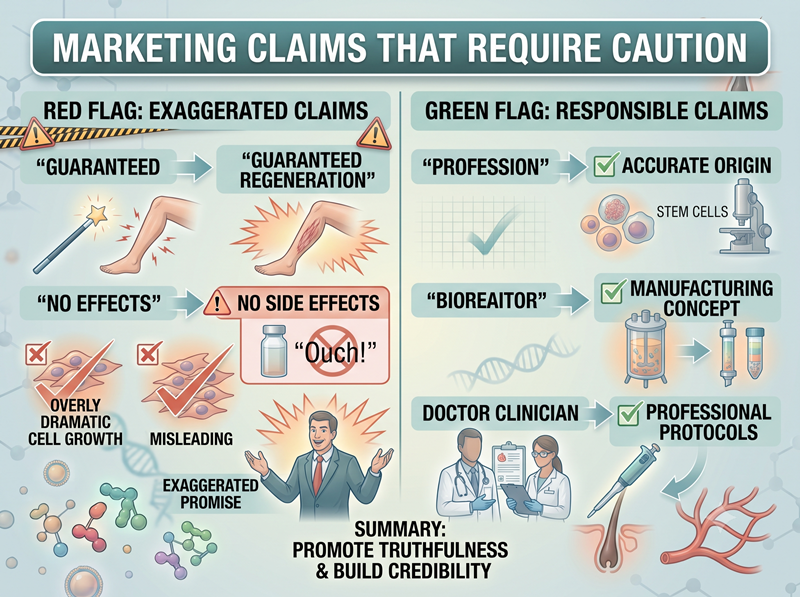
Distributors should carefully review claims such as:
• Pure Exosomes
• Stem cell treatment without stem cells
• Billions of particles guarantee hair growth
• Permanent follicle regeneration
• Approved Exosome therapy
• Clinically proven for all alopecia types
• No side effects
More responsible product communication should describe:
• The exact source
• The actual product type
• The manufacturing concept
• The available characterization
• The intended professional protocol
• The level of clinical evidence
• Important limitations
Transparency is a stronger long-term sales strategy than exaggerated terminology.
Key Takeaway
Exosomes are cell-derived extracellular vesicles that may carry proteins, lipids, RNA, and other biological cargo.
However:
• Exosomes are not stem cells.
• Exosomes are not the entire Secretome.
• Exosomes are not the same as Conditioned Media.
• Stem Cell Conditioned Media is not automatically a purified Exosome product.
• Particle count does not prove purity or potency.
• Different source cells can produce different vesicle preparations.
• The delivery method affects both performance and clinical interpretation.
For distributors, the word “Exosome” should be the beginning of product evaluation—not the end.
A responsible commercial review should confirm:
1. Product definition
2. Source cell
3. Culture conditions
4. Separation and purification
5. Particle characterization
6. Purity
7. Potency
8. Safety
9. Stability
10. Clinical evidence
11. Regulatory status
In Part 5, we will examine the manufacturing and quality-control process of Exosome-based products in more detail, focusing on the practical information that distributors should request from suppliers.

This article is provided for scientific, educational, and business-information purposes only. It does not constitute medical advice, diagnosis, a treatment recommendation, or confirmation of regulatory approval. Exosome, extracellular-vesicle, Secretome, and Conditioned Media products may differ substantially in composition, manufacturing, quality, permitted claims, and professional use. Distributors and healthcare professionals should review current product-specific technical, clinical, and regulatory documentation before commercialization or use.
“Some of the images were created using Miricanvas and Gemini.”